

Build the Future Podcast
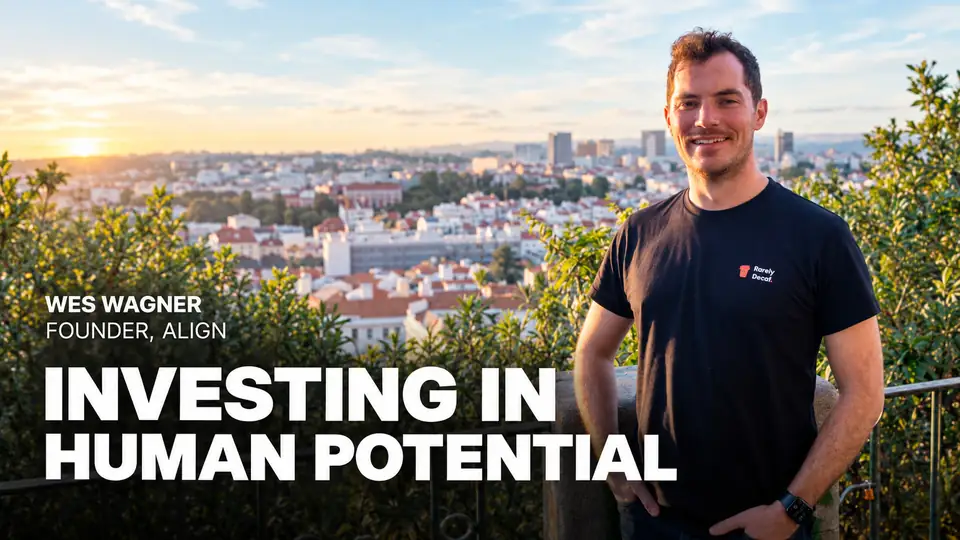
Wes Wagner — Learning, Incentives and Outcomes-Based Payments
Wes Wagner explores education funding tied to outcomes, along with its practical trade-offs.
September 8, 2020 · 28 min



About the episode
"We sort of forgot that this isn't how things used to be, because in no one's collective memory is a time when education was relatively affordable."
In this conversation, we talk with Wes Wagner, the co-founder of Align where they make it extremely easy for anyone to set up an outcomes-based payment agreement with their students, customers, or clients.
We talk with Wes about the history of higher education, incentives, unbundling, and the role that outcomes-based payment agreements will have on making quality education accessible and affordable for all.
Links
Chapters
Times follow the podcast audio. The video’s timeline may be slightly different.
- 00:00Welcome and introducing Align
- 01:15Connecting talent with opportunity
- 02:59How payment structures shape incentives
- 06:52Unbundling higher education
- 09:20Beyond content: learning and community
- 13:51Infrastructure for outcomes-based education
- 19:24Risks and limitations of early agreements
- 21:03Direct relationships versus third-party finance
- 24:47Community and the changing role of institutions
Read the conversation
Open the full transcript
CAMERON WIESE: Welcome to the Build the Future podcast. My name is Cameron Wiese and I'm your host. I've always been fascinated by the ideas and sentiment that drove American culture in the 1960s with the space race. A culture of possibility with a mission to build things. And I quote JFK, not because they are easy, but because they are hard. It's this culture that seems to have been lost, and it's something that we want to bring back. With Build the Future, we're here to promote the ideas of those who not only see how the world can be better, but those who have plans to get there. It's our hope that these plans inspire you to think about the future you want to live in, and create plans to go build.
CAMERON WIESE: Today, we're talking with Wes Wagner, the founder of Align. At Align, they make it simple for anyone to set up an outcomes-based payment agreement. By doing this, they're helping create the infrastructure that will enable the next wave of online learning and help make high quality and affordable learning available to all. Wes, welcome to the show. Thanks for having me, Cam. I want to start with the basics. Can you tell me about the future you're building with Align? What's the vision?
SPEAKER UNCLEAR: I'd say, in short, to democratize access to opportunity. You know, it is just a shame that there's millions and billions of incredibly talented, high potential people all around the world. but that bridge between that talent and opportunities is still not fully constructed. And so I'm working on connecting that talent and opportunity in the world. So how are you going about doing that? Simply put, we're making it easy for any company to launch and scale income share agreements. And so income share agreements for anyone listening that is not familiar with them, it's basically a pricing slash financing mechanism for education. So if a business, a school, a bootcamp, a person is selling a service where they'll help someone else learn a skill or land a higher paying job or connect with more clients to increase their income, the business only profits or rather part of their pricing is that they charge once someone increases their income above a certain threshold and they should take a percentage of that.
WES WAGNER: Or maybe they actually just take a fixed payment after that threshold. And so, yeah, at its core, I'm just making that super simple. And so it's kind of going back to how education pricing, I guess, used to be where, you know, back in the middle ages, if you wanted to learn to be a blacksmith, you go to the local blacksmith and say, I want to train under you. And, you know, they would teach you and help you learn that skill and help you, you know, maybe get jobs as a blacksmith. But you'd have to repay them by working for them for a certain period of time. So what I'm doing, I think, is really just a tool to make apprenticeship models function at scale for a lot of different people.
CAMERON WIESE: You mentioned that you're a big fan of incentives. Can you break down how the incentives are better aligned through income share agreements versus the options today?
WES WAGNER: Yeah. Continuing on the thread of how education pricing used to work, or actually education and finance in those relationships. Back in the day, it used to just be between two people. the person or organization that was providing the experience or services or training and the person that was receiving them. And how it worked is you would pay the person that was providing the services for the services, whether that be upfront on a recurring basis as an income share agreement, AKA, you know, an apprenticeship model, whatever. Well, as you fast forward through history, when Harvard launched, you used to pay Harvard directly for the education. At some point, Harvard realized, you know, not everyone can pay upfront for this education. So we'll give loans to people and they can pay us, you know, us Harvard back once they get a job and they're able to pay that back. Well, at some point along the way, that relationship, which was only two people or two entities turned to three because it became more efficient for a third party bank or loan underwriter to service those loans, to assess the risk, to collect the payments, to collect the funds, to then give to Harvard. In general, it became more efficient for a third party to come into the equation. Well, as soon as that happened, the incentive structure switched, where Harvard was no longer on the line for their student or alumnus to pay back. They basically just got the money from that third party and they were done. At some point that incentive builds up like that,
WES WAGNER: those sort of misaligned incentives build up because all of a sudden someone, you know, the purpose of education to some people is, is to go learn your skills and get, you know, get a higher paying job. For a lot of people, it's, it's also, you know, socializing with other people at your, your similar age. It's, you know, going through transformative life experiences, getting away from your parents, you know, growing up, it's, it's this whole bundle of things. And so if you combine the fact that our education has sort of shifted into this bundle of all these different things from the actual education to the socializing to just like growing up and become a productive member of society with the fact that you no longer have an incentive for the people that are that are paying for that thing to actually be able to pay back in the future you have what's resulted in our education finance system today in the United States which You know, there's over a trillion dollars in outstanding student loan debt because the current system incentivizes just accumulating more and more student debt and universities getting paid up front.
WES WAGNER: And then there's this whole like multi-generational thing of like, well, you know, you always have to, you have to go to college. You have to get an education. And that's just what you do. You get student loans. And so we sort of forgot that this isn't how things used to be because in no one's collective memory is a time when education was relatively affordable. I mean, if you talk to your parents or grandparents, it's like, yeah, no, you need to work during the summer to save up money and pay for school. But now it's like you see the graphs and it's like, wait a second, how is it that higher education prices have increased so much compared to everything else in modern times? And it's just because there hasn't been an incentive otherwise.
WES WAGNER: And so I think now you're starting to see the breakdown of that structure. People are realizing, you know what? I don't need to pay six figures for a college education. I actually just want to have a better life by learning a skill where I can earn enough money to have a family. I can buy a house. I can do all these other things. And people are realizing, you know, I don't need that bundle of the nice credential of that in-person college experience of all those other things. And I think, you know, the COVID has just accelerated this trend because now Harvard or whatever is like the most expensive streaming service or all these universities are just incredibly expensive streaming services. And it's making people wonder, like, what are they actually paying for?
CAMERON WIESE: Obviously, things are shifting. And I'm curious, in your mind, what does that unbundling look like?
SPEAKER UNCLEAR: I think every single higher education has a bundle of that, like, social journey and like connecting people that are at a similar stage in life as you. not necessarily learning the same things. Like maybe you have great friends in college that like are different majors or whatever, but they're all going through that same transformative life experience, maybe dating people, maybe, you know, just, just growing up in general. And so there's that, that bundle of like growing up, I guess I would call it, or like becoming an adult. And then there's the bundle of like actually learning a skill that encompasses its own bundle. So like underneath learning, there's a bundle of like, okay, there's the content, there's direct sort of one-to-one mentorship and help. And then there's the community of just a bunch of other people that are also learning that skill that, you know, sometimes you're helping them, other times they're helping you.
WES WAGNER: I separate that than like the professor or the tutor that's more of a one directional relationship. But that itself, I think is something that the internet started unbundling first with like they started unbundling content. Now anyone can actually get like Harvard content or MIT content online for cheap or free. And so that was sort of the first wave of the unbundling of higher education. This next wave is really for more of that learning community. There's one-on-one mentorship connections. And I think the last thing that's going to be unbundled is that social component and the growing up component.
CAMERON WIESE: Right now, we're at the point where the content has been unbundled. And now it's kind of the training and education, like the actual skill development is the space we're operating in right now.
WES WAGNER: Exactly. So I think right now people are realizing, oh, wow, this huge component of education. So education is just the process of learning. A huge component of education, or rather, you know, in the first wave of online education was MOOCs. It was the course is the content. This next wave is all about, you know, actually we need, that's not, a process for learning, aka education is not just content, it's this whole other learning experience thing. You need accountability, support, and community to actually learn quickly. And so that's what I've seen, especially during COVID, a whole bunch of businesses pop up to provide you with a learning community, accountability from others that are learning the same thing, support from more experienced folks, and really just connections that can more quickly help you on a learning journey.
CAMERON WIESE: Yeah. And so is that why this kind of rise of income share agreements is becoming so popular? Because before the MOOCs, it was uploaded to the internet, it's free to consume. But now the actual process of going through that education is a bit more intensive and requires more resources.
WES WAGNER: Yeah, exactly. So with MOOCs, there was sort of this race to the bottom for pricing, like content quickly became a commodity. And you can test this by going onto any MOOC website. And if you're there for a couple of minutes, it'll pop up with like a discount, like saying, you know, Hey, you know, if you stay today, like you can get 80% off this course. And so income share agreements don't really work if the thing costs $5. But that next layer of education, the accountability support community in those connections, your costs start to accumulate, especially if a school or education company is trying to provide all those really helpful people in house. And they start, you know, paying for mentors, paying for people to answer questions, but maybe, maybe actually most people still try to compete on content. They'll decide they're like, I'm going to hire my own professors and teachers to like recreate the wheel and start to create my own content. And actually that's, that's sort of the first area where people I think are realizing, wait a second, I don't actually have to produce any of my own content. I can actually just pay for the accountability, support and community people or staff in-house and save a bunch of money by not having to hire a teacher, professor, or someone to create the content. And so income share agreements have rose, I think, first because you need to pay quite a bit for all these learning components. Like the marginal cost of training someone is pretty high, but it's decreasing now as people are outsourcing more and more of these things that people thought that they always used to have to do in-house.
WES WAGNER: The theory of the firm is like an economic concept, which basically says like, you know, we'll do things inside the firm if they're more efficient and cheaper that way, and we'll do things outside the firm if they're more efficient and cheaper that way. You know, what Uber realized is that to be the biggest transportation company is that, oh shoot, it was actually now more efficient to do things outside the firm. And so, you know, instead of paying for their own, hiring their own drivers and buying all their own fleets of cars they just outsource that and similarly i'm starting to see the withering away of or rather the switch of what's most efficient in terms of providing that one-on-ones accountability support and community you know the first couple startups i've seen are that i've realized this are like my former employer microverse which is like we don't actually have to hire teachers and professors to recreate the wheel content. We can use free content that's already out there and help facilitate the connections between like our career coaches and fellow students. Well, I think the next wave is realizing that you actually don't have to hire the career coaches or people that answer questions either.
WES WAGNER: What you can do and what can become more efficient is just create incentives so members of the learning community themselves are incentivized to answer questions, provide guidance, provide support to other members of the community. So I think this is where I see sort of the rise of the platformization of education and where like education, just as like Uber made it so that everyone has a private driver. In the same way over the next decade, the cost of education in like a really high quality education is going to plummet and become affordable once again because now we're able to create these systems, the processes and software to connect folks at any given time in a way that's just incredibly efficient. Because there's probably someone, you know, there's probably a really experienced person in an X industry that maybe enjoys to mentor others.
WES WAGNER: They maybe enjoy coaching others and helping others. And right now they're actually just probably doing it because they like helping others. But now if you give them the option to spend even five hours of their week teaching, coaching, mentoring others and you're incentivizing, you're kind of supercharging that incentive. It's no longer just their own goodwill, but now you're like, oh no, you can like pay you for this. You now have people that are like, oh shoot, I'm going to spend five hours in my week helping coach, mentor, and support the next wave of folks. And, you know, maybe the pricing mechanism there is that when someone gets a job or increase their income, they pay a percentage to that person or to the platform that the platform then pays that mentor.
CAMERON WIESE: Or the one I want to tie back to is kind of with Align and with the income share agreement, how you see the work that you're doing kind of evolving into supporting that platform, or maybe your play is to like create that platform. Can you tell me a little bit about how you see the work you're doing at Align kind of playing out to get us to the future?
WES WAGNER: Yeah. So I see sort of, you know, the industry is just in its infancy, but the transaction mechanism is an income share agreement, deferred payment agreement, retail, solid contract. Anyway, there's a lot of legal terms, but the point is that the transaction mechanism is going towards success and pricing based on success. Because when you sort of price for the value that you provide, it becomes a more efficient market. And you've seen that with SaaS in the last couple of software in the last couple of decades. All of a sudden, when you start charging people for software of like, you know, usage and maybe you have a free trial and you have different tiers, people start using software a lot more because you no longer have to pay X thousands of dollars to get your own software installed on your computer or whatever. So at Align, we're really just trying to create the infrastructure for anyone from maybe, maybe just a small, I'd call them like a mom and pop school, you know, maybe someone that's experienced in marketing or experienced in software engineering and now they just want to help others learn that skill and help them get a job i want to empower them to sort of fulfill their their passions and earn a living by doing that and helping others at the same time i also think there's going to be a huge uh i'm not sure if it's going to be one or many but platforms that are going to rise they're sort of going to be like digital guilds if you will so what i mean by that is you have the mom and pop schools on one side of things. Now, if you, if you look at like what a huge school or learning community would look like,
WES WAGNER: it looks nothing like a traditional school. It looks more like a social network. And what I mean by that, it's like anyone can join this social network. And the more that you use this, this social network, if you will, the better this social network gets it, like sort of connecting you with the right people at the right time that can help you learn more quickly. And And the transaction layer is that, okay, well, we'll provide you more valuable connections that incur us costs as a platform, as long as you pay us back later through a share of your income that you're now able to generate as a result of that experience, those costs and those connections. And so this is why I view a line as Stripe of this decade.
WES WAGNER: And sort of Stripe's innovation was like, holy cow, online payments is going to be a huge thing. It's just way too hard and complicated to even start. and we don't necessarily want to build the best marketing software on type of payments or the best productivity software, whatever. Like we just want to create the infrastructure. So it's easy for any other entrepreneur to launch and scale a business the same way. I just want to create the infrastructure that allows you, whether you're sort of a solo or the mom pop school, and you just want to, you want to launch a business, helping others learn a new skill. And you want to make that a business. Um, like they, they need a mechanism to charge users. Like Right now, they could theoretically do that, but if they're going to spend all their time helping coach people, they're going to have to charge people maybe $1,000 up front or $2,000 up front.
WES WAGNER: What I guess SaaS has taught us is that when you want to charge people $2,000 up front, you have less people that are willing to take risks starting businesses or take risks. like, well, you know, I'm incurring all the risks myself by paying for this, this software thing. And I, yeah, I think I could, you know, launch a business doing X if I get a couple of these software tools together, but the, the entrepreneur occurs too many risks in doing that. And so right now with income share agreements, the end consumer doesn't have to incur as many risks in joining an online program in the business itself can make a successful, sustainable business by not charging, you know, $2,000 up front. Because when they start to charge $2,000 up front, only a small fraction of their market are going to be willing and able to shell out that money up front.
SPEAKER UNCLEAR: So right now, income share agreements are starting for very sort of simple digital trades and things like that. Or maybe not simple digital trades, but I mean, like, it's easy to see the correlation of like trading someone for three months and getting them in a successful position or in a position where they can pay back. Well, as there's more and more data around like, what it actually takes to learn a certain skill and get that job, it's going to make more and more sense to actually like give people stipends. It's like, oh, you've proven that you like have the capability of learning. I know you can't afford to not earn an income right now. So we'll just actually pay you to train for a new skill. And yeah, you can just pay us back later. And so that's sort of where I see like the bridge between opportunity and talent coming to fulfillment is that when, you know, someone is born somewhere, no matter where they are in the world, we get at identifying, okay, this person is talented. This person just needs the resources. Let's give them a computer. Let's give them all their basic needs and allow them to learn a new skill and get a new job. And I think, yeah, it's a very economic perspective, but it's like, this is how we bridge the gap between a talent opportunity is we make it sustainable. Yeah. Cause you remove the friction
CAMERON WIESE: and then you let the markets kind of take care of it. And then if you're in Argentina and you're trying to learn a new skill, you want to improve your life. It's like, Hey, we're going to give you money. We're going to pay you because we know that there's a positive outcome here. Like this is not a zero-sum game. We can grow the pie by investing in people all over the world.
WES WAGNER: Yeah. And don't get me wrong. We're still in the infancy of income share agreements and these modern instruments. And so there is still a lot to be learned. And there's a lot of folks that have not, I'd say, implemented them properly or rather, you know, the people that got most excited about of income share agreements at first were a lot of like financers. They basically saw, you know, how education loans work. They're like, Oh, great. We can do the same sort of thing with income share agreements. And so like you, you have, you know, what was a two party interaction went to three parties. And now there's this, there's this resurgence of the two party system and the financers like, no, no, no. Like let's, let's, yeah, let's do the income share agreements, but let's still be involved as a third party. And we'll still facilitate the, the money and assessing the risk. And I scratched my head. I'm like, no, no, no, no. Like that's not how income share agreements work. It's like the incentive, like the incentives are that there is now just two parties. And so one of the, one of the other things I think that people are sort of worried about is that, you know, people compare it to like indentured servitude. I'm not sure if that's the correct term, but people are like, where you're like, oh, wow. You're like, you're forcing someone to, you know, pay X percent or income for, you know, however long of a period of time.
WES WAGNER: and it's true that we you know there still isn't a ton of consumer protection like in the united states or the rest of the world in terms of how to structure these agreements that are really you know to make them fair to the consumer and so uh you know the legislation is just sort of starting to pop up now but i'm a strong believer that the market will make it so that the consumer that there's going to be more and more options the consumer is going to pick the most equitable and best option for them it just takes a little while to establish the industry it's so funny it's
CAMERON WIESE: you're reading my mind because I was going to ask you like, what do people get wrong about income
WES WAGNER: share agreements? Yes. The biggest thing that I, that I think is just, I, like I scream anytime I like read about income share agreements is that they approach from the, the model of how we've been doing loans in education finance for the last, let's say century, which is a third party looks at the relationship, assesses the risk, assesses the potential outcome, and they bring in the capital. And I'm just like, no, like that is still the old incentive structure where there's a third party that as a loan provider, a loan servicer, you don't have the power to help someone increase their income so they can pay back quicker or that they're more likely to pay back. or rather maybe you actually, you don't even have the incentive to make them really grateful for the experience that they want to pay that. And so once you have that third party, it just becomes incredibly inefficient to like have the income share agreement. So like the current, if you want to launch an income share agreement today, your only options besides using a line are like going to a third party bank as an entrepreneur and be like, Hey, help me launch these income share agreements. And they'll want to see all this data. Like no one has, you know, years of financial data and success data and outcome data to be able to like get a financer interested. But there's, there's plenty of individuals still that are like, well, no, I'll incur the cost myself.
WES WAGNER: And they just don't have the infrastructure to launch them themselves. They don't know what contracts to use. They don't know all the systems that are involved, you know, from verifying that someone's going to actually pay back later and creating a system to like assess the trust to creating systems like monitor the health of like you and your students relationship because turns out if people uh don't really like your service they don't want to pay back like if people really like their service they'll want to pay back and so um i think it really clicks with people where i tell them do you care about your alma mater oh yeah you know i care about my alma mater like they're they're cool you know i give time i go back and maybe uh you know volunteer. I wear my alma mater's clothes. Oh, do you care about your loan servicer?
WES WAGNER: God, no, of course not. You know, like, and so you, every time I see income share agreement startup, they're like, Oh, we'll get a third party to handle it. I'm like, no, like you're, you're destroying this really valuable relationship that you could otherwise leverage to make people want to pay back. They want to give back to their alma mater. And so, um, yeah, it's, it's, it's still something that boggles my mind that every single new, new kind of company in this space uses third parties because sometimes, you know, you need a lot of capital and cash flow. If you just assume that so many, I think a lot of people when they're launched, they're like, oh yeah, I'll just get a third party to like, give me $2,000 up front. It's like, no, like just prove that you can actually help people increase their income first. And so actually, you know, it's interesting. And this is why I refer to income share group. This is a pricing model more than anything else. I think they're going to become the most popular first for businesses that realize, oh, actually, you know, I don't have to charge $2,000 up front anymore. Let's actually only charge $1,000 up front and maybe $1,500 as like an income share grant when someone's successful. And so it's not going to be like, it's not going to go from a student loan to income share agreement. Rather, it's going to go from upfront or recurring payments or free to a hybrid upfront income share agreement. And that's, I think, where people get wrong too.
WES WAGNER: It's like they think of income share agreements as an alternative to student loans where I'm like, No, no, no, no. It's like this whole different, like where income share agreements are working best is where the other option is just charge people up front.
CAMERON WIESE: It's clear that this is definitely the way the world is moving, right? Especially as we kind of see the demise of higher education with COVID. I would love your quick thoughts on kind of how do you see COVID affecting our current institutions and how do you see that evolving?
WES WAGNER: Yeah. So I think when institutions first popped up, it was like, hey, come for the tool, come for the utility. We'll train you in some skill and stay for the network. Now you have this really valuable network of a bunch of other people that have other skills. You can, you know, work with them in the future or whatever. Well, for too long, our kind of traditional institutions have relied on, no, no, come for the network and stay for the eventual utility because after you have a network and you might be able to get a job where you can learn the skill or you might be able to connect with someone that will give you a chance. And so I think our current institutions are in for a rough time because all these new startups are going back to the origin of these network effects, which are come for the tool, come for the fact that we're going to help you increase your income and stay for the utility. Now, you know, higher education still have the whole come for the tool, stay for the utility when it comes to like, come for the utility of like that life experience and growing up. And so that is still powerful. But as more startups get in that space of selling, maybe, you know, that life experience in that sort of component, it's gonna be really tough.
WES WAGNER: I think the biggest thing is the internet in general, has made it so that the social capital potential. So when I refer to social capital, I refer to like, the potential value of a relationship, which could, you know, or connection, which could increase your health, wealth, or happiness. the internet's potential social capital and like that potential market is so much bigger than a you know an in-campus group of let's say 20 000 people and so now when like harvard and all these other institutions are forced to go online they're forced to create online systems to create social capital to create that serendipity that that a campus and a classroom was provided and they're not used to building online experiences and social networks and so um i don't like to play you know the game of time estimates. But I think it was 20% of Harvard freshmen are deferring or something like that this year. And so I didn't think remote work would sort of rise this quick either. So I'm not sure about the timeline, but the institutions are in for a rough reawakening.
CAMERON WIESE: Thanks for joining us for another episode of the Build the Future podcast. If you're looking to start a business, coaching, teaching, mentoring, whatever it may be, or just want to learn more about income share agreements, head on over to withalign.com. And then if you want to follow along Wes's journey, you can find him on Twitter at caffeinatedwess, where he's working in public. Lastly, if you're building and want to get support, want to hear about specific topics or hear from certain people, shoot us over an email at hello at buildthefuturepodcast.com and we'll see what we can make happen. That's it from us. Until next time, go build.
SPEAKER UNCLEAR: Thank you.
More episodes
All episodes Kelly Smith — Microschools, Mastery and Empowered LearnersKelly Smith describes his vision for small learning communities that build confidence, agency and the ability to learn.
 Tyler Shaddix of GoGuardian — Building the Future of LearningTyler Shaddix of GoGuardian explores classroom technology, student needs and how schools can build better learning experiences.
 Indra Sofian — Rethinking High School at SoraIndra Sofian describes Sora’s project-based approach to meeting academic requirements while giving students more choice.