

Build the Future Podcast
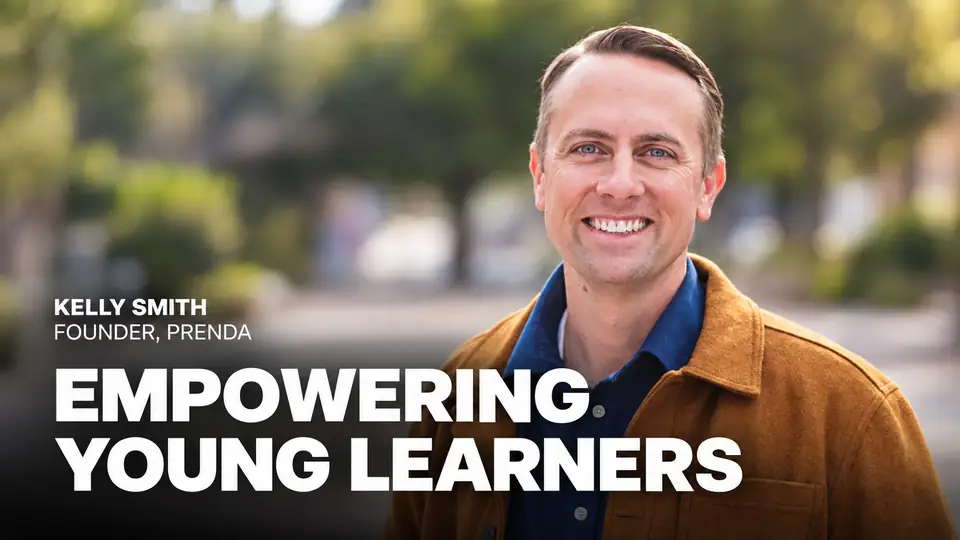
Kelly Smith — Microschools, Mastery and Empowered Learners
Kelly Smith describes his vision for small learning communities that build confidence, agency and the ability to learn.
May 26, 2020 · 48 min



About the episode
In this conversation, we talk with Kelly Smith the CEO of Prenda. Prenda is a new type of school — called a microschool — that blends in-person interaction and technology to create personalized learning programs for kids that focuses on mastery and responsibility.
We talk about alternative education models, growth mindset, and how Prenda is working to develop the next generation of empowered learners.
Links
Chapters
Times follow the podcast audio. The video’s timeline may be slightly different.
- 00:00Welcome to Build The Future
- 01:45Rethinking education around empowered learners
- 08:11The role of a learning guide
- 10:59Mastery, goals and the learning frontier
- 15:13Moving beyond labels and fixed abilities
- 22:31Mindset, curiosity and learning for yourself
- 25:00Rethinking what families want from education
- 31:50Kelly’s own experience with grades and learning
- 35:44From Code Club to a kitchen-table microschool
- 39:54Conquer, collaborate and create
- 44:42Student choice and starting an education project
Read the conversation
Open the full transcript
CAMERON WIESE: Welcome to the Build the Future podcast, where we share compelling visions for what the future might look like. Visions that inspire you, instill a sense of wonder, and get you thinking about the possibilities of tomorrow. I'm your host, Cameron Wiese, and today we're exploring the possibility of an alternative education model with Kelly Smith, the CEO of Prenda. Prenda is building a new type of school called a micro school that blends in-person interaction and technology to create a personalized learning program for kids that focuses on mastery and responsibility. In this episode, we talk about alternative education models like Prenda, the role of developing a growth mindset, how the matrix relates to education, and how Prenda is working to develop the next generation of empowered learners. So let's jump right into our conversation with Kelly Smith of Prenda. First of all, I'm like really excited about the entire landscape of the future of education.
CAMERON WIESE: But one of the things that excites me about Prenda is this micro school model, because to me, it seems to serve, it takes the best parts of like the homeschooling model and the social and support mechanisms of the traditional education system. So I'd love for you to tell me a little bit more about how you view the role of, well, first of all, like the role of education changing now into the future, and then how alternatives like Prenda are going to shape that landscape.
KELLY SMITH: So we can spend maybe the first 10 hours or so just on the future education. It's changing a lot, and it's exciting to be part of it, to be honest. You know, education's been around a long time. It's provided a really critical, kind of played this critical role in society.
KELLY SMITH: But, you know, it's the technological peer. you know when we talk about it like a traditional model of education this was invented around the same time as a train a steam engine and a and a telegraph these are not new structures and it's exciting finally after a long time that there are tools and there are other reasons why things things can be rethought and reconfigured a little bit and that's exciting for me to see so we talk about where's education going in in prenda's view in my view it's two words which is empower learners and when we talk about that it sounds like oh yeah that's of course like every school should be empowering kids you know as learners but if you look closely at it it's really evolved in a way that that's much more around education as a thing that happens to you you sort of show up you ride the ride the escalator knowledge is kind of put into your head and you show that you have that knowledge through standardized testing and then eventually you get these grades and a transcript and you get spit out the other end with a degree of some sort and hopefully that all leads to a job and happiness and a lot of bliss so that's kind of been the the promise i think of a free public education for a very long time right it's like get on our escalator it will take you somewhere great and i think more and more people have become a little cynical about that even as i as i explain it that way it's kind of like well that's a little strange like I wouldn't necessarily do that for other aspects of my life, like take the government designed and run system and just jump on the train and ride it. I would say, let me have a little agency in this.
KELLY SMITH: Let me decide. And many, many parents are starting to ask those questions. You brought up homeschool. We're seeing a trend in homeschool, formerly kind of the domain of people who felt very strongly about religious or ideological principles. There was kind of that one to 2% homeschooling 30 years ago and they had to fight, you know, to get to that point. There was a lot of resistance politically and a whole interesting story there. But now there's this, there's this new type of homeschooler that's really interesting to me, which is much more about, you know, looking at my kid, looking at the world as I see it and experience it and saying, what, what will my child need to be successful in that world? And then feeling like, okay, I need to give that to them. So that's, These homeschoolers are motivated by things like, you know, how do I help them be creative?
KELLY SMITH: How do I help them learn grit and determination and a growth mindset? How do I, you know, allow them some choice in terms of what their passions are and sort of tailor the experience to them and who they are? These are all the things that people are looking for when they make a decision to pull out and homeschool. But for everyone that makes that decision, there's another 10 parents saying, yeah, that all sounds great. Like I would love that, but it feels really hard and alienating and isolating. And it's just me and my kids. And so Prenda is really trying to give those benefits of homeschool to people that wouldn't otherwise do it. And we do that through communities and micro schools that we can get into what that's all about.
KELLY SMITH: But backing up again, just to where I see education going, empowerment of learners. You know, we talk a lot about what's the point of education in the first place. And for me, it's about helping these young people grow to the point where they have confidence and skills to learn anything they want, to do anything they want, and hopefully using that to contribute in a meaningful way and make the world better.
CAMERON WIESE: Yeah, it's fascinating how our traditional, you know, even the education system I went through is it like boxes you in, right? So if you're different at all, if you're curious or wanting to be creative, I mean, just by the way the system's designed, you're forced to conform. And one of the struggles for me and things that excites me about Brenda and these alternative models is you can help kids develop that growth mindset and that agency, which is increasingly more important because the traditional tracks are sort of going away. You have to be able to adapt and change your career.
KELLY SMITH: yeah we could debate for a long time and there are people that will say like the traditional tracks are here to stay um yeah look i mean i think there are structural constraints like you're talking about and i meet teachers all the time you know long time public school veterans that are doing amazing work they're constantly saying i'm hampered by this such and such standard or this such and such or sometimes it's like a toxic internal culture in my district or my school there's all these different things that are not an adult and kids right all these other things kind of can can add up to tying people's hands a little bit there are it's really important to point out amazing counter examples to this right people that just heroically in spite of all that show up day after day I had a teacher in third grade that cared about me and it was it should shine through so powerfully that I like still remember feeling loved and accepted and I felt a strong desire to learn and be part of my education. You know, she was still inside of a pretty traditional system.
KELLY SMITH: I got to do a program as an elementary school student that pulled me out one day a week with other kids. And we got to do much more like creative work and problem solving. And I lived for that day, you know, that was the best. And so a lot of these things have been done and are, there's a lot of great examples of people inside of the system that are trying to do this. What I'm trying to do is think of a way that that can be available and made available more consistently to more kids and to not have it depend on, you know, this one teacher just taking it all on her shoulders or this one school having the resources to hire an additional teacher for some other program.
KELLY SMITH: I want it to be, hey, everyone, every child, you have gifts and abilities and potential. And I want you to be able to find those in a loving, safe environment and develop yourself as a learner so that you can reach that potential. So kind of big and it transcends some of the things that people talk about in the sense of K-12 education. But really, if you imagine kids getting to that point, it's almost scary what they'll accomplish. Like these kids are going to take us to Mars, find vaccines, cure cancer. Like everyone's going to be living like we need all of these things. Society can still grow by leaps and bounds. And where is that going to come from? It's going to come from a generation of humans that figure stuff out, right? And they're going to need these types of skills and habits and mostly just that mindset of a real empowered learner.
CAMERON WIESE: I think it is very important not to throw the baby out of the bathwater. to your point, there are great, like great teachers who care so much. They're showing up, they're often, I mean, underpaid, but they're showing up day in, day out and they're doing their best to like help support their students and in fact, and like influence that sphere.
KELLY SMITH: Absolutely.
CAMERON WIESE: And so I think there's, yeah, there's the, the model, there's a lot of people who are working on how do they empower teachers in the existing structure and then help them work with the incentives of, you know, the school board and providing data so that schools can see, you know, oh, these kids are making progress. And then there's the other approaches, which is kind of what you guys, what you're working on. Tell me a little bit more about kind of how you're approaching it at Prenda.
KELLY SMITH: So Prenda is a network of micro schools. Our plan is to allow a normal person that cares a lot about kids to step up and run a micro school. So often this is the mom of one of the kids in the class. She will be trained and supported and equipped. We send things, we train her, we teach her how to do it. We provide software and resources and tools that she needs. And then we pay her to run that money. So we take a good portion of the funding that comes to us for education and give it directly to this. We call her a learning guide. In part, that's because she's not teaching. So the goal here is not to like reinvent or even like extend on the traditional teaching profession. There's a lot of science that, you know, how do kids learn? We're not asking this learning guide to invent that, to write lesson plans.
KELLY SMITH: The real challenging work that she does, which is, I would argue, the most important work in all of education, is to connect one-on-one with human beings, to care about them, to see them, you know, in their potential and value. And then oftentimes that requires the tireless work of kind of iterating and trying different things and being that coach and mentor that can truly motivate and change lives one at a time. And our micro schools are five to 10 kids. So there's a small group. They meet often in a home. So there's this comfortable, informal setting. It's hyper local. So they often know each other through music or sports or neighborhood things. And as these kids come together in the environment kind of curated and facilitated by this loving learning guide, that's when we've seen some really amazing things happen in terms of empowering kids as learners, where they really accept that responsibility and step up and start learning well beyond what's mandated or what they have to do.
KELLY SMITH: And those are exciting times for us when we see kids that just make choices and they start digging in and following their interests and learning in ways that no one's forcing them to do.
CAMERON WIESE: Yeah, it's giving these kids the opportunity to be creative and to explore their genuine curiosity, right?
KELLY SMITH: Right. Lots of it is creativity. I think it's coupled with work ethic and goal setting. And there's kind of a discipline and a drive to it, too. So one of our learning modes is called conquer mode. And we give kids, you know, look, here's what the state says is third grade math. Here are all the things that you should learn as a third grader for math. So we're aligned to state standards. And we actually don't run away from that.
KELLY SMITH: We use the word conquer to say, look, here it is. Here's a mountain of stuff. Let's climb it, right? And we help kids get in the pattern of, you know, daily looking at their progress, setting incremental goals like today I'm going to get from here to here. and then they move that little bit and celebrate the wins and when when it's difficult they get to dig in and and deal with all of the psychology and emotion that that come with that right there's tears a lot in a friend of my school there's there's kids running into their you know it's called a learning frontier there's a this um the scientists call it the zone of proximal development but it just basically means there's like what i know and what i don't know and when you run into that frontier, that's scary, right? It like pushes you into a really uncomfortable spot as a human.
KELLY SMITH: So yeah, to complement all of the, we do tons of creative stuff, tons of collaborative activities, but it's not all fluff and fun and everybody's just like, do whatever you want, it's okay. Like, there's also the sense of like, I'm going to dig in and work and achieve things. And so you kind of put those two together and you now have what I'd call an empowered learner that's ready to take on the world.
CAMERON WIESE: Are there age restrictions on who can open a micro school? Like what are the requirements there?
KELLY SMITH: Prenda today is set up for K through eight. So typically it's organized in three grade levels at a time, which is following kind of what Montessori does. So there's K through two, three through five, and six through eight. But yeah, we've, you know, we have friends who are doing interesting things in high school and preschool. There's all kinds of places you can get involved.
CAMERON WIESE: Yeah. So after eighth grade, I feel like there's a chance that you instill this growth mindset in kids. And then what? What do they do after? Because I can't imagine being thrown into my high school, having this belief that I can build anything and have to conform to that box again.
KELLY SMITH: Yeah, it's a good question. The analogy is probably like adult learners who go back to college, right? So there are people who like later in life, for whatever reason, like they didn't get a degree. And now they're like, I want this degree. I want it for this purpose, this purpose. It's not just like I'm riding an escalator. It's like, I'm very like deliberate about what I'm
KELLY SMITH: looking for. And those people, when you watch them in school, they take a very different approach, right? It's like, there's no time for kind of like waste, right? So they're able to kind of like satisfy any sort of demands or check the boxes, but it's really for them, it's about self-actualization, right? Like setting a goal for themselves and accomplishing that goal. So my hope is that we get kids ready by age 14 to be that type of empowered learner with a goal for myself. For many of those kids, that's going to include high school, right? And college probably too, but it doesn't have to. If it doesn't, you know, if it does include high school, my hope is that they would show up with like, these are the things I think I'm interested in. These are the things that I'm going to do because the government tells me I have to, but like, that's a trade I'll make. Right. And you just like, you adapt to, to whatever system. It doesn't have to crush your soul at that point because you've, you've now accepted a different way. You've taken the red pill. You like accepted a different way of being. And so you can function. And we we've seen this, we have some kids that have transferred over and, you know, they'll complain to me and say, it's kind of boring or whatever, but it's fun that they don't have to define themselves around that, right? So they can satisfy the requirements, still dig in and read a book that they care about.
KELLY SMITH: And I'll see them, you know, working on their hobbies and passions and interests on the side, which is exactly what's going to bring them, you know, fulfillment and happiness in their life.
CAMERON WIESE: Definitely. Yeah. Going back to what you said earlier, what's, there seems to be a lot of misconceptions about, about the homeschool and in the micro school. It's like, what are these kids doing all day, right?
KELLY SMITH: You'll get these great stories. They're great in a dark, twisted way. They're actually horrible, where the other parents will kind of corner your kid. Like, if you're a homeschooler, you know, you get separated at a community event or something, and other parents, you'll find them like drilling them on state capitals or spelling words or math facts or something, just because they don't believe that they're learning anything.
KELLY SMITH: And it's like awful that the people are that way. But, you know, you can kind of see in that a lot of the the fear and and one of the messages prenta's really trying to get across is like look humans should transcend all of that that's all so petty and what if we could just be the best version of ourselves like recognize where we fall short and and work on it you know and grow we see i saw a kid come in to prenta that was two two and a half grade levels behind on math according to you know the the standards and what the state would say and this kid felt bad about it. He was like, oh, you know, I'm not, maybe I'm not good at math. Maybe I need to, he had some stories in his mind that just weren't, weren't accurate, you know? And he had, I would call it, he was, he's a bright and very impressive young man. Like, but there, he was maybe in danger of giving up in some ways. Right. And just kind of being like, you'll hear adults say, I'm not a math person. I can't do it. And to see this kid get into a safe place where he trusted his peers and this learning guide, and he was able to take some risks, but like get some early wins and be like, Oh, this is how to do it.
KELLY SMITH: This is how to learn. And to see this kid go from, you know, two grade levels behind to one grade level ahead, like over a couple of years. It's just really cool. And that he can apply to whatever he wants. Right. So it doesn't have to be math. It can be, you know, if he wants to be the best pottery sculptor in the world, he can, he can be that. And I actually have no question that he would, I mean, these kids are capable of so much. So it's just once they can set their sights on something and then, build the habits and the work ethic that will get them there. It's pretty cool.
CAMERON WIESE: Yeah, and it's one of those things like, man, imagine that mindset developed early on in everybody. Like, what did they go do? I kind of had that shift a couple years ago. I grew up, I'm like, I'm not a math person. I don't get it. And what I realized was, oh, at some step along the way, things got challenging or I didn't understand a concept. And then I had to move to memorizing. and then that's when it turns to like it's no fun i don't understand what the integrals are doing in like my calculus class yeah but i know the formula so i'm just going to memorize it and see if i can pass
KELLY SMITH: yeah it's like and people say i think we all know about the stories of the ones who you know for for whatever reason like learning disabilities or socioeconomic purposes where they they fall behind and the system kind of just piles piles on them i've met so many millionaires today, people who have been really successful at business or whatever they did, that were not good at school. I mean, they're like, look, it was not easy for me to do the way it worked in school.
KELLY SMITH: And I felt like a loser. And even still, they'll talk to me in ways that are like self-deprecating in a negative way. I want to just grab them by the lapel and be like, look, that was fake. What you've done is succeeded in life. And there should be none of this in your mind or your thoughts at all there's there should be definitely not in someone successful but even if someone's not i mean i want to take everyone and just be like can we just get that out and just not worry about oh this is me versus other people and by the way like letter grades and some of these things reinforce all of this i mean they're they're like built to to almost compare and contrast kids you know so that that there's some like uphill climb that i think a lot of people have to do in order to get there. But it's important to recognize that people, human beings are capable of way more than we give them credit for.
CAMERON WIESE: And it's fascinating how that plays out in the professional world too. It's like, oh, I got a promotion or I got a raise, right? It's like the new, it's like another scorecard.
KELLY SMITH: Absolutely. It's designed that way. Yeah. And you do see this. So I went to MIT for grad school. I was one of those kids that had gotten good grades on everything. And MIT has a big problem with this because all of a sudden you go from being the first in your class to like the lower you know half of your class just like that and it's like um it's a it's like a trial of a fire you know it sounds people that you know maybe if you didn't go to MIT you'd be like oh yeah yeah that sounds awful it like really is awful because all of a sudden your whole life is set up around good job a plus you did it and now you're like I got a 13 out of 39 on my first test this was this is a true story in grad school. I got a 13 points out of 39 magneto hydrodynamics. I still, I think I kept the test. I mean, it was just like, what the heck? I looked at it. I was like, I don't know what to do with this. It was stunning. And then not only did I not know the material and I wasn't able to do the math. It was like, I didn't even know how to learn. So I felt very disoriented and lost. And that can happen. I mean, in some form or another, that's going to happen to everybody a lot of people it happens much sooner than that and they build this narrative that's in part self-preservation right which is like school's stupid I don't care you know and then they go through and do other things or I can't do it I'm dumb I'm a B student you'll hear people say there's all these great that have actually like almost like immersed themselves in our vocabulary right and they're all just like the wrong message it's like it's these labels on ourselves that limit us and what I'm trying to do with education you talk about the future of
KELLY SMITH: education. Like what I want to get to is a world where it's not at all about these external labels or metrics. It's about reaching your potential as a human being. That sounds lofty and fluffy, but that's what I'm trying to do.
CAMERON WIESE: But see, like, I mean, lofty and fluffy is not how to describe it. It's like, it's important, right? And we're, we see this in adults too. And I mean, we all have things that we're constantly working on. I have skills I'm working to build. I'm sure you do too. And like, absolutely. You're running a trend. It's like, you have to learn new things all the time. You start out knowing virtually nothing. And then you learn a little bit, a little bit, a little bit. And it's just like, it's incremental process. And it requires that, that mindset that, Hey, I can do this. I can learn this. I can go start a company that changes the landscape of education or like empowers kids. And so if we get that mindset shift across the board
KELLY SMITH: yeah no seriously like i tell my kids what do you want to do you know my son had this idea for he's 12 now but when he was maybe 9 or 10 he was tired of like taking dishes out of the sink put it in the dishwasher because you know that's his chore and then like taking them out of the dishwasher after the machine this is still like fully basically automated but he's like annoyed with this like process i'm like look if you want to you could get really good at robotics and solve this.
KELLY SMITH: You could have like, imagine like a slot. You just kind of like put your stuff in there. It just like takes care of it. And then it's back in the cupboard. Like at the other end. I was like, you could invent that, you know? And it was this weird moment for him to be like, what? Like, what do you mean I could invent that? He's like, I don't know how robots work. I don't know how that, that, that. I'm like, you don't yet know those things. But why, if you really wanted to make that your life goal, I have no doubt that you could make that thing, you know? And it's pretty cool. Like I would love it if there was a whole generation of kids growing up believing that and practicing it. It doesn't have to be perfect, life-changing everything. You hear so many stories of people who, you know, get really good at a musical instrument or like write a book. And, you know, even if not everybody reads the book, it doesn't matter. It's like the point of this is being your best self.
CAMERON WIESE: Yeah. And it reminds me of there's a book, The Inner Game of Tennis. I'm sure if you've read it but it's it's all about like you're playing your own your own game right it's like oh my gosh you have to compete against against yourself it doesn't matter if Joey or Kelly are further along or if they're better than you at math or science like you've got your own scorecard that you should be playing against like you're competing against you not anyone else
KELLY SMITH: I love it I played tennis up until ninth grade and I remember even at a young age like noticing that It's like, I'm basically like defeating myself here, you know, and that was, that could be frustrating.
CAMERON WIESE: But then you, then you stopped playing tennis.
KELLY SMITH: Well, I just got busy with other things. I didn't really, I don't know if I, maybe I just didn't love it enough, but I didn't give up because of that. I just, I remember though, in those matches, I'd be like, the only reason I'm losing right now is because I just cannot get my thinking straight. you know
CAMERON WIESE: yeah it's it's it's a mindset thing is what i think ultimately what it comes down to totally like how are you how are you doing and then i think that extends further like beyond just the student's mindset but to the mindset of of the parents and to the culture at large yeah we're starting to see this understanding of or well i guess let me know if like how you view this, but my take is that you have these parents or people now who are having kids who grew up in the system and they realize like, oh, this didn't actually work for me. Like I've had to go learn all these things on my own or, you know, I've had this negative mindset around my math skills. I don't want my daughter or my son to have to go through that as well. So it's like, what are the other options?
KELLY SMITH: Yeah, I do agree with that, except I think it's not like readily obvious the problem right so it's like you kind of live your life and you're like yeah you know I like got good grades in school and then I went to a good college and grad school I got a job and yeah it wasn't like engaging I didn't really love it I I jumped through a bunch of hoops but it was fine you know it wasn't like terrible I there are people unfortunately that are harmed you know hurt at school either bullying or like trauma there's all kinds of terrible thing but you know for a lot of people it's like yes it's not the best but it was fine there's this great paul graham essay but he talks about seeing the future it's like envisioning this future state and then like backing into so if you could like the stuff we've been talking about so far which is a whole world of people that have the confidence to work on mars missions or curing cancer or inventing vaccines so that no more pandemics like shut us down and and automatically putting away our dishes so we don't even have to like pick them up like this whole long list of things that like belong in the future and you like really can get your head there and then you go back and look at today it's like oh like we're like this sucks we're like we're far short you know then it becomes an urgent it becomes urgent because it's like no no no this isn't going to get us there
KELLY SMITH: like what we're doing right now it'll be okay it's not like going to kill us but it's it's not that you know and how can we get that and what I want I wrote this blog post that talks about uses the matrix analogy of like a blue pill and a red pill the idea is like many of us take the blue pill which is you just kind of go to school do the things get the grades get the transcript go to college hopefully get a job it's this trust in an existing system and if you remember the movie the point is there's this scary but true reality that actually isn't that right and and so that's what I'm asking parents to come with me to take the red pill, which is all about learning, right?
KELLY SMITH: It's like, no, this should be about who am I, what am I capable of, and I'm going to learn everything that's necessary to get me there. It's scary to do that, to take a different pill, but in a way, people ask me all the time, what is the demographic for Brenda parents? and we have people in inner city with very low income we have people in native american communities we have suburbs middle class upper class we've got rural we've got urban i mean we've got people from all different like places and skin colors and everything else the one thing they have in common is that red pill right it's like they're willing to look at education and say no this should be about learning and empowering my kid as a learner and once they make that leap it's amazing because the parents then are like the allies and advocates and in these micro schools form and by the way often the parents are you know involved as they can be in education so it becomes this like community almost like rallying cry like and the kids feel it and they respond to it and it's it's just really it's all really empowering it's cool to see it happen
CAMERON WIESE: so i guess when you're communicating that mission appendix school and parents are exploring, do they usually come to you guys with like having already taken the red pill in this example? Or have you seen the mindset shift?
KELLY SMITH: It's both, right? I mean, there are definitely like blue pill parents that immediately like they might end up on our website or something, but they look at it and they're just like, what? You can tell them like the first question is like,
KELLY SMITH: when do they learn state capitals? You know, it's like, well, and that's I don't mean that in a negative way. There's parents who are like, in fourth grade, you should learn state capitals. And that's a belief system that like, that's fine. That's not my belief system. Like, I think it's great to know state capitals if you want to know state capitals, but it's just a set of facts, you know, an array of like 50 by two. So if I memorize that array, then I know state capitals. It's, you know, so it's just a totally different way of thinking about things. So we'll get people that bounce immediately. But oftentimes there are people who are like, they like the idea of the red pill, but it's still a little scary. And it's a little kind of like, spend some time with us, they'll talk to guides we try to be really upfront with people about things that that are in your way like things you could just let go of and one of that is like we've been talking about just these frequent obsessive comparisons to other people like none of that being helpful or positive in any way so um yeah they're willing to you just have to kind of like name it and see it and people are happy to come along and when they see the kind of the love of learning start to to light up in their kids eyes like that's an exciting moment too because the parents then are like okay like this we made the right decision like these kids are going to be just fine
CAMERON WIESE: it's cool too because my guess is that most parents think like oh well i either send my kid to public school or private school or like or at the home school right and so they discover this middle ground like oh okay well we can we can try this because like something's not working for my kid right they're like oh oh this is really neat oh my son loves math my daughter loves science and then i would imagine like it probably has some sort of like second order effect on the parents too
KELLY SMITH: we hear all the time parents coming to us and saying like hey i'm you know i'm saying so we have these core values we talk about all the time parents sort of like repeat them back to us and be like i've been you know like thinking about learning over comfort in my like day-to-day you know whatever my job or my you know this little bit side business that i'm starting whatever they're doing yeah it's cool i'm always thrilled to see that happen and we have to keep reminding ourselves when we talk about empowering learners that doesn't actually have an age group you know attached to it there's not it's not just kindergarten through eighth graders that we're talking about everybody ourselves included
CAMERON WIESE: the one of the books i found really fascinating is um dalia's principles yeah it's like hey listen you gotta you gotta just embrace reality for what it is and when you do you can start to identify like where you can improve right and then that's that's the game
KELLY SMITH: ray dalia is one of the few people i you know and they're out there who are early to figure out that 99 plus percent of the time the limitation is in your own mind you know and and that's uh he wrote a whole book helping people you know kind of sharing the way he navigated through that. There are other examples of people who have kind of made similar, that same observation, but done, you know, maybe attacked it differently for them. And yeah, I think that's a lot of what we want people to see is like, look, the thing that's really getting in your way here is like in tennis, it's the story you're telling yourself is this mindset that you're reinforcing with your thoughts. And so if you can just rewire that, it can be really empowering for you.
CAMERON WIESE: When was the moment in your life when you had that that like rewiring happen
KELLY SMITH: yeah it's a good question so in one way I was a learner from the beginning like I always at home I was always tinkering and we built we designed a like a roller coaster amusement park ride that went from like a tree house down to the ground in our backyard it was probably like a 12 foot vertical drop and we got we tied me and my friend tied this the rope really tight we had it surely and we would test it with empty you know and then we even put a stuffed animal in it oh it works perfectly it's like this just nice ride and um and this is not what you're asking for but i'm going into the story so i get my little brother it's like well we better test this out on something living you know i get my little brother he's like four years old and we tie him in there we got him all secured and we were like about to push which would have been terrible right I'm sure our knots weren't like I was I think I was seven so it's not like we should have been doing this but my dad stopped it like just at the last second like right before we pushed but I've always been that type of person that was like thinking and experimenting learning I wouldn't have see at the time I wouldn't have said the word learning right I was learning all the time but I thought
KELLY SMITH: learning was what you do at school yeah and I was good at that for different reasons so that was like I was almost like a split personality at school. It was just, I just didn't want to get in trouble. I was really compliant with everything. I did all the work. I got straight A's. I was the salutatorian in my class. I was proud, secretly proud of never getting above a 91%. So I played this game perfectly, right? It was like, if I'm between 90 and 91, every class, and then I would work the syllabus so I knew, oh, I've got the points, so I just can skip. I would just skip weeks at a time. know so it was clearly like not motivated by learning it was motivated by getting good grades and I was good at that so so I had kind of those that split personality and they came colliding together at grad school like I mentioned I had this kind of crisis where it was like oh I thought I was smart and I'm actually not and uh this is this is painful and I had to kind of pull on character lessons that I had I kind of picked up from other aspects of my life right so it was like well I've you know I've done a lot of like hiking and hiking's hard and so this is going to be hard I'm going to have to you know be in pain through this whole process but I can learn plasma physics you know so then I would go and like harass these teachers like asking them questions and you know I'm reading tutorials and I'm like anything I can get my hands on I'm trying to learn and I'm asking study groups you know to help me and it's just like I was just obsessed so I had
KELLY SMITH: to work really hard I was able to then because I had found that learning frontier I was able to like push through it but I don't think I would have been if it wasn't for other aspects of my life where I had kind of like built up some muscle around around learning and then the curiosity part of me like following my own passions that was kind of always there but I had sort of put it on hold because I thought you know a legitimate adult should you know play by the rules and like it was cool and get a good job and so I had kind of I had taken a blue pill big time and so that was actually even later where I would even while I had stable respectable jobs I was like chinkering with things on the side that I thought were fun and I'd stay up late so you know try to code a little app that does this and but yeah I got to this point really with Prenda's kind of the first time I've done it where I was teaching kids computer programming just as a volunteer thing.
KELLY SMITH: So I was, I, my son was eight years old and I said, you should learn to code. And yeah, well, instead of doing it at home, we'll go to the public library and just open it up to the neighborhood. So we were just down there with posters in the neighborhood and kids would come down and I was there every week for like five years. So it's kind of a gradual process, but working with so many kids it was amazing to just see how they learned you know and how they how these all these ideas and principles we've been talking about but see them in a very real context of learning and kids able to create amazing things and they're working on these projects and they're learning these skills anyway so that was as that was all happening that was a transformation in me too of just saying like hey maybe I could do it you know maybe I don't need to sort of have a blue pill side of my life and a red pill side of my life. And that's where it took a big risk and had some time with very little income. But thankfully, it got this, you know, got this thing working. And it's been a really interesting ride.
CAMERON WIESE: Yeah. So tell me, like, what was going through your head? Because so that was Code Club, right?
KELLY SMITH: Yeah. Started that in 2013. My son was eight years old. We spent, yeah, every week, I'm watching these kids come to code club. They would say, school's hard. School's boring. I hate school. I'm always in trouble, whatever. Like they're having these issues. And then I'm watching their brains work right before my eyes. I can see them solving problems, right? Cause coding is all about logic and problem solving. And so I'm watching how they think. I'm like, dude, you're capable of like acing everything. Like there's, it was like no question about ability in my head. Right. because I can see what they're doing. And so then it's like, well, what is it about if it's not about ability, right?
KELLY SMITH: And that was, this is kind of what gradually got me into education at all, right? Because now I'm like, if they're capable of it and they're just not doing it, like maybe there's an environment where they would just choose to do it. Like Code Club was one of those environments. We're meeting every week after school. Parents would tell me like, my kid loves coming to Code Club so much that I use it as leverage to get them to do their chores. Right. it's like okay not only are you gonna come like think hard do challenging problems and prepare yourself for a future career in a tech economy but you're also like that's the reward that you are working for so that you're willing to do your choice like it was just like a win-win all around you know and um and it was really cool to see it happen and i was kind of asking questions like well what if you know what if math was this way what if science and social studies and english were this way. And that's when I started getting really interested in, you know, how education even works.
KELLY SMITH: I'm watching my own kids in, you know, a great neighborhood school, you know, it's highly rated and sought after. And I'm kind of like, wait, they don't have that engagement. They don't have that fire burning, you know, really interested in learning. And again, didn't blame the, you know, the individual adults. I think there are a lot of just constraints that were placed on everybody. But the question then was like, well, could we do something different? And what would that look like? So that's when I pulled my other son out of school. He was a fifth grader at the time. And I convinced six of my friends to pull their kids out of school. And we've got this group of seven meeting around my kitchen table. And we, you know, I didn't have anything built. It was just some ideas, but called ourselves a micro school and started putting together what does a day look like, kind of incorporating a lot of these lessons and these ideas that we've been talking about.
CAMERON WIESE: Tell me about some of the experiments you ran with those kids, Because I was reading, you were counting how many balloons you could fit into a car.
KELLY SMITH: Well, here's one thing that's amazing, because we talked about all of these adults that are doing great work. The internet is chock full of educational experiences, not just content, right? It's full of great ideas for how to run things. And so one thing that gave me a lot of comfort, and I'd say even confidence going into it, I was like, it actually wasn't about me as the like content creator or the lesson developer.
KELLY SMITH: I knew that if that were the case, one, I'm just like too flaky to even do it. So we just, I would have been unprepared. We wouldn't have had anything, but two, even there, it's like, I'm just me and there's all this other stuff. So I just kind of came up with a framework that was like, okay, here's how we can do this. And the framework was three things. So I kind of knew that blended learning for mastery should be part of the day blended learning means like kids on computers the tools are able to like adapt the curriculum so you learn at your own pace mastery means you learn something and then you move on to the next thing as opposed to how most of school works where it's like time's up like you get to see let's move on to the next you know like the next thing so mastery is like you master this and then you master that and you kind of keep going and so I called it conquer mode it's like blended learning for mastery and I found tools like Khan Academy is free for everybody it covers all the math standards so it was like how could I just get kids to like make progress in Khan Academy and Khan Academy of course is there for free for anyone but most people don't use it or they don't or they'll quickly get you know discouraged or give up for the human reasons and so for me it was like okay what if we could create this environment where it's I'm going to set a goal I'm going to say out loud what my goal is so that's borrowing from startup culture this idea like a stand-up meeting I'm going to say my goal and then I'm going to work on my goal until I get it right so it sounds really simple but just that like really basic structure set a goal say it out loud write it down work until you get it
KELLY SMITH: and and growth mindset is just like embedded into all of that because yeah you have this faith that like if you keep working you will eventually accomplish that goal and kids meet their goal over a period of time some days it's easy some days it's hard but they all they believe that they'll get there eventually if they keep working so we're reinforcing through the structure you know exactly what we want to be having kids believe about themselves so that's one of the modes and and that again wasn't me inventing stuff besides like a framework around it i would use these tools and we would we would just have kids set goals in the tools collaborate mode is the second part of the day and i knew i wanted like real deep meaningful interaction between human beings right so there's people like jeff sandifer in the world that runs actin academy people who have really dug into socratic dialogue and what does that mean and we just built this this model around okay we're going to do a structured group activity i will give you the guys the scaffolding but you kids are in charge of it.
KELLY SMITH: So it's like, Harrison, it's your turn today. Like what topic, you know, choose an article and everybody will read the article and come prepared to discuss. Or Faith, it's your turn. Like come up with an article that we can read or a debate topic that we can debate. And here's how debates work. We use a tool in there called Mystery Science that's just amazing.
SPEAKER UNCLEAR: Oh yeah.
KELLY SMITH: Have you seen this before? And basically there's this really talented science teacher named Doug that gets on there and like blows kids minds he does it way better than I would ever do it and then they um I sort of help facilitate them on a path of like discussing engaging with the content and then doing hands-on activities always so they get this real world science so I'm sure the balloons was an idea that I found somewhere on the internet I don't even remember where lots of good stuff that's um that's out there and yeah it was it was really from the beginning my goal was never to create content it was to find the best content and then just fit it together in a kind of a model that that worked and then create mode is the final portion of the day just to finish that out and that's project-based learning of course there are great examples all throughout education of people who have done project-based learning really well and so it was easy to find you know ideas and project prompts and things we ended up kind of adapting a lot of that because we wanted it to be you know more self-driven for kids and kind of adapted to the ages and we we weren't trying to the place where project-based learning gets a little bit boring
KELLY SMITH: is when adults try too hard to kind of align it all to the learning standard so it's like this is standard 3-a-24 and it and the kids are kind of like what like it doesn't feel like a project that I'm interested in at that point. Just kind of like, this is just a sneaky way to try to get me to like learn the standard. So we just took a lot of that out. We just said, look, we're going to cover the standards in conquer mode. So in create mode, while it will touch on a lot of those standards implicitly and kids will reinforce a lot of what they're learning, but it's not like explicitly, we're not going to make that trade. And so all of our, you know, project prompts are written from the perspective of if I were a kid, what would be interesting to me? and everything's just trying to catch that fire, you know, like help kids develop the spark and care about their learning.
CAMERON WIESE: Yeah, because then they get to pick the project. It's like the students and the teachers are on the same level. It's like, hey, like what do you want to do today? What project do you want to create? Versus, okay, you get to pick from one of these three options. And it's like there's no fun there.
KELLY SMITH: Even that would be good. I mean, most of the time it's like my experience. I remember being surprised. My junior year in high school, I had this English teacher, AP English, Mr. Olson, I think. He let us choose books. You know, he gave us like 10 that we could choose from. And I remember being like, oh, like I get to choose a book, you know? It made a big difference for me in enjoying that book. But yeah, you can imagine like applying that principle and giving kids as many choices. Basically, what I say is like as many choices as we can give them, which is not you choose everything, right? Like it's a difference between that. and we've made some trades and we definitely have to you know there's things that we can't give them choices on but as many places as i can give them that choice and tell them that and and hopefully they respond you know they they do they rise up to it and take you at your invitation to kind of own their own their learning
CAMERON WIESE: no they totally totally do and then then they feel empowered and then that the agency starts to develop and you can see the growth mindset come like takes you and then that's the magic
KELLY SMITH: that's it back to the vision that's what we want right
CAMERON WIESE: i i love it um hey we're kind of we're getting close to the end here do you have any give any guidance or advice for for those who may be looking to get involved in building the future of education
KELLY SMITH: i'd say the the advice for the future for building the future of education is to start i've been involved with lots of inspiring education entrepreneurs i'd say most of most of the waste that I see is just planning and thinking about, oftentimes, if you're the type of person that has these ideas, you're already in this category of, you know, thinking about it more than most, you should start and the real learning happens when you do it. So I just encourage people to take the plunge, doesn't have to be huge, you know, get seven kids around your table. And by the way, if you want to open a Prenda Micro School, you know, check us out. We'd love to be a platform for you to do that work. But if you, if there's something else you want to do, yeah, I would say just do it.
CAMERON WIESE: Thanks for joining us for this episode of the Build a Future podcast with Kelly Smith. If you want to learn more about Prenda, you can go to prendascool.com or you can find Kelly on Twitter at Kelly Smith in a Z as in Kelly Smith in Arizona. Lastly, if you enjoyed this episode, we'd absolutely love it if you'd send it to just one friend to get them thinking about how they too can help build the future. That's it from us. Until next time, go build.
More episodes
All episodes Tyler Shaddix of GoGuardian — Building the Future of LearningTyler Shaddix of GoGuardian explores classroom technology, student needs and how schools can build better learning experiences.
 Indra Sofian — Rethinking High School at SoraIndra Sofian describes Sora’s project-based approach to meeting academic requirements while giving students more choice.
 Wes Wagner — Learning, Incentives and Outcomes-Based PaymentsWes Wagner explores education funding tied to outcomes, along with its practical trade-offs.