

Build the Future Podcast
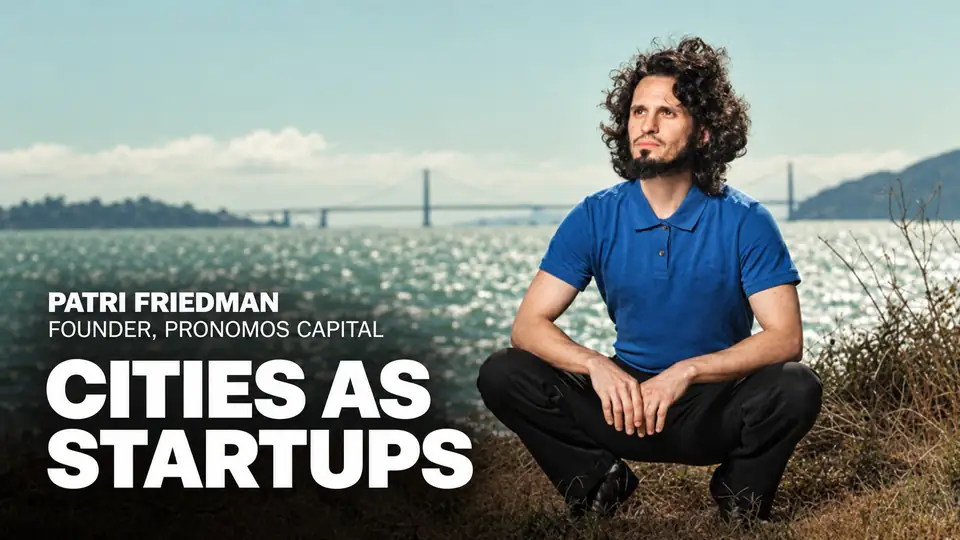
Patri Friedman — Charter Cities, Law as Code and Governance Experiments
Patri Friedman lays out his vision for charter cities that experiment with laws and services while competing to attract residents.
July 14, 2020 · 55 min



About the episode
My long term goal is to create a world where people can start countries. Like they start companies today.
In this conversation, we talk with Patri Friedman (@patrissimo), the founder of Pronomos Capital where they're supporting the development of charter cities and new forms of governance. In doing so, they're building the future of how new cities are created, how they're run, and how they innovate.
Key Ideas
Links
Chapters
Times follow the podcast audio. The video’s timeline may be slightly different.
- 00:00Welcome to Build The Future
- 03:01Law as code and the city as a product
- 05:40Testing laws and provisioning physical space
- 11:00Voice, exit and governments that serve residents
- 13:38Insurance and market incentives as policy tools
- 19:38Charter city projects and host countries
- 24:05The longer-term vision of a sovereign city-state
- 25:43Citizenship, coalitions and geopolitics
- 30:05Working with existing governments
- 34:23Could charter cities emerge in the United States?
- 39:49Software, cryptocurrency and new sources of capital
- 42:55Finding a mission worth decades of work
- 48:53Other opportunities in the physical world and markets
Read the conversation
Open the full transcript
CAMERON WIESE: Welcome to the Build the Future podcast. My name is Cameron Wiese and I'm your host. Before we kick off today's conversation, I want to tell you a little bit about the show and what you can expect. Over the last few years, I've always come back to the ideas and the sentiment that drove American culture in the 1960s with the space race. A culture of possibility and the pursuit of a mission much greater than ourselves. A mission to do things, to quote JFK, not because they're easy, but because they are hard. I've always asked myself, why have we stopped dreaming about this future? Why have we stopped pursuing the world of tomorrow?
CAMERON WIESE: Well, I've decided to stop asking and instead start building. To start building a future where we're all dreaming about the possibilities of tomorrow and creating plans to get there. See, if we want to overcome the challenges that are facing our world today, we must build. To drive forward innovation in frontier technologies, we must build. And when I say we, I mean you, and me, and all of our friends. Whatever the issue or opportunity, we must refuse to sit idly by while some version of the future inevitably arrives. We must step up. We must challenge the status quo. And we must build the future that we want to live in. See, that's what Build the Future is all about. It's a place for definite optimism in a world of negativity.
CAMERON WIESE: A place that promotes the ideas of those who not only see how the world can be better, but those who have a plan to get there. We're starting with this podcast where we share the visions of the future from those who are building it. Visions that inspire you, still a sense of wonder, and get you thinking about the possibilities of tomorrow. All this with the hope that you too will decide to take action and build the future that you want to live in. So with that, I welcome you, not only to the show, but to the future and the possibilities that lie ahead. Today, we're talking with Patrick Friedman, who is the founder of Pernomos Capital, where they're funding the research and development of charter cities.
CAMERON WIESE: In doing this, Patrick and his team are building the future of governance and exploring the possibilities of being able to deploy laws like we deploy code. Especially now, as our world becomes more and more distributed, the idea of building cities and experimenting with new forms of government is an exciting one. And today, I'm excited to have Patrick with us to explore these ideas. Patrick, welcome to the show. Hey, thanks for having me. Patrick, on the Build the Future podcast, we're aiming to share compelling visions of the future from those like you who are building it. Can you tell us about the future you're building with
PATRI FRIEDMAN: Pernomos? Sure. So what I want to do is I want to change how our governments work and how our cities are built. And I come at this with a very Silicon Valley software engineering perspective. I spent 10 years at Google and there's a sense in which the things that I do, even though people consider them very strange and unique way of looking at things. It's sort of just if you take like the software engineer or investor mindset and apply it to governance, to the shared rules that we live by and how we build our cities. So specifically, I have this idea of law as code and city as product. So law as code is just the idea that if you look at what a legal system or institution is, it's very much like code. It's information, it's processes. And what we see with software is that with code-like things, there's incredible power that can happen from open sourcing them, from copying the best code from place to place, from not trying to rewrite an operating system yourself every time, from having a world where you have all of these different components, all these different libraries that people around the world are coordinating and building.
PATRI FRIEDMAN: And when you want to go make an app or a website, you don't start from scratch. You grab all these modules. And I think that law can and should work the same way. We can have all these different legal modules for all these different types of law that are customized for different purposes. And if you're making a jurisdiction, rather than using the laws that you happen to grow up with, that were imposed by some random colonial power 100 years ago, you actually say, hey, what are the best laws for, you know, for my culture, for the industries that locate here? And just, you know, what works the best and then put it together. and then the other is the idea of the city as a product which is that you know one of the the neat things about how silicon valley approaches things is they say they put the user first i mean my mind goes back on like remember think of the users um and this idea of like okay we want to make it beautiful for the users because startups in order for startups products to succeed they have to convince people to try this new weird small thing so it has to be really good you know You can't just coast into success.
SPEAKER UNCLEAR: And so what would it look like if we designed and built cities and all the different parts of the experience, the transportation, the apps for the parking tickets, your municipal taxes, and the way that an Apple designer team tries to create the iPhone, make it a great experience for the people who live there. So those two things, the law as code and city as product, is how I'm thinking about cities.
CAMERON WIESE: Fantastic. So tell me more about some of the possibilities that are unlocked with the development of these charter cities and these new forms of government.
PATRI FRIEDMAN: Absolutely. So I think of it as a general technology for letting us innovate on governance, where today, if you have an idea for a new, say, drug law or contract law or building codes, the process for implementing that in any physical location is just absolutely beastly, right? You You may need to convince a city planning council or a state Congress or in the United States, you know, the federal Congress. And it's just ridiculous. And if you compare it to the way that we, you know, roll out new software, right? You just, you roll it out, you beta test it yourself. I mean, I worked at Google for 10 years. So it's like, you know, this is a system where it was really important that things continue to work.
PATRI FRIEDMAN: You know, Google would lose hundreds of millions a day if it stopped, but you could still do experiments. You had like ways of testing them to make sure they're probably going to work. and then incremental rollouts to little groups of people. And what I'm trying to create is a way that we can have laws be changed and remixed and innovated like that. So imagine a jurisdiction where maybe in most parts of town you use a legal system that changes less often. But there's some people who are like, hey, I'm willing to try out the latest biotech codes or the latest contract law because I'm like a code geek. I'm a law geek. Like I join the weekly council discussions about like, should we change part A, subparagraph B to be a vote of whatever?
SPEAKER UNCLEAR: And I'm going to kind of get the notifications on my phone about the latest changes that we're testing out this week. So just kind of bringing about a world where we test new laws and institutions. I mean, I think the cryptocurrency world is a place that's really doing this. And, you know, there's a lot of uncertainty about, you know, what the business models will be for cryptocurrency and how it will change the world and how much of it is scammy. But one of the basic things that they're doing is they're experimenting with new economic models of sharing and governance at the speed of code. You know, that's what we want. And so it can get a little bit hard to pin down a specific future, you know, kind of like, okay, it's 1980.
SPEAKER UNCLEAR: What is ARPANET going to turn into? Because I think it's so general. And that's what's so fun and exciting to work on it and why I've worked on it for 20 years and we're getting some real traction. I think in another 20 years, we might have something really close to the future I want. And 40 years, it's big enough that I'm happy about that. But it's so big. But here's a random example that I was just talking about with my coworker Bradford Cross yesterday is right now we have a world where regulators, say banking regulators or the SEC, they write down a bunch of laws and then they ask a business to follow them. They say, okay, here's our anti-money laundering laws. Well, why wouldn't you make a jurisdiction where the government owns the API calls for the finance world? So if you're a bank and you're trying to approve a new customer, you say, what information do I need to ask them? How do I verify this information? Am I allowed to give them a bank account? Right? The government, the regulators who are deciding like the financial rules for the jurisdiction, they could like be the ones who own the library that the bank is calling where they decide what do we ask them? Are they approved?
PATRI FRIEDMAN: And like, why shouldn't they? Like if they're making the rules and they're trying to achieve an outcome of like terrorists don't get money or like scammers don't get it, why shouldn't they also actually be doing the work. And that's just one little example of a total paradigm shift in governance that would have a huge effect on the entire finance industry within one of these cities. And I think that there's a hundred other things like that. My friend biology gave me this vision 10 years ago of provisioning space, physical space, the way that we provision cloud software. So You can just go right now and go to Amazon Cloud and be like, okay, I want 10,000 servers with this much RAM. I want this much storage, and it has to serve North America, Europe, and Asia, and now hit go.
SPEAKER UNCLEAR: Then I get my servers. I can deploy my code to them. Well, why can't I be like, all right, I want 3,000 square meters of Class C office space with 2020 Rev3 biotech law for my startup, and it has to have like this level of crime, this walkability, this quality of life, like access to a job market of like biotech entrepreneurs, go, right? And then somewhere a computer whizzes and it searches through the database of charter cities and it finds a place that has some space and it like orders, you know, a shipping container sent there to like provision the office. And a week later I can walk in and set up my biotech lab. Like- It'd be incredible. It would be amazing. And there's not a reason like not to, except that we don't think that way.
CAMERON WIESE: Yeah, because it's one of those things where we kind of expect government to just operate inefficiently. And it's this thing that a lot of us, especially from the Valley, ignore. Like, we're just going to build software. We're going to create a better way. And we're going to deal with the government. And what you're doing is you're saying, no, hey, everybody, listen. We can actually do this differently. There are other alternative models we can explore.
PATRI FRIEDMAN: Absolutely. And I just really believe in that you can ignore politics, but it won't ignore you. And like, like, I understand why in the Valley, we want to ignore politics because it, it doesn't work very well and you can't move fast and break things. And, you know, it just, it has all these bad incentives, but unfortunately, but we can't ignore it because it's what controls the guns. It's what, you know, it's going to, it's going to regulate the big tech companies. It's, you know, slowing down the deployment of, of capital just has all of these negative effects. And so my idea is kind of how can we bring a bit of the Valley mindset to how we run our governments? And I think that's the power of a podcast like this is when you show people that, I mean, I think of the four-minute mile, right?
PATRI FRIEDMAN: And when you show people that something is possible, I think this is something that science fiction has a lot of power to and fiction on TV. Then they stop thinking, oh, things always have to be like this. And so the idea of the government being as responsive to you as Apple or designing a city as a product, you know, or you being able to trust the regulators to actually do the finance API. I think these are all things of like, hey, once you think about it, now you start to wonder, like, why not? I mean, look at the scooter, right? Once somebody says, hey, why are we dragging 8,000 pound cars around to go a mile? That actually can't be right. Here's another way to do it.
SPEAKER UNCLEAR: now we're all like oh my god let's do this everywhere yeah it's it's a shift in in the
CAMERON WIESE: mindset from the government is just an entity to oh the government should serve us and then i think this comes this is a concept i think apology has talked quite a bit about which is the the vote with your it's like the voice or exit sort of thing yeah where you can go i mean right now you don't really have an option but ideally in the future it's hey if you don't like the the policies or the structure or you need different things, you can go experiment. You can go to different cities that have different setups.
PATRI FRIEDMAN: Yeah, and that's the Silicon Valley perspective again, right? It's like on the internet, it's easy for people to switch between service providers, relatively easy. And look, it's never going to be as easy to switch governments as to switch cloud storage providers. But the easier it is, the more governments will have to view us as users that it's competing for. serve us well. And that, you know, flipping the script from, you know, citizens are at the mercy of their government. I mean, in theory, the script in a democracy is that government serves the citizens, but, you know, kind of in practice, we can see that that, you know, you go to the DMV,
SPEAKER UNCLEAR: you don't generally feel like they're here to serve you. You don't? I love my time at the DMV. When I think about the charter city model, things come to mind for me. It's like the possibilities of what buildings being built without the interference of the redlining of the EMB movement or whatever's happening in San Francisco. And then you have things like experiments around UBI and healthcare. What are some of those things that either technological innovations or governing structures that you are most excited about seeing?
PATRI FRIEDMAN: One general category of things I'm really excited about is everything as insurance. you know and this is an old kind of like ancap idea that there's a ton of things so let me give you an example you're trying to decide who to let visit your city and you're kind of you're you don't want somebody to visit your city who might like smuggle in a bomb and and blow people up or he's going to come in and try to con people yeah right but it's like it can be hard to figure out to figure out who those people are so what you do in the city is you say hey anyone can come visit as long as you buy liability insurance, say insurance against doing $10 million worth of damage. And now you let the insurers worry about how to price it, right? Like how risky is this person? You know, that's, that's up to their, you know, machine learning model to figure out.
PATRI FRIEDMAN: And then you say, anybody can come here and, and somebody who, who truly is low risk, but for whatever reason, from their past history, their psychological profile, maybe assets that they have can get in cheap and people are high risk can get an expensive. And you're not, you're not making up a discriminatory policy. Like fundamentally, you know, the, the, the machine of insurance is like the more accurately the insurers price this liability, the more money they make. And if any, if any insurer is discriminating, like charging a certain group of people, maybe, you know, maybe these are like American insurance companies from red states. And they're like, Oh, I bet Muslims are terrorists. And they, you know make a model where they charge a lot more to muslims well that means that anybody with an accurate model that like correctly prices the risk can make money by undercutting them on that market so you have all this beautiful logic of of like efficiency and markets for this prediction will be accurate yeah yeah and then you also you now don't have to worry like suppose somebody comes in and and does something they they attack someone uh they sexually assault someone they blow something up. Well, at least you can like compensate the victims. And that's not perfect.
PATRI FRIEDMAN: There's a lot of damage that people can do that can't be solved with a monetary payment, but at least it helps. And you know that visitors who are coming in are not doing anything that's uncompensated. And so it's just a totally different way of thinking. And what I believe is that there are a lot of things like this. I mean, we kind of do it with car insurance. You know, that's a good one. But I think there are tons of things where we make laws to try to create some outcome. But these laws, I don't have like the flexibility and dynamic nature of like a machine learning pricing model. It's like, what did we think 15 years ago when the legislator spent a couple of days on this was going to predict like what people could visit our city or like who's likely to damage another driver's car. And so if we instead just do insurance for all of these things. Now we have kind of constant dynamic pricing. Yeah, fascinating.
SPEAKER UNCLEAR: And you can think of ISAs, income sharing ingredients, it's sort of another version of this. It's just that the thing that you're kind of pricing equity as opposed to pricing insurance, but it's still the same idea that instead of guessing like, who should we give scholarships to? Who should we let into our school? You're saying, hey, let a market mechanism figure out what educational investments are positive expected value. We're like, make a person make more enough to pay the cost of this. And now you set this entire machine of efficiency in motion at solving this important question and funding people to go to school. So yeah, I guess maybe this is a markets and everything approach, but I think there's a lot more things that we could be doing in markets that would make life a lot better. Yeah. No, that's a fascinating way to think about it? The FDA and drug approval, right? So the FDA is like, we're really worried that some drug will hurt a lot of people. Like, instead of banning it, make them get insurance. And if they're going to deliver their drug to enough people that some hidden side effect that might not materialize till two years down the road could actually do like $10 billion in damage, then they have to buy $10 billion of liability insurance. And now, you know, now you're kind of covered. And it's being priced by, not by, again, not by a few regulators who got together once for a few days and tried to decide, or even by like the FDA, but by competing private organizations that are like running computer models to try to be as accurate as possible, you know, at guessing
PATRI FRIEDMAN: this. And a drug company with a poor record or a specific drug that's targeting pathways where we know that sometimes it goes wrong, it's going to get charged more. But then if the drug is worth it if the if if it's if it's you know solving a really big medical problem if it's curing cancer or ending heart disease well it's going to be worth it to pay the insurance and you actually have like there's so so few areas in our government where like we're actually calculating costs calculating benefits and comparing them right like like that practice is like virtually non-existent it's virtually non-existent um in our regulation and if you do things you say okay what's the benefit? Well, the benefit is related to what price you can charge. So we can kind of see the price they're charging and the profit captures benefit pretty well. If we're worried about these weird random harms, instead of trying to guess them and ban things, just make them insure
CAMERON WIESE: against them. Yeah, that's so cool. For the, okay, let's see. What does the rollout of this look like? Like where are we right now? And what are the phases to get to this world where we can start experimenting with these different models and having all these things start to come
PATRI FRIEDMAN: to fruition. Yeah. So I guess I'm really excited about where the rollout is, although maybe that's just because I've been pushing it from zero for so long that to see any progress is exciting. But where we're at right now is that the leading program is in Honduras. And I worked with them back in 2011 and 12, although not since then. And they created what they call the Zeta program. and Azeta is a region in Honduras that's regulated by the Honduran government that follows the Honduran constitution and criminal law, but it can apply to the government to bring in best practice commercial law from other jurisdictions and run its own court system and police. So maybe you hire retired American judges, for example, as your court system or well-reputed international arbitrators. And so it's a really innovative program, very exciting, and it unlocks a lot of this potential to try out kind of new institutions. And from what I hear, they've approved a few of these Zetas, and some of them are kind of being designed, but none of them are actually like launched and operating yet, but they will be soon. In the next year or two, some of these will be running and at pronumas we're working with a number of other countries on similar programs you know in some cases kind of less innovative than the hunder and zeta program but i think a lot of countries are looking to see what happens in honduras and i've talked to
PATRI FRIEDMAN: several governments in africa and asia and latin america all of whom are considering copying the Honduras Zeta law. And so I think, I mean, you know, governments don't tend to be innovators. I think there's a lot of potential for this to accelerate really fast if it works. So what we have now is a lot of teams out there who are working on charter cities. They're working with governments to craft the regulations. They're working with developers on the initial plans, and they're looking for tenants and residents. And there aren't any that are kind of operating, but there are, you know, I mean, how many pitch I've probably gotten 30 pitches in the last year. And I'd say easily 10 of these projects are kind of active right now that have founders and, you know, and are moving forward. So what this looks like is in the next couple of years, you see the first few charter cities happen. They're under the jurisdiction of a host country.
PATRI FRIEDMAN: They're focused on economic benefits for the host country, providing jobs to locals, bringing in foreign investment, being just a more modern environment, so more eco-friendly, more citizen-friendly, more business-friendly, just upgraded governance. One of my advisors, Tavi Kotka, did the e-governance program in Estonia, and that's another model that people look towards. I find something that's so fun about this is because large organizations, including governments, are just slow and not very innovative and behind the curve. We know this in software. It's just a thing that happens, whereas small jurisdictions are just, they're more responsive. They're more nimble. It's that we're seeing a world where, like, the cool new things that are happening are happening from these tiny jurisdictions, like Estonia or Honduras. Or, you know, I love the constitution in Liechtenstein, where constitutional monarchy in any town can secede.
PATRI FRIEDMAN: They're like, if you don't want to be part of us, we don't want you. Like, we're all free. where it's like the tiny jurisdictions that are doing the coolest things that the big countries are going to have to copy. So I love that. So in the next couple of years, you're going to see several of these charter cities launch and be taking residents who will be able to live there. And if it works, I think it will catch on and become the new thing in international development. And then you're going to see dozens of countries kind of racing to create these programs, all copying kind of the simplified common law that we're working to create through projects like ULEX, our open source legal system. But they'll all still be under the jurisdiction of the country.
SPEAKER UNCLEAR: I think in a lot of, it's going to be, what we're seeing is countries are much quicker to be willing to change all of their civil law or their commercial law, things like contracts, labor law, building codes. And they're not really open right now to changing their criminal law. But that's something that may change over time. And I think that you'll see the number of these grow a lot in the next five years. You'll see the size, like the population that they have grow and the degree of autonomy. And then what I see as the next big milestone, which may be 10 years, is when the movement as a whole has kind of proven itself, gotten enough capital, enough people involved that we can try to start like a, a sovereign city state, the international community to develop the criteria.
PATRI FRIEDMAN: Cause right now in international law, there's no, there's no path. There's no like recognized definition of, of sovereignty or path to getting it. But I think that if you can credibly start a city state that has the population and the economic power of a, you know, a 20th percentile country and you spend a lot of years working with major countries and international community on standards for recognizing country, you got a good shot at being able to start one in, say, 10 to 20 years. So that'll be a big milestone.
SPEAKER UNCLEAR: Is that kind of your long-term goal?
PATRI FRIEDMAN: Absolutely. To start the first venture-backed sovereign city-state. And ideally, I mean, my long-term goal is to create a world where people can start countries like they start companies today.
CAMERON WIESE: Spin it up, get the servers going, pull an open source libraries for the code, and then the policies. When we have all these different, I guess the cities will be supported by their host countries. How might that affect the geopolitics? Because I can imagine one, there may be for lack of a better term, like brain drain on certain areas, people will go to these cities because they have better tax laws, better infrastructure, better standards of living. And then two, what role might citizenship play there?
PATRI FRIEDMAN: Yeah. Yeah. I mean, it's hard to predict in advance, but I think it will affect geopolitics. I mean, we already see kind of a long tail of countries forming. If you look at the number of countries over the last hundred years, it's been growing pretty steadily. And, you know, we're seeing now that the kind of the age of U.S. empire is ending. And like, sure, China is rising in power, but it's not going to be the same kind of like dominant power that the U.S. was. You know, if you just look at the numbers, like economic wealth is being more broadly dispersed, military technology is more broadly dispersed. So I think you get a world where there are coalitions of smaller states around interest sets. Like you could imagine a charter cities coalition. We sometimes talk about creating a neo-Hanseatic league of cities where, okay, any one city, 100,000 person or even a million person city, it's kind of hard for it to affect geopolitics. But if we have 10 of them, if we have 30 of them, now it starts to be like a decent sized country. And they all share an interest in recognizing their local autonomy, right? You know, in not having the large imperial powers, like quash the independence of these small cities in free flow of travel, trade ideas.
PATRI FRIEDMAN: so I think you'll see those kinds of shared interests but I think it's just going to get in the same way as how are narratives and information dissemination different now than they were 50 years ago you can't summarize how they're different because the technological change of the internet it didn't just shift things in a simple way you'd be like well it was one to many and now it's many to many but many to many has there's all these different platforms there's podcasts and there's blogs and there's Twitter And then there's the centripet of the different platforms that happens, you know, and then there's this like cultural cancel culture phenomenon. And it's like just the number of words that you need to describe the media environment or the sense making of 2020 versus of 1950, you know, it's just way more.
PATRI FRIEDMAN: And I think that we're going to see that in like geopolitics, like we're already seeing corporations, the largest corporations play like a meaningful role in geopolitics. I think that's only going to continue as kind of effective forms of organization like corporations and maybe crypto networks will continue to kind of take over resources from less effective governance. So I think there's just going to be like more different stakeholders and more different types of stakeholders and kind of like a much more fragmented world of geopolitics with different alignments and different structures around different interests. citizenship again it's going to be you know just more mobile than it is today not like you're born with one citizenship and keep it your whole life and you die with it in most cases but you know your citizenship is like what's my association with my my governance service provider yeah what's my association with my local community you know i think that we'll see maybe a splitting of these different roles. Because when I think, okay, I'm an American citizen, what does that mean? It means a whole set of things about my culture, about where I'm allowed to travel, about my tax regime and regulations. I think that we'll see a lot of those things be unbundled, right? Like, do I really want my provider of, I don't know, military services to be the same as the person who comes up with the laws that my business operates under to be the same as like my local community in which we make shared schools and like policing and safety
PATRI FRIEDMAN: and try to keep our neighborhood nice and parks like I kind of I want those unbundled yeah instead
CAMERON WIESE: of having them all coming from yeah from one entity I think because we see that in software but clearly the next frontier is the bundling unbundling of governments and civil service projects and things like health care and the question that I have is I don't get the sense that the existing government governing structures are going to go down without a fight like how do we get to this desired state when the competition is say the united states government who has vested
SPEAKER UNCLEAR: interest in maintaining the status quo yeah i i think that's a really good it's a really good thing to worry about is because we see in every industry when the old guard gets disrupted they always fight to keep their power and their resources. And I agree with you that when we're talking about militaries and taxes and the governing of geographic area, we see throughout history that fighting about that is one of the worst kinds of fights. It's even worse than fighting about where we get our news or how we transport ourselves from place to place. But I think it It helps that the U.S. government, for example, it's not a unitary entity, and it doesn't kind of just simply act in its own selfish interest.
PATRI FRIEDMAN: It's composed of humans, a lot of different humans with a lot of their own interests and coalitions and people who, I think overall, like all else being equal, do want things to work better. So I think that the more that you can, the more that new forms of governance can position themselves as solutions to the problems that current governments face. You know, I kind of think of these charter cities as maybe they're going to be testing out, you know, they're like, they're like the startups and the alpha testers and the beta testers. They're trying the new aggressive things that might work a lot better. But then, you know, like law is code. There's nothing stopping existing governments from kind of copying the things that work the best. And, And, you know, they may resist and it may be painful, but kind of bringing in the best practices and forcibly upgrading themselves.
PATRI FRIEDMAN: Yeah, I think it's going to be very fragmented. Like, there's not a simple answer to this. I think that there will be, you know, some interests within the U.S. government that are bothered by some things that some charter cities do. but that I think you mostly, you know, in as much as you can minimize the degree of competition, that's good. I mean, one thing that I think really helps charter cities in this age is the way that they're a solution to the refugee crisis. And I'm really seeing a big difference in how governments look at charter cities. You know, 10 or 15 years ago, they're like, oh, this seems like some weird neocolonialist thing. and and now it's like oh you have this technology for kind of upgrading the economies of existing countries and providing jobs for their citizens so that their citizens like most people want to stay in their home countries they want to be around their friends and family they want to be in their culture they leave because they're desperate for economic opportunity and if if you can kind of create jobs and economic economic opportunity in those countries that's better for everyone. And so for, you know, for the US, for Germany, I think that charter cities are a solution, not a problem. You know, we're saying, I mean, the Silicon Valley way, we're saying, hey, this is something that you as a user like, like want. And so like in my conversations with people in the US State Department, for example, when they think about charter cities within the US
PATRI FRIEDMAN: sphere of influence, they love the idea of having better trained police and up-to-date anti-money laundering and like a well-run jurisdiction that's creating jobs and economic opportunity so that people don't go migrant caravan. Like the U.S. doesn't really, you know, if Central America increases its GDP, that's mostly good for the U.S. Like it's a nicer neighborhood rather than you know the u.s losing anything but there will be fights there will be
CAMERON WIESE: fights do you see charter cities arising in the u.s or in u.s territories or will that kind of be the last place because i can imagine we do have people in cities and in the state department as you said who who want improvement they want to experiment with new models but there's a lot of friction to doing so the way it stands right now so i don't know how do you how do you think about that
PATRI FRIEDMAN: Yeah. Yeah. I guess in the current system, I think it's really hard. There have been a few of them proposed, but it's not impossible. The main mechanisms that I see, I mean, I guess to start with, I think that in the US, like most of the governance issues are at the federal level, just in the same way as with smaller countries working better than bigger ones, our cities and our counties and our states just overall work better because they're smaller, they're closer to the people, they're more responsive. And so without being able to change federal laws and regulations, I think there's not a lot of value in doing a city in the U.S. But there are existing mechanisms within our Constitution to change, to have a jurisdiction that does not follow federal laws.
PATRI FRIEDMAN: Native American reservations and interstate compacts. And so I've looked at several projects involving Native American reservations. There are some really significant legal benefits. Trade tariffs don't apply. Intellectual property laws don't apply. there's a lot of significant autonomy based on the last few decades of federal court precedent. So that's meaningful. And then an interstate compact has to get approved by a majority of Congress, but a group of states with approval of Congress can choose to opt out of federal law. There was one high profile one where some states opted out of some parts of Obamacare. So it is definitely doable. So with those mechanisms, I think there is some potential. So that's today. I mean, like at Pronomos, we don't really expect to do anything in the US, but we're open to it if it does fit into one of these categories. But I think that in 2020, you cannot project the US monolithic federal entity as going forward for sure for the next 20 years, right? It's never been more tested. There's never been more strain.
PATRI FRIEDMAN: And so it's a very, very wild and uncertain time right now. That's right. And so what happens as the, you know, as the U.S. realizes that maybe this country is too big to govern in all the ways that we try to govern it as one people. I mean, look at the differences in coronavirus rates in different regions or even here in California between different counties. You know, I mean, there's a lot of different worlds. And I mean, look, it's wonderful to live in a diverse society with a lot of different cultures and to have free trade within that society. Like, I think that's awesome, but there's gotta be like some of the rules that we have, you know, the EPA and OSHA and the FDA and the BATF and the DEA, like there's some of the things that they regulate that really should be different in different states. Like the legality of psychedelics or the trade-off between like business and the environment, you know, or the way that policing is done. I mean, you know, with, with everything that's going on right now.
SPEAKER UNCLEAR: So I think that we may see the U.S. kind of realize. And to me, it's not a failure if the U.S. says, you know what, we should have less laws at the federal level and more diversity. That was the idea of the entire country. You're pivoting back to what it was supposed to be. You're not giving up. So I think there was more potential than ever before for the U.S. to make some kind of big, big pivot. Yeah. Right. And and it would be, you know, and the states would be like this. It would be maybe a coalition between the states and Congress and a friendly president. And I would expect it to be opposed by the federal deep state. Like that would be the war because they're they're the ones who who stand to lose the most.
PATRI FRIEDMAN: but if you look at the number of states that have called for a new constitutional convention i mean last i checked it was at maybe 13 or 14 and you need two-thirds of states you need 36 so like 13 is like that's that's getting there it's like more than a third of the way to 36 so like we're we're marching towards towards a potential in the u.s like with no revolution under our existing laws completely legally like no need to fight about a constitutional crisis towards revisiting the laws of the land. And that's pretty exciting. So maybe the 21st century Constitutional Congress will approve charter cities.
CAMERON WIESE: That'd be so cool. Yeah, because we take advantage of the existing infrastructure to an extent. We can test stuff out much faster. Yeah.
PATRI FRIEDMAN: For example, you can make an amendment that lets states opt out of federal regulations by category so that, for example, the FDA by default starts out regulating all 50 states. But any of the states, say with a two-thirds vote and approval of their Congress, could say, okay, we're going to do our own FDA.
SPEAKER UNCLEAR: Yeah, yeah.
PATRI FRIEDMAN: Like that single structural change would just completely unlock like governance competition in the U.S.
SPEAKER UNCLEAR: Yeah.
CAMERON WIESE: So we have this social cultural climate right now. What are some of the other changes that we've seen over the last 10 years that have started to make charter cities a little bit more feasible?
PATRI FRIEDMAN: I think a big part of it is software eating the world and then cryptocurrency. And just the fact that like who has money? I kind of look at this in these two revolutions that are both like my people. Like the dot com and then the 20 years of tech after it. it kind of like gave all of this money and resources to like the nerds and the systems thinkers and and not gave in a lottery sense like because they made the world better because they were leading the way towards helping humanity flourish and that was rewarded and so they now control a lot more capital and then you know to a smaller extent and we'll still see how it plays out but cryptocurrency gave all of this capital to people who said hey let's build private alternatives to things that used to be private.
PATRI FRIEDMAN: Money used to evolve by cultural consensus. So the name of my fund, Pronomos, Nomos is the ancient Greek word for law, and it actually literally means custom. And it came to mean law because they saw law as being customs that were then enshrined as legal principles. And the Greek word for money, Nomisma, came from the same root of custom because they saw money as having value from custom, the custom of people agreeing to accept some unit of exchange. And so money used to be kind of this crowdsourced common culture thing before it was taken over by the state. And so in cryptocurrency, like all of this money and resources have been given to people who said, we are going to build private community-driven alternatives to this thing that almost everybody else thinks, of course it has to be done by the state.
SPEAKER UNCLEAR: Like, of course money is issued by a government. And so when resources are given to people who think in terms of systems analysis and you can build the future and like we can actually with our hands like make things real and different in small teams, not by like having to convince hundreds of millions of people, when those people are given money and then the people who say, okay, like let's look at what something like money means from first principles and think about re-envisioning private alternatives and like how can we take back power you know from the gatekeepers are given lots of money that creates an intellectual and a financial environment where people who are really open to these ideas of like how can we bring government back to the community how can we make it work better how can we make it be upgraded at the speed of code so i i think that's a big part of it i also think just just seeing how like the old models are failing like small countries that have tried you know the imf strategies or the typical international development strategies that they just they're seeing that it doesn't work and so they're they're open to new ways of doing things so the other
CAMERON WIESE: question i have for you is you've been working on this for a long time like 20 plus years right what's what's kept you going why did you decide to like that this was the thing that you wanted to spend your life working on
PATRI FRIEDMAN: well a lot of different things but i guess that it seemed really big and important i really want it for myself and i i felt like i had the right like skills and background and i was getting enough, I've gotten enough traction over time to kind of see it as being like a, like a, like a realistic moonshot. One that's like, yeah. And, and, and, and I look, I love, it's, it's wonderful to be a part of something big, right? I mean, that's just, it's just fun. Like, you know, this is getting back to what we were talking about at the beginning about coronavirus and it being a wonderful time for self-examination. You know, I went back and I asked myself this question. I looked at like, what are my life goals?
PATRI FRIEDMAN: And the way I see it is like, I want to help humanity with some kind of like, of big new ideas. Like I love playing with, you know, things like what you talk about in your podcast. Let's reimagine the future. What are like the big ideas that are, that could really change humanity, but are actually possible? I mean, there's a lot of these, you know, whether it's like AI and Neuralink or going to Mars, you know, or eliminating disease by hacking our genome. There's a bunch of things that are kind of tractable, you know, reinventing government, kind of tractable, but also huge. And I realized, like, I just want to play with and help one of those as my contribution to humanity. And I was just lucky enough that in my early 20s, I kind of like came across this problem because I was personally frustrated.
PATRI FRIEDMAN: I was like, there's no country I want to live in. Like none of them are run very well. And like the ones that are the most safe, they're like really socially intolerant. And the ones that are socially tolerant aren't very safe. And I was just unsatisfied. And I feel like I just got lucky at something that I kind of had, had the skills coming from an economics and computer science and mechanism design background, you know, with, with my, my family traditions. And just like, I was kind of like the right person. And I found an idea that I cared about and it was at the right time, you know, and then from then on, it's like, well, I don't know if it'll happen, but it's big enough that even a small shot is worth it.
SPEAKER UNCLEAR: And, and that's just fun. And now I'm just, you know, it was literally, it was not until the past two years, right? So it was 18 years before it got to where I'm like, wow, it is actually going to happen. As of the last two years, like it's going to happen. Like we're going to reinvent our city. We're going to have government. We're going to have laws in GitHub. Yes. Like we have a model legal system on GitHub today. Within a few years, there's going to be multiple jurisdictions using it. like 10 years from now the idea of version controlled legal systems and like new special economic zones going and putting together a set of law like 10 years like it will happen i don't know if i'm going to make money doing it like i don't know if we're going to have you know downs as well as ups but like the ball is rolling so now it's just kind of like all right let's try to guide it so it happens well and enjoy it so how does that feel for you well I feel very optimistic I guess I sort of feel like vindicated um in the sense that a lot of people said I said that this like viewpoint was insane in the early years I I feel very warm towards like the people who from the beginning were like yes that's what we need to do we need startup countries you know we need to we need to be able to deploy institutions like uh like new like MPM packages. Yeah. And I guess just like excited again with the like coronavirus self
PATRI FRIEDMAN: improvement for me, like I love learning. And, and one thing I like about being an investor is that I just, I love the tech stack of the world, like, and the economic stack. Like there is no like technology in the sense of like a way of manipulating natural reality that you can tell me about and bore me like whatever if you're into how you know the new transistors are being made with nanoparticles i'll just sit there and and listen because like i'm just excited about how we as humans manipulate the natural world and same thing with economy it's like if i meet somebody with a job that i've that i i don't i've never heard of before i can just sit and listen to them talk about their job and think about how they fit into the economic stack of the world but but the downside of having so many finding so many things interesting is that like you get overwhelmed. Like what, what books should I be reading? What part of economic history should I study? Like what theories there's something incredibly relaxing to me about like, I no longer wonder like what my role is in the world or like what subset of things to work on. I can focus deeply because like I found my thing, it fits me and it's enough traction to know that this is what I should work on. And, and that's just, it's just, it's just a great way to live.
CAMERON WIESE: Totally. Yeah, it's got to be relieving and calming to know that, okay, I have my direction, you have your lane, and then you can channel all your cognitive energy in one direction versus the back of mind chatter about, is this right? Am I going the right direction?
PATRI FRIEDMAN: Exactly. Yeah, it's very relaxing. And look, I love the beginning of the exploratory period. Like that was fun for a while, you know, but at some point, yeah, you want the relaxation of finding that lane.
CAMERON WIESE: So now that you found your lane, what are, if you look out, you look next to you at the other lanes, what other opportunities do you see for people to go take big risks and to go build some of these moonshots? What else is interesting that you would like to see other people building?
PATRI FRIEDMAN: Yeah, there's a lot of things. Some of the general themes, I'd say, world of atoms, like how can we make stuff and make physical stuff work better, whether it's mass-produced manufacturing of buildings or new material science. how can we bring these in? I mean, I look at a company like Tesla, they brought software to the car in a sense. So they're still making these, you know, hunks of material that move you around, but their, their entire manufacturing process. And then the way that the car operates is driven by software. So they've managed to, to nudge a bit of the physical world. So it's having a bit more of this like rapid improvement and user focus that we have in software. I, I feel like that's something that we just need done to everything. Like another theme I have is markets eating the world. So there's software eating the world. And my interpretation of what Mark meant is that software is just a much more general tool than what almost everybody thinks. And there are ways of taking almost every part of our economy and every part of what humans do and making it better with software. And therefore, the amount of code will be written and the number of places you'll find it is way more than you might think. And I think the same is true for markets. And if you look at, you know, I look at Uber as just, oh, they made a market in car rides. You know, Amazon has made a market in the delivery of physical things. I think the number of parts
PATRI FRIEDMAN: of our world, you know, I'm trying to make a market in governance. You know, like what I'm doing is actually under this more general category of like, what are places where, and what I mean by market is like, there's a bunch of different like buyers and sellers and that the sellers are trying to make a great product for the buyers and you have prices and you have competition and you can kind of like turn the engines of machine learning, like on optimizing these things. I guess there's almost a sense in which, you know, sort of like finding your focus as an individual lets you just like crank the machine in one direction. Like when you create them, like a market and you have like prices on the exchange of a good or service, and it's being done in a standardized way, that enables these machines, laser-like machines of machine learning or of entrepreneurs coming in and trying to sell into this space to then just go optimize. I have my framework within which to do it. And I view cryptocurrencies as just this set of technologies that can help make more markets.
PATRI FRIEDMAN: And so I think that there's just a huge, you know, like with software in the world, there are just every industry that is not like trade. I mean, when I say every industry, like I think there are some parts of our non-economic life. Maybe, actually, I don't know. I'm trying to decide whether like a market for romance, you know, because Tinder, it's not really like a market. But you can imagine a way of structuring things where you kind of like picked who to set up on dates with who in such a way as like the market made the most money if people like ended up getting married and like being happy and having grandchildren decades later. Like if you set up a market like that, I think that that would make humanity better. So there's just so many areas where just figure out like where you can make a market. Beautiful.
CAMERON WIESE: So, Patrick, we're like just about at time. I want to be very conscientious. I have one quick last question. Let's see if we can squeeze it in in like a minute. What do you want people to know that you don't often get the opportunity to share?
PATRI FRIEDMAN: You deserve it. You, the listener, we, the humans. like you deserve to be able to live places where you the citizen are king and where things are designed to make your life better it's not just something we say because like to eat to out compete the existing governments we're going to have to like make it better for people like i also feel that we as humanity we deserve to be served and catered to by our systems and not have our systems kind of move us around for their own benefits. So this is not just the way the future is going, but it's, it's like good for humanity. Like it's a spiritual or an ethical good to have your city serve you.
CAMERON WIESE: Thanks for joining us for this episode of the Build a Future podcast. All of the links and things we discussed in this episode can be found in the show notes at buildthefuturepodcast.com. On the website, you can also sign up for our new episode announcements and our weekly newsletter. If you enjoyed this episode, we'd love it if you would send it to just one friend that you think would benefit from thinking about the possibilities of tomorrow. See, the best way for us to build the future together is to spread this idea of definite optimism. to start talking about the future we want to build and then creating concrete plans to get there. So if you're thinking about building, want to get support, or simply want to hear about specific topics, ideas, or from certain people, shoot us an email at hello at buildthefuturepodcast.com and we'll see what we can make happen. Thanks so much for listening. And that's it from us. Until next time, go build.
SPEAKER UNCLEAR: Thank you.
More episodes
All episodes Adrian Fenty — Building Better Cities Through Policy and TechnologyAdrian Fenty connects his work in city government and venture investing through education and accountability.
 Nick Donahue of Atmos — The Future of Homes, Building, and Community LivingNick Donahue explains Atmos’s approach to designing and building custom homes online.
 Alexis Rivas — Building Homes Like Products at CoverAlexis Rivas describes Cover’s panel-based construction system, software-assisted design and backyard-home starting market.