

Build the Future Podcast
Ken Chong — Restaurants and the Food Delivery Economy
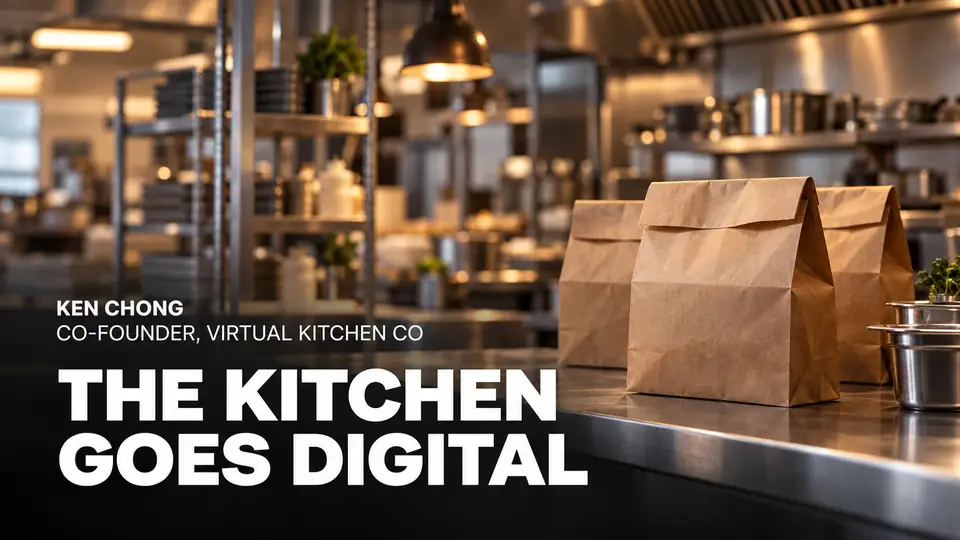
Ken Chong describes Virtual Kitchen Company’s approach to helping restaurants handle delivery and reach new customers.
August 11, 2020 · 21 min



About the episode
"It's really just about a platform or service that allows restaurants to continue doing what they do best. Right. Which is design great food and prepare great food while taking some of the complexity of the technology out and setting up the integration with couriers, delivery drivers, or these delivery apps, in really seamless way."
In this conversation, we talk with Ken Chong, the founder of Virtual Kitchen Company which empowers restaurants, chefs, and food entrepreneurs to take advantage of the delivery boom without enduring the challenges of building out additional locations themselves.
We talk with Ken about the food delivery economy, food entrepreneurship, and the role delivery will play in building the future of both food and restaurants!
Links
Chapters
Times follow the podcast audio. The video’s timeline may be slightly different.
- 00:00Welcome and introducing Virtual Kitchen Company
- 01:57Helping restaurants adapt to delivery
- 03:47What changed during the pandemic?
- 04:35The restaurant of the future
- 06:49Dining out and ordering in
- 07:37Data alongside culinary creativity
- 11:01Opportunities for food entrepreneurs
- 13:59The challenges of physical operations
- 16:38Consumer habits and the shape of cities
Read the conversation
Open the full transcript
CAMERON WIESE: Welcome to the Build the Future podcast. My name is Cameron Wiese, and I'm your host. I've always been fascinated by the ideas and sentiment that drove American culture in the 1960s with the space race. A culture of possibility with a mission to build things, and I quote JFK, not because they are easy, but because they are hard. It's this culture that seems to have been lost, and it's something that we want to bring back. With Build the Future, we're here to promote the ideas of those who not only see how the world can be better, but those who have plans to get there. It's our hope that these plans inspire you to think about the future you want to live in and create plans to go build.
CAMERON WIESE: Today, we're talking with Ken Chong, the founder and CEO of Virtual Kitchen Company. At Virtual Kitchen Company, they're helping restaurants adapt and thrive in the new food delivery economy. In doing this, they're building the future at the intersection of how we buy and how we experience food. Ken, welcome to the show. Thank you for having me. So I want to start with the basics. Tell me about the future you're building with Virtual Kitchen.
KEN CHONG: Yeah, it's sort of no secret at this point in time now that there's a huge shift in the food industry and consumer behavior, right? It's sort of the on-demand generation. It started with retail and Amazon, and now we're seeing it with food and groceries. It's sort of this generational shift in how people like to purchase and shop for goods, including food. And food delivery is really popular. It continues to grow in popularity. And with COVID, it's now that many cities become an essential service. And what we noticed looking at this space is that there's a lot of innovation that has to happen to sort of accelerate us to this world and this future. And so we started Virtual Kitchen Co. two years ago to build a platform to empower restaurants to thrive in the delivery economy.
CAMERON WIESE: Just to paint the picture for the listener, what exactly is Virtual Kitchen Company doing?
KEN CHONG: Yeah, I think the most consistent piece of feedback we heard from restaurant, whether it's restaurant owners or chef friends that we have, is that three years ago, less than 10% of their sales came through delivery. But today, especially in a lot of major US cities, it's 40, 50, 60% in some cases. And this was pre-COVID. And so I think the question we always got was, how do I do this well? What does this new normal or this new paradigm mean? And so we really set out to understand and talk to as many chefs and restaurant owners as we could to understand what does it mean to conquer delivery and to do it well. And it turns out it's very different than opening a brick and mortar, beautiful dining room.
KEN CHONG: It's a very digital first. sort of experience for consumers. And what that looks like is you take a popular restaurant in Oakland, for example, they can almost overnight go from just serving the nearby Oakland neighborhood to reaching customers in San Francisco, Palo Alto, San Jose, etc. It's sort of that instant expansion without having to worry about whether it's space, tech, or operations. It's really sort of this turnkey offering that allows for instant expansion and to bring great food to more people.
CAMERON WIESE: So effectively, it's a back end for restaurant owners who want to operate in a way without a
KEN CHONG: singular storefront. Yeah, that's one way to put it. I think it's really just about a platform or service that allows restaurants to continue doing what they do best, right, which is design great food and prepare great food while taking some of the complexity of the technology and setting up the integration with couriers or delivery drivers or these delivery apps in really a seamless way.
CAMERON WIESE: What are some of the things that have changed for you and the company with COVID?
KEN CHONG: Yeah, I think COVID's changed almost every aspect of life overall. For restaurants, we've sort of all seen the headlines in the news. It's really challenging. And I think it's more important now than ever, our mission to help restaurants thrive through delivery, because it continues to be the safer way or the only way for customers to reach the restaurant and sort of order the food they know and love to eat. And so we have noticed a lot of increased activity and interest in virtual kitchens from the whole restaurant industry since COVID. And we've been working really hard to try to help as many restaurateurs and chefs adapt and change and sort of adjust to this new business model as quickly as possible.
CAMERON WIESE: With this shift, what might a successful restaurant look like in the future?
KEN CHONG: It's a really good question. And I think it's going to continue to change at a really rapid rate. But what it looks like in sort of the near future is restaurants can instantly expand at a much higher velocity than traditionally what it took to build sort of a regional or a national brand. And what they can do is really focus on opening beautiful dining rooms and building these flagships for their standalone locations, but through delivery and digital channels reach way more customers right off the bat. The analogy that people often use is sort of Shopify and how retail has evolved to having a few stores, showrooms to really build the brand and the physical storefront experience, but reach customers in a very broad and wide way through digital ordering.
CAMERON WIESE: Oh, that's a fascinating way to compare it. Essentially allowing businesses to scale up from one flagship location to then distributing their food to people all over the state, country, and world eventually, right?
KEN CHONG: That's exactly right. That's exactly right.
CAMERON WIESE: The question that comes to mind from the virtual kitchen model is who thrives and survives in this future? What happened to the restaurants who may not be able to adapt or scale as quickly?
KEN CHONG: I think the interesting thing about our model is, and what we're building is, it's meant to benefit all sides. It's really meant to help restaurants sort of adapt and conquer delivery, take on delivery and grow it in a very, very easy, low friction way. for consumers, they get more selection, great choice, you know, faster, high quality food. And for everything else in the ecosystem, we hope to connect more, whether it's on the supplier side or even on delivery app side, just really connect the ecosystem and bring sort of a value add to them as well. So it's really a rare win, win, win all around. And I think for the industry as a whole, you know, the consumers have sort of spoken. They do like being able to shop and order food from their phone. And so there is going to be this transition period where restaurants kind of adapt their business model and improve and kind of take on this future. What does it end up
CAMERON WIESE: looking like for us as consumers? Traditionally, we go to restaurants, we go out to eat. How does being able to have more and probably better options through delivery shape the landscape,
SPEAKER UNCLEAR: especially in our cities? I think you'll sort of see the bifurcation of experiential social occasions of going out and eating with friends. But on the other end of the spectrum, because of the increased convenience and accessibility, you'll see a lot of people being able to order food and do it with great ease. And that probably looks like giving back some of their time, whether it's doing groceries or cooking and dishes, et cetera, or just having a better access to a variety of menus, whether it's certain diets or health crazes and trends, et cetera.
CAMERON WIESE: Yeah. With the stuff you guys are doing, it seems like one of the key insights that you have is access to data on what sort of food people are buying, what they're interested in. How do you see that playing out? And what sort of opportunities do you see being unlocked for quote unquote food entrepreneurs to start and grow and thrive in the restaurant space that traditionally has been probably a bit more challenging?
KEN CHONG: Yeah. We certainly use data to inform our decisions to a certain degree and as much as possible. Being a tech company, we kind of hold that as one of our core values. But the thing that is really important for people to remember is food is a highly sort of emotional, creative, culturally relevant need in people's lives. And that it's really important for us to never lose that. And, you know, right, it's not just utilitarian, functional sort of solution that we need to eat to sort of sustain life. I think that is too extreme of a way to look at it. He liked to obviously use data to inform our decisions, but always complement it with the sort of chef creative culinary, right? And sort of cultural elements that make great food relevant to people.
CAMERON WIESE: Yeah. I think that's super important because what we don't want is just a standardization across the board of like, you know, you got the same thing wherever you go in the world, just rebranded. That's right.
KEN CHONG: Selection is really important and that shows, right? It shows in how people decide on what to eat.
CAMERON WIESE: One of the terms I've heard used to talk about virtual kitchens in general is this kind of food delivery economy. Can you talk a little bit about what that is and what the future of that might look like?
KEN CHONG: Yeah, I think it's part of this broader trend of it's sort of the on-demand generation, right? We see this with groceries. We see this with actually CPG and retail goods. 15, 20 years ago, buying things online, that was sort of novel. And now it's become sort of a regular part of life because it's more convenient. And consumers have kind of gotten used to it. And I think when new technologies and new sort of platforms become available, it unlocks what is possible for an entire industry in terms of how new companies get created, how new brands get designed, and how new customer or purchasing experiences sort of happen. And I do think that in the next decade or so, the on-demand sort of digital first ordering from either a smartphone or a computer is going to be the norm for how people purchase and make decisions. And that applies to food as well.
SPEAKER UNCLEAR: Yeah.
CAMERON WIESE: What excites you the most about this future that you're working towards? Because you have insider access. You're entrenched. You're seeing all the trends. What do you think about? What excites you?
SPEAKER UNCLEAR: You know, one of the most exciting things about this space is just the rate of change, and not just in food delivery, but all the sort of adjacent verticals, right? So we see in autonomous vehicles and sort of sidewalk delivery robots in aquaponics, hydroponics and vertical farming, there's just so much everybody has to eat. And it's such a core part of people's lives. And there's so much work being done to try to either improve or or create new options available for people and consumers, that I think the rate of changes in this industry is incredible. exciting. It's a very optimistic future. And food being a core part of our lives will have great impact in far-reaching things from health to stress, et cetera. Yeah. One of the other things
CAMERON WIESE: that I find really fascinating is the ability for people to get food that is healthier and more tailored towards their personal dietary preferences. What else do you think is going to play a role in the consumer behavior around their choices of the foods they decide to eat, or like the opportunities for new businesses to create different types of food? Like you have cellular meats, you have the hydroponics. How does that all kind of get bundled together?
KEN CHONG: I think they're all very interrelated. And so there are many different ways that this can sort of play out or take shape. But I think just the ability to gain awareness and then have access to those, whether it's cellular meats or meat alternatives, it's much easier to learn about it digitally, whether it's through YouTube or Instagram, how people actually already consume and learn about new things today, but then quickly right there, be able to say, Hey, I'd like to try that. You know, the beyond burger looks really interesting. I'd love to try that right now. And so I think connecting the whole ecosystem and having everything move at a very rapid pace is going to create a lot of new opportunities and customer behaviors and how they think about food, how they decide on what to eat, how they track the calories or, or even certain food allergies or how it affects their health. So I think the once everything becomes more and more mature, the opportunities to kind of integrate and have things work in tandem are going to be really cool.
CAMERON WIESE: Yeah, I get really excited thinking about just the ability for people all over the country, all over the world to be able to get access to healthier foods that they previously didn't have access to. Because with the model you guys are doing, you don't have to have a big box retailer, There are more options for people. So they can be healthier. They can choose other things that previously they didn't have access to. I think that's really, really exciting. Can you talk about the opportunities for entrepreneurs in the restaurant space and what they can do now and what opportunities you see coming up in the coming decade?
KEN CHONG: Absolutely. I think with the platform we build, restaurateurs, chefs, and everyone in the food industry, that's sort of one of the most important parts of the ecosystem. And they're, you know, one of the most important stakeholders in our platform. And so we listen closely to feedback and we try to build for them. And one of the key things is the ease to innovate and create on the platform, right? So we work with a lot of great chefs, a lot of great brands, and a lot of great restaurants in the Bay Area and the U.S. right now. And we're always looking for new ways to make it easier for them to innovate, whether it's keeping up with food trends or more seamlessly updating their menus. And so I do think that with these new platforms and this new model, it's going to be much easier for the culinary industry to sort of innovate on top of. At least that's our goal, and they can hold us to that.
CAMERON WIESE: What are some of the challenges that you've been running into in this space?
KEN CHONG: Food and physical goods, anything in the physical logistics space takes time. I think compared to a purely software, whether it's a consumer app or SaaS enterprise software business, it's really a different type of company and business to build. It's very easy to flip a switch and sort of scale something if it's purely digital, like purely software. With I think anything that involves the physical world and real estate really needs to be planned carefully. And the opportunity cost of getting something wrong is much higher, right? Whereas in software, we talk a lot about A-B testing, we talk a lot about running experiments. And oftentimes, you can quickly try something. And if the outcome isn't what you want, you can quickly walk it back I can try something else. In a physical type of company, you really have to be mindful and planning sort of how do you expand? How do you grow? What is the next thing you do before just full steam
CAMERON WIESE: ahead? Yeah, no, that makes sense. When you're operating in the world of atoms versus the world of bits, it requires a bit more planning and thoughtful preparation. What are some of the
SPEAKER UNCLEAR: misconceptions about the work you guys are doing? Yeah, I think there's been a lot of different players in this space, in the overall food delivery space. And there's a lot being reported in the news of whether or not it's actually good for restaurants or small businesses because of the many different things that other companies are trying and things that are happening in the space. I think the thing that comes up the most when we talk to people is restaurateurs and chefs, just how surprised at how committed we are at building the platform for them first. And that was one of the main motivations as to why we got into the space. It's because we're seeing so much innovation and so much change in this industry, but not enough of it being done for the restaurant owner or the chef.
CAMERON WIESE: Yeah. Tell me more about that.
KEN CHONG: Yeah, I think really just the consumer behavior changed so quickly that restaurants weren't sort of built for this world. They were built for the brick and mortar, dine-in sort of experience. And as quickly as consumers rushed to delivery and on demand, it was really just the sort of rate of change and the need to adapt. So we said, hey, there's really a need here and a gap here in the market. can we go build a platform and a set of tools to help restaurants thrive in this new world?
CAMERON WIESE: Okay. Tell me more about the consumer trends.
KEN CHONG: Yeah. I think the key sort of macro insight there is millennials and Gen Z, it's sort of the on-demand generation, right? They grew up with smartphones and LTE and data. And that's just the norm of how you order shoes or order dinner and have it delivered. It's a very different model than I think even the sort of societal norms looked like 20 years ago. And with that, you see them sort of leading the way. And there's been a lot of focus on them as a consumer, right? New apps, new ways of payments, right? New ways of ordering. And we're sort of seeing this inflection point where when that becomes a big part of how consumers purchase, that the entire sort of restaurant industry has to adapt. It's very similar to how brick and mortar retail kind of went through this transformation over the last 15, 20 years, you know, from department stores and large big box retailers to really the thriving Amazon, Shopify sort of ecosystem, building these new tools, building these solutions to sort of unlock new innovation
SPEAKER UNCLEAR: and possibilities for entrepreneurs in space. Yeah. Our generation gets really excited about it. Like, cool. Everything's changing. Things are new. There are other people who aren't so excited about the change, but they're the people who still try and go to Nordstrom's to get their shoes. The world is moving in a different direction. That said, the implications of Amazon and Shopify on suburbs and even in our cities, it's changed the way people interact with malls. Those aren't really a thing anymore, especially now with COVID. And I'm curious how you see this kitchen model shifting the way our cities operate. That's a really good question. And I think a super
KEN CHONG: interesting topic that, you know, a lot has been done in urban planning and how, you know, with the sort of turnover of malls, what does that look like? You know, it's not an area that I personally specialize in, but it is, I think, a really interesting one to sort of see what cities look like five, six, seven years from now. I think the shift in retail will be sort of the primary driver of that. I think restaurants will continue to be a part of our community and sort of really, really double down on that experiential aspect, right? Even things like gas stations changing too with electric vehicles, right? Being less relevant. So I do think just at the macro level, I'm really excited to see how urban planning kind of evolves, but I wouldn't call myself an expert in that matter. So I remain curious to see what happens. And then on the topic of just how food and cities come together, one thing that I'm super interested in, but again, I'm no expert in is sort of how agriculture evolves, especially with vertical farming and some of these meat alternatives. How does that just change what has been a massive industry, but largely stagnant or, I guess, undisrupted for the last century? And so, you know, we hear a lot of stories about food being produced closer to where it's going to be consumed. And that way you sort of bring down the impact of the environment and transporting it.
KEN CHONG: I think that's really exciting. I don't know how it's going to play out, but I'm really optimistic about how that can really help everything from global warming to just beautiful, more aesthetically pleasing cities.
CAMERON WIESE: Thanks for joining us for this episode of the Build the Future podcast. If you're interested in learning more about Virtual Kitchen Company, you can find them on the web at virtualkitchen.co. If you want to learn more about Ken, you can follow him on Twitter at Ken underscore underscore Chong. Then if you want to experience this future for yourself, head on over to localfoodhall.com, where you can order from a virtual kitchen company restaurant. And if you're an entrepreneur, chef, or restaurant owner, and you're interested in getting involved in this new food delivery economy, reach out to the Virtual Kitchen team at hi at virtualkitchen.co, and they'll get you taken care of. Lastly, if you're building, want to get support, or simply want to hear about specific topics, ideas, or from certain people, shoot us an email to hello at buildthefuturepodcast.com and we'll see what we can make happen. Thanks again for listening, and that's it from us. Until next time, go build!
More episodes
All episodes Evan Goldin — Parking, Public Space and the Future of CitiesEvan Goldin argues that parking rules and pricing shape housing costs, travel choices and public space.
 Jason Crawford — Progress, Prescriptive Optimism and Useful KnowledgeJason Crawford argues for understanding and appreciating past progress while actively working toward future improvements.
 Patri Friedman — Charter Cities, Law as Code and Governance ExperimentsPatri Friedman lays out his vision for charter cities that experiment with laws and services while competing to attract residents.