

Build the Future Podcast
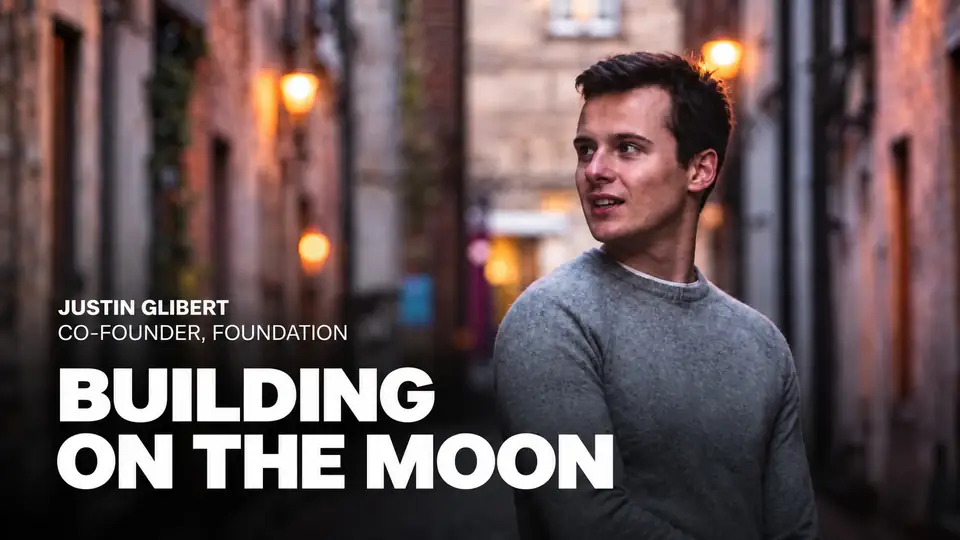
Justin Glibert — Factories on the Moon
Justin Glibert imagines lunar factories that use local resources and eventually make their own equipment.
November 24, 2020 · 37 min



About the episode
In this conversation, we talk with Justin Glibert, Founder and CEO of Foundation, about building the first moon factory. Foundation is designing self-replicating robots, which will use resources from outer space and the moon to replicate and manufacture items and new factories. This will provide a much-needed depot for those traveling in outer space. They will be able to stop by the moon and purchase or make their own needed devices for their space travels, without the need to return to earth. Justin is designing a way for us to live a “Star Wars” life, where you can take vacations on Mars and other outlying planets. If you have been dreaming of intergalactic travel, this is the episode for you.
Links
Chapters
Times follow the podcast audio. The video’s timeline may be slightly different.
- 00:00Welcome and introducing Foundation
- 04:28Energy, resources and industrial scale
- 08:11The first lunar manufacturing steps
- 12:42What self-replication would involve
- 17:31Customers and a market for lunar infrastructure
- 22:36Why attempt this now?
- 25:32Products and possibilities beyond the first factory
- 31:37Dependencies and unsolved engineering work
- 33:59Other technologies Justin wants to see
Read the conversation
Open the full transcript
CAMERON WIESE: Welcome to the Build the Future podcast. My name is Cameron Wiese, and I'm your host. I've always been fascinated by the ideas and the sentiment that drove American culture in the 1960s with the space race. A culture galvanized to dream about the possibilities of tomorrow. Whether it's food, transportation, cities, biology, or anything else. It was this cultural mindset rooted in optimism, that the world tomorrow would be better than the world today. A mindset where people were compelled to build things, and I quote JFK, not because they were easy, but because they were hard. It's this desire to build and to dream that seems to have been lost, and something we're here to bring back. With Build the Future, we're here to promote the ideas and stories of those who see how the future can be better and promote their plans to get us there. It's our mission to get you to dream about the possibilities of tomorrow, to dream about the future that you want to live in, and inspire you to go build.
CAMERON WIESE: Today, we're talking with Justin Glibert, the founder and CEO of Foundation, where they're building self-replicating factories on the moon. At Foundation, they're building towards a future where space travel, space commerce, and space manufacturing are commonplace, enabling humanity to explore the galaxy. Let's jump right in. Justin, thank you so much for jumping on here.
CAMERON WIESE: I'm excited to have you on the podcast today. Let's start with the basics. Tell me about the future you're building with Foundation. What's the vision?
JUSTIN GLIBERT: So we are building a future where the massive engineering projects you can find in science fiction are doable. And by massive engineering projects, anything like from space elevators to Dyson spheres, as long as like your fancy new toy that you want to build doesn't record new physics, let's say a teleporter, will be able to build it. So that's the future we're building. Essentially, if you want to picture it, you close your eyes and you think about a future where you can live in space stations, you can have your own spaceship, you can have your own house on Mars, you can go visit floating cities like of Venus during your vacations if we still work. Otherwise, it might just be vacation all the time. That's like the future we're building. But essentially, to be able to do that, you need to crack two things. One is you want to be able to leverage the immense amount of materials and energy in our solar system. Because unless you can do that, we'd be restricted to what we can do on Earth and the materials and energy we have there. And so that's not going to work out. So one, being able to leverage the immense amount of materials and energy in our solar system. Two, being able to scale manufacturing exponentially. So that's what foundation is working on solving those two problems. And I'm going to explore both of them because it might be a bit abstract right now. So the first one is about energy and materials. There has been an interesting energy stagnation since the 1970s. So if you graph watts per person per unit of time over time, it used to be an exponential, but it started stagnating in the 1970s.
JUSTIN GLIBERT: And that led to a lot of weird things happening. So the first thing is there was a huge shift when it comes to what engineers spend their time on. So instead of writing the exponential and inventing bigger, faster, and louder toys, like we have done until the 1970s, we're now optimizing for efficiency. So we don't build things that require more energy because deep in society, there is this idea that the total amount of energy we have is extremely limited. And so we all act like very poor people that need to optimize their budgets, their energy budget. So we can't dream big anymore. And you can see that like the joke I usually tell people when I want to illustrate this idea is that the washing machines we have right now, they take longer to wash your stuff than 10 years ago or 20 years ago.
JUSTIN GLIBERT: Because we're just working on making them more energy efficient. And we're getting really good at this, but like all the engineering time is spent on that efficiency problem and not on just let's just get more energy and be able to build bigger toys. And that's that had like strong impacts on society. So essentially, what we are trying to educate people about is that this idea is flawed. And it's also quite a very recent one because there's a humongous amount of energy and matter in our solar system. Just the only thing is we have to be able to use it. And so if we can use that energy and that matter in the solar system, we'll be able to rediscover abundance again. So, yeah, that's like the first problem.
JUSTIN GLIBERT: Can we access all the matter and energy in the solar system? Because travel within the solar system is essentially solved. Like in the next five years, we'll have the SpaceX Starship. We'll be able to go like anywhere for like quite cheap. The only thing is can we use like all those like fancy resources? But that's one side of the problem, right? You need access. But then the second thing is you need to be able to do something with it. And I want to explain a bit like what factories do. And there is this interesting fact about factories, no pun intended. So right now we're like with factories that can make stuff like a Tesla Model S, right? And the scale you get from those factories.
JUSTIN GLIBERT: So the fact that you can build a ton of cars from one factory, it drives prices down, right? The problem is that factories can't be built with factories. So factories are still designed and built by humans, which means that they're extremely expensive. And so if we can manage to build factories that can build factories, we'll be able to manufacture exponentially, right? Because you have one factory that builds another one, and you have two factories, and then you have four factories, and eight, and 16, and 32, and you ride that exponential load. So those are the two things. Can you leverage the immense amount of materials and energy in the solar system? And then can you kill manufacturing exponentially? And those are the two things we work on at Foundation, essentially. And when you can do that, you will have a future that looks a bit more like Star Wars and a bit less like now. And that's what we're really aiming for. So there is a lot to digest. So I'm just going to wait until they just ask me questions.
CAMERON WIESE: There's so much stuff there. Yeah, there's an incredible amount of different paths we can go down. What are some of the changes in energy? What do we need to capture? Is this like a nuclear sort of thing? Is this a, because we've made things very efficient, but it seems like we need to unlock, we need to move beyond our current source of energy to then go the next thing. Can you walk me through what that looks like?
JUSTIN GLIBERT: So there is a solution that doesn't require us to leave Earth. But the problem is that it's a failure of the nerves and that's like nuclear. So I'm going to say things that are a bit controversial right now, but I don't care. So nuclear is the way to literally stop using fossil fuels right now. if we just decided to trust it a bit more than we do right now. So the problem is there are scars in society from Chernobyl, from Fukushima, and even Fukushima was actually not that bad. It was just like over-mediatized. And we have scars about those events. And so now we just don't want to invest into those things anymore. The thing is, right now, we have like very tiny and very safe nuclear reactors that we could build in factories, and that would literally solve all our problems.
JUSTIN GLIBERT: So one crazy fact, like among many, is that if your Boeing could fly using a nuclear reactor, you would refuel with 17 dollars at the current price of uranium instead of one third of a million so you could like have plane tickets that would cost two bucks like a bus right because the problem is the energy but we don't want to do that because we're too scared we're all too scared about it and so i think that building stuff and doing science is much easier than convincing people to forego stupid ideas so that's what we want to do is basically we want to collect the immense amount of solar powers that you can get if you're in deep space. Because the problem with Earth is that it's not a problem, but the atmosphere and a bunch of other processes greatly reduce the theoretical efficiency of solar panels. So if you can get solar energy outside of Earth and beam it back, this is one key to have energy abundance here. There are plenty of other things you can do, but this is one of the things you can do.
CAMERON WIESE: So with Foundation, the aim is to then ultimately capture the energy from solar sources instead of trying to dwell on like political mess around nuclear.
JUSTIN GLIBERT: And the thing is, I'm pretty sure that if we manage to crack fusion, people would be scared as well. And they'll just say, oh, fusion is dangerous too. So we don't want to do it. So I think that it's just so hard to solve people problems. So we don't want to solve people problems. We want to solve science and engineering problems because those are straightforward if you know how to do it.
JUSTIN GLIBERT: So yeah, solar energy, essentially. But like what foundation is doing is I've been like explaining all those things. But what we're doing is we're building the infrastructure and the means to be able to do that. I don't see foundation in 30 years as like a mega corp, like in the cyberpunk movies where we own everything and we're the bad guys. This is not what we're building. We just want to build the, I don't know if your audience know AWS, but it's like Amazon Web Service. That's what like most startups run on. We want to build AWS of space. So we want, let's say some people want to mine helium three on the moon because it's like material for fusion. Instead of spending billions of dollars in capital to get the infrastructure to do so, they can go to the moon and start renting stuff from us. So they can render roads or landing pads or solar panel arrays or robots or 3D printers. And they can just start doing their stuff for cheaper. And so that's what we're doing, essentially.
CAMERON WIESE: So the idea is to create the manufacturing hub on the moon.
JUSTIN GLIBERT: Exactly. On the moon first, and then on Mars and in orbit and everywhere. Because it's essentially the same technology. But you have to start somewhere. I've been talking about the 50-year plus plan of foundation and why I'm doing that, deeply why I'm interested about this company. but we can go into the actual like master plan details later if you want.
CAMERON WIESE: Let me pull on that thread. What is that 50 year? Why for you? What gets you like? Why are you so excited about this?
JUSTIN GLIBERT: Yeah. So as I said that like we were trying to solve the two problems I mentioned at the beginning, access and exponential manufacturing. So the 50 years plan is we start by allowing people to build stuff on the moon. This is like the next five years. And the reason we want to do that is because right now all the space missions are exploratory in their nature we're never we never try to stay somewhere and the reason we we don't do that is because as long as you have to ship every single piece of infrastructure to where you want to stay you're doomed there is no way to do that and like one way to delay that problem is what SpaceX is doing which is reducing the price of shipping stuff to space but as long as you have to pack things in a rocket you will be doomed. You won't be able to build like a city on Mars. And so what we're doing is we're building a company which can get revenue in the first five years, as opposed to one massive Apollo project that would require 300 billion from governance, because nobody's going to do that anyway. We have
JUSTIN GLIBERT: this viable economical plan for bootstrapping space manufacturing, because that's the first step, right? Before thinking about exponential manufacturing, before being able to think about asteroid mining, you first need to build something, like a tiny thing off Earth. And that's where you start. And we're focusing on one class of product, which is heavy, dumb things. So by heavy, dumb things, tanks, radiation shields, beams, whatever, anything that is made out of one or two materials has no moving parts and is very heavy. And the reason we want to build very heavy stuff is because those are the most expensive pieces of infrastructure to ship there. So you have your huge, let's say, radiation shield that you plan to put on top of your inflatable habitat. This probably weights like a metric ton, which means it's going to cost you $10 million in shipment, even with super optimistic starship numbers. And so our business plan is if we can build that radiation shield on the moon and then sell it for a million dollars, which would be like ridiculous. Like why a million dollars for radiation shield? It's for settlers.
CAMERON WIESE: Tenth of the cost, right?
JUSTIN GLIBERT: Yeah, it's a tenth of the cost. So they better buy it from us because it makes their whole adventure cheaper. And so that's the plan. We start by manufacturing very heavy stuff on the moon. And the way we do this is by extracting metal from lunar dust because lunar dust is actually 30% metal.
JUSTIN GLIBERT: So we extract metal, we make powder out of it, and then we print it using massive 3D printers. But those 3D printers are actually not boxes. They're mounted, like the printing head is mounted on a rover. So your build size is unlimited. As long as you can drive somewhere, you can just print it in one go. And because the gravity is only one-sixth there, you can print a huge tank on the floor and then you can raise it up. And it's only one-sixth of gravity, so you don't need big robots. You can actually have tiny robots that would pull that up. So that's the plan. Extracting metal, printing it, that's like how we make money in five years. And then from that, we expand, we increase the output space, the kind of things we can build with our factories. So we start with metal, but then we print motors, we print electronics. So we start like building our own rovers and our own manufacturing machines on the moon. For us, if we want to scale our operation, we don't have to ship everything anymore. We can ship 1% of the mass and the 99% of the mass remaining will be built there. So we scale on the moon and then we build the AWS of the moon. And then after that, it becomes mega exciting because after that, I think we'll have so much revenue that we can actually start investing heavily into self-replication, which is the second part of the plan. How do you build exponentially?
CAMERON WIESE: Okay. So tell me about that.
JUSTIN GLIBERT: So self-replication is such an interesting concept. It's when you say self-replication, you're like, okay, what does that even mean? Life, as an example, has that property. If you put a cell in the right environment, it will build copies of itself. and it's mega powerful because that's how like life is everywhere on earth right now because like thermodynamically the probability of having something like a cell is extremely low because there are like huge like gradient of temperatures and stuff like that but as soon as something is can self-replicate the probability of seeing more of it goes up exponentially right because it just like builds copies of itself and we can't do that with machines right now like you can't put a robot in the sahara and then wait 30 days and then there's another robot there it's incredibly complicated and when i say simplification like we we don't plan on doing that just having a rover that would build a copy of another rover because it's immensely complicated what we see instead is entire systems of robot that together would be able to build copies of themselves so like a team of 50 robots and a bunch of machines and like drilling equipment could after 30 days build a perfect copy of the entire base and then just next to themselves and so that's what we're working on And it has to start very early. Even if it's something we plan on doing at 100% in 10 years, you want your early designs to always imbue the idea that every single piece of your robot, at some point, will need to be built by the rest of the robots.
JUSTIN GLIBERT: So you can't just say, oh, we're going to use super fancy microprocessors, and we'll deal about them later, because I don't see us having a clean fab on the moon anytime soon. Even in 100 years, it's very difficult. So you need to think about that as well. So that's what self-replication is. The prospect of machines building copies of themselves and the pros of having such machines, it's very clear. If you can put a robot in the right environment, then you scale exponentially. So that's the second part of the plan.
CAMERON WIESE: So it's a little bit like on a higher up level than like the molecular nanotechnology sort of thing where, because I know there's like the Feynman replicators, it's like cellular level. So this is, you have to go one level up.
JUSTIN GLIBERT: It's like a macro self-replication. So you have like nano self-replication. Because the thing is, like the prospect of nanotechs is that if you can build atomically precise machines, then it's super easy to self-replicate. You just put the atoms in the right place and then you have a copy of yourself. But nanotech is very hard and it's harder than what they expected. 30 years ago, they thought we would have nanorobots doing surgery today, but it's not the case because nanotech is very hard. So we're basically approaching the problem just like SpaceX, right? We just say, okay, this is an engineering problem. No need to start doing fundamental research. We just take the technology we have today and we just bang our head on the problem for long enough with limited resources.
JUSTIN GLIBERT: And we'll do it. We'll manage to do it because there is nothing that fundamentally prevents it right now. There's nothing that prevents a gigafactory from being able to build another gigafactory. It sounds ridiculous when you think about it, but it would be possible. We can do that. We could do that right now. The thing is, it would require such a huge research project and budget that nobody is ready to invest into that. But because it's such a key part of our plan and because we can succeed even if we don't have self-replication yet, we'll just grow with that. And the thing with self-replication is it's not Boolean. It's not, oh, we don't have self-replication and then one day you wake up and finally you crack it and then you can be rich. It's just as time goes on, more and more parts of our systems will be built in space using the free resources funder. And less parts will have to be shipped from Earth on very expensive rockets. and and that means that all margins and the kind of things we can offer at a low price will grow as time goes on so that's the plan
CAMERON WIESE: it's arbitraging the free resources in space to go build all this stuff instead of having to pay someone to mine it on the earth okay i want to jump back to the like the moon so we're going to the moon nasa has their artemis project what's going to drive the first group to stay on the moon and start to manufacture stuff there like how do we get to a point where people are coming to foundation and hey cool we need you to build this like how do we get to that point?
JUSTIN GLIBERT: This is a good question. So the thing is, there's a huge chicken and egg problem with the moon where everybody says, okay, like the moon is such a great place to build an industry on because the materials everywhere. You don't have to mine. You could just take a bucket and then you fill it up and you have 30% of iron. That's amazing. But for this industrial hub to start, you need money to be invested in it. And for money to be invested in it, you need like clients and for clients to be there you need an industrial hub so you have like a huge like cycle like you have this like this vicious cycle where nobody can start right now because there's nothing to do there economically speaking what we're banging on right now is the fact that some very rich people really really want to go to mars i'm not gonna say who but like one guy in particular really wants to go to mars and he's gonna do anything like everything he can to go to mars and the cool thing is that the moon is the perfect playground when it comes to learning
JUSTIN GLIBERT: to collaborate, live and build in deep space. Because the moon is three days of flight away from us. You can shoot a rocket to the moon every two days. You don't have to wait for a new launch opening to open. And so it's amazing, right? You can just go there and do stuff. So the moon is a playground. And so we expect people to just say, okay, there is no way for me to actually get a business return on this yet, but I will invest into building moon bases. And the cool thing is NASA, again, don't know if your audience is familiar with that, But NASA switched from a science. They're still doing science. But what they do know is they do capital allocation. So they get a lot of money from the government and they give it to private U.S. companies that do stuff.
JUSTIN GLIBERT: So as an example, they don't build lunar lenders anymore. So this company called Astrobotics just got $140 million check from NASA to build a lunar lender. The way we can fund what we're going to do, we'll rely heavily on venture capital, but we'll also rely on grants coming from NASA. because what we're building is literally in their like RFC documents. They really want someone to be able to do that. They just don't have anyone yet. So if we can send a tiny like demonstration mission to the moon funded by ourselves, or even if we can prove it on the ISS or on Earth, it really depends like how convincing we are. Worst case scenario where they don't trust us until we print a tiny ball on the moon.
JUSTIN GLIBERT: As soon as we can print that tiny ball on the moon and bring it back, then one, we'll get a lot of money from them. Two, I'll be able to sell that tiny ball on eBay for millions of dollars because it will be the first ball manufactured on the moon. My plan is actually, I don't know if you read this book called Seven Eves. It's a really good book about the moon and crazy stuff happening there. And the beginning of the book starts by saying that there are a bunch of billionaires in Silicon Valley that are bidding on those paperweights that have been manufactured on the moon. NASA can fund this if we can prove it works. Venture Capital will fund this if we can prove that we will create a market, essentially.
JUSTIN GLIBERT: Just by having us on the moon and like us renting infrastructure to other people, new businesses will start because the capital expenditure will go from having to spend a billion dollars to 50 million. And that will open like a lot of doors. So the problem right now is if you ask me how big is the market, I don't know. But I know because it will be a market creating as opposed to just like us coming into a market that has not been disrupted and capturing the entire market. It's going to be a new thing. So that's the plan. We start small by demonstrating things until everybody on Earth is convinced that we can do it.
CAMERON WIESE: I feel like one of the misconceptions here when people would think about this, like, how are you going to get to the moon? Oh, like, who are you going to sell this stuff to? The real point is, no, there's massive interest in doing stuff in space, but there just aren't, there's not really a clear path to get there. What other misconceptions do people have about what you guys are trying to do?
JUSTIN GLIBERT: First, like, when we tell people that there will be fellow humans on the moon in five years, they don't trust us. Like, why? Like I thought like going to the moon was something we used to do back in the days, but we don't do that anymore. And they were right until now. I don't know. It's because of the new NASA administrator. This guy is amazing. You should check him out if you don't know him yet.
JUSTIN GLIBERT: But as I said, they changed the way they operate from funding everything in-house to allocating capitals to private companies. And that really unlocked a lot of growth because the government is finally realizing that they're very good at getting money from taxpayers because they can force taxpayers to give them money. but then they're not that great at building stuff themselves so what they do is they give it to experienced technologists and entrepreneurs that are working under massive constraints people like musk right with spacex he's doing something that nobody else has done before because he's working under real constraints that are coming from the real world as opposed to just like having unlimited money from the government and so they realize that like we should actually give money to other people and and know that they've been doing that the space is like again no pun intended, is heating up very fast.
JUSTIN GLIBERT: And people don't realize that. We, in five years, I don't know if you have a five-year-old kid right now, when he will be 10, he will be able to watch YouTube like a moon landing, probably. And that's incredibly exciting. And people don't realize that yet. But it will become more and more apparent as time goes on. That's the biggest misconception.
CAMERON WIESE: And it's primarily driven, would you say, by this new change in funding. But I think it really is Elon. It's like, I'm going to Mars.
JUSTIN GLIBERT: Yeah. Yeah, it is who came up with an interesting business plan. He saw that there is money to be made in satellites, not with Starling, but even before just by sending satellites to space. And he was like, OK, we're still sending stuff with Soyuz rockets from the Russian. There are ways to make this cheaper, so I will. And so he found a viable business plan. And we're trying to play the same playbook where at the very beginning, our clients will be the government and people who believe in this. And this is how we would bootstrap our company. We don't start by saying, okay, like we're going to build Dyson spheres because there is no way to build Dyson spheres yet. Instead, we focus on something that will have a market very soon. And that's the plan we have.
CAMERON WIESE: Let's jump back a little bit. Let's talk about the actual space manufacturing process, right? So you're building, you're 3D printing the metal, you're using the iron from the lunar dust. I know you mentioned in your lunar manufacturing and research for 50 years, but no one's really come up with an efficient way to do it. So one, what's changed? And two, how are you thinking about it differently than people have thought about in the past?
JUSTIN GLIBERT: First, it has been researched for a while, but since the 2000, NASA essentially stopped working on this. So the reason why the designs that are in the literature are so much more complicated than the one we have right now is because they didn't exploit the new chemical reactions and the new additive manufacturing techniques that have been developed recently. Additive manufacturing means putting a layer of stuff until you have the piece you want. That's commonly called 3D printing. and it's called additive manufacturing because it's to make a contrast with subtractive manufacturing where you start with a block of iron and you mill it until you have the piece you want.
JUSTIN GLIBERT: NASA designed a, they actually designed a self-publicating wound base in the 1970s, which is something that most people don't know about. There's this huge 500 pages PDF on the net that explains how they were going to do it. And when you read that PDF, you see this huge graph that they call a manufacturing graph and it's extremely complicated. Like you would need five different chemical reactions in a row to extract the iron and the titanium and the aluminum. And then you would have to forge it to cast it like Game of Thrones style. And then you would get like your pieces. But of course, this is like super complicated. There are so many moving parts, things would break, it's just not doable. So the reason why our thing is so much simpler is because one, we're using chemical processing systems that are very new. And by very new, it's still 20 years old.
JUSTIN GLIBERT: But like in the industry, this is very new. This is like extremely new. I'm not going to reveal or our secret sauce right now, not because I'm scared that other people will do it, just because we're not ready to commit to anything yet because there are like a lot of stuff we have to explore. But there is this thing that is commonly described as a universal chemical processor in the literature. And this is like very new. This is 20 years old and it allows you to basically remove the things you don't want from the minerals with the metal inside. So when I say that moon dust might be like, I don't know, 15% iron, when you take the moon dust, you don't have pure iron.
JUSTIN GLIBERT: You have iron coupled with oxygen and stuff like that. And so you need to use chemical processors to remove those things until you end up with the pure metal. And so part of the innovation is that we put the pieces of the puzzle together. We went very deep into the electronic chemistry research. And we have a way to do that in a box instead of something that would fit in a house. It fits in a bathroom instead of fitting in a house. So it's much better. And then the second thing is instead of having to do casting and forging and welding and stuff. We can just use all the research that's been done in additive manufacturing and use the fancy new 3D printers we have now to print the whole thing in one piece. So those are the two things that when combined together allow us as a startup to build something that is radically better than what had been designed 30 years ago.
CAMERON WIESE: Yes. Okay. So it's 2030 and we're on the moon and foundation is manufacturing shields and lunar bases. And tell me about what are some of the other things that you think will be manufactured first five, 10 years that you're on the moon? And then what are some of the things that will get created in the future, maybe longer term?
JUSTIN GLIBERT: Yeah, this is like the coolest question. So short term, it will be what I call critical pieces of infrastructure. So anything that is required if you want your astronauts to survive on the moon for a substantial amount of time. So the most important thing when you're on the moon is protecting yourself from radiation and cosmic rays. And the way to do that is having radiation shields. And those have to be heavy. There is no magic trick where on Earth we could build a super light radiation shield and just ship it on a rocket. Those have to be massive by design because that's how physics work. And so those will be primarily manufactured on the moon.
JUSTIN GLIBERT: The second thing is a lot of companies right now have as their game plan, they want to extract the water on the moon and make proponent out of it. because when you do the rocket math, it is actually better to get propellant on the moon and then put it in cislunar space. So cislunar space is the space between moon and earth. So if you have propellant in cislunar space, you can refuel your rockets in orbit. And so you can go to Mars or like wherever you want to go with a full tank instead of a tank that is like one third empty. And so the way, as an example, SpaceX is solving the problem is they want to shoot four starships with a tiny bit of fuel left into their tank every single time to refuel a Starship that is in orbit.
JUSTIN GLIBERT: And then after four or five launches in a row, they have a Starship with a full tank and then they can go. But it would be much simpler to just have prop land there. So a lot of companies want to go get the water, electrolyze it to separate the hydrogen and the oxygen and transport the hydrogen, which is essentially rocket fuel, to just ruin your space. The problem is all those people will need a lot of infrastructure because moving hydrogen around is very hard. So what we will do is we are going to manufacture a bunch of stuff that would be very useful for them, starting from roads to fuel cells where they can put their hydrogen to. This is like something I didn't want to say, but we're also planning to build photovoltaic areas because the cool thing is the moon is mostly silicon.
JUSTIN GLIBERT: So we can actually build solar panels there, which is very exciting. It's not part of the first few steps because it's much harder than just printing metal. but if we can build solar panels using i don't know if the solar panel is 99 of it comes from like the moon and one person has to be shipped then that'd be amazing because then we can actually scale energy production on the moon so yeah those are the things we plan to do at the beginning but the really cool part of this question is okay what happens afterwards and something i'm incredibly excited about is building a huge lunar shipyard so we want to start building rockets and and ships, starships on the moon as well. And that is going to be mad.
JUSTIN GLIBERT: This is going to be fire, man. Because when you can build massive spaceships off Earth, you're not stuck with the Earth gravitational fields. So you can build the spaceships in The Martian and in Star Wars instead of rockets you see right now because you don't have to escape the atmosphere. That's step three. And this is the coolest one because this is really Star Wars. We'll be able to build, maybe not the Death Star first because it's pretty big, but we'll be able to build X-Wings and Storm Destroyers in orbit around the moon that's that's what we do afterwards in 15 years
CAMERON WIESE: and then so then but that's on the moon and then if we extend that out the idea is to set up similar sorts of manufacturing bases on mars
JUSTIN GLIBERT: and then the thing is mars is really far away so we have to start with the moon but you're right mars and i think we'll see people on mars in the 2030s
CAMERON WIESE: what's the deal with mars it's like why is it so exciting okay cool we're becoming interplanetary species
JUSTIN GLIBERT: Mars is exciting because one, there is an atmosphere, which means that a bunch of stuff are actually much easier to do. And it's less deadly. Okay, it's less deadly. If you remove your helmet, you die on the moon, just like you die on Mars. But if we graph it, I still think Mars is less deadly than the moon. Because an atmosphere allows you to do a bunch of cool things. One is you don't need radiation shields as much as you need on the moon. So the moon basis will really look like underwater basis. And so you will live on the moon just like you live in a submarine. While on Mars, we can actually build huge domes and stuff like that, where you could live a normal life if there is such a thing as a normal life. And the other cool thing with Mars is there is actually a way to terraform it.
JUSTIN GLIBERT: While you could terraform the moon, but the problem is that when people will look up, they will see the moon and it will have a very different color and it will look very different from what it looks like today. And so maybe we want to keep the moon as it is right now and not change it too much because it's a sacred resource. While Mars is like, it's so far away, you don't really see it. So we can go there and do crazy stuff.
SPEAKER UNCLEAR: It's a bigger sandbox.
JUSTIN GLIBERT: That's why it's so exciting. It's a bigger sandbox. And also there's a larger variety of things you can get from the Mars crust. The moon is good because there's a lot of metal there, but there are a lot of things that are missing. And most importantly, carbon. There is no carbon on the moon. So carbon is essential for a lot of stuff, plastic, polymers, steel, and for agriculture and stuff. So you really need carbon. and you don't have it on the moon. So the moon is really going to be an industrial zone. I don't think people will go there and have like their summer house on the moon because it makes no sense. It's going to be very uncomfortable to live on the moon. Mars can one day look like Earth. So that's why it's so exciting.
CAMERON WIESE: Or we end up spinning up one of the Stanford Tauruses. We get one of those built on the moon and then we're inhabiting this floating spaceship thing.
JUSTIN GLIBERT: Yeah, we could do that too. Like space stations are yet another direction. But the cool thing is all those things, especially space stations, required cracking the two problems I talked about at the very beginning of the show, which is access to resources and exponential manufacturing. If humans in spacesuits using space jackhammers have to build space stations themselves, it's never going to happen, right? Because you want robots to build those at massive scale. And so we need to crack those two problems first for any of those things to happen.
CAMERON WIESE: This is so exciting. What other innovations need to happen to enable those two things? I know you guys are working on your plan, but what are some of the other things you're counting on being developed for the next decade to get there?
JUSTIN GLIBERT: We really count on SpaceX becoming the boss of the solar system where you can go anywhere for very cheap. Because if this doesn't happen... Okay, so the problem with designing things that are supposed to work on other celestial bodies is that your feedback loop is not tied at all. You spend five years designing something and then you send it to the moon and it blows up and it doesn't work. And then you're like, okay, we don't really know why it blew up, but we have to start from scratch. So that will change when going to other places in the solar system will become very cheap. And so this is something we were really counting on. Like we're believing Elon because we need them to make things cheaper.
JUSTIN GLIBERT: So that's one thing that is very obvious, but it is required in the plan. I would say the second thing is that there are a bunch of boring things I could go into. We need like better materials. There is like a bunch of material engineering that needs to be done. There is a lot of work that needs to be done in safety critical softwares. So again, this is super boring. But as an example, like a lot of rockets and rovers didn't work because like those things require millions of lines of code. And it's very easy to, because you can't really test them. You can't just try it and see if it works. You have to send it there. And so there are a bunch of new programming languages that are being built right now where you can have guarantees about the execution of your program.
JUSTIN GLIBERT: And so you can guarantee that a bunch of bugs will not happen and stuff like that. So we need more research into this because I don't want the future. I don't want like, it would be hilarious to think that, okay, you're on a space destroyer. I hope there won't be wars. So they won't be called space destroyers. But you're like on a super big spaceship, like built by us or built by other people. And there is a bug and the entire spaceship just like dies or like crashes. And you have a blue screen of that because your starship is running on windows. You don't want that to happen. So we need to do a lot of work when it comes to safety critical software. And that's like a very unsexy thing, but it needs to happen.
JUSTIN GLIBERT: So that's like another thing I can mention that most people don't think about. And then maybe the last thing is we need to be able to 3D print motors. So electric motors right now cannot be 3D printed for various reasons because the design doesn't fit with the constraints of 3D printing. But as soon as we can 3D print motors, we have checked two of the three boxes. Because what is a robot? A robot is a motor and motors, like a bunch of motors, with a chassis and with sensors and electronics. So if you can build a chassis and the motors, you only have one tiny thing left in terms of mass. That's the power electronics and the sensors. and those will take longer to be able to be built off-world using 3D printers, but we really need to find a way to print electric motors. Like short-term, this is something that needs to be researched.
CAMERON WIESE: Outside of the work you're doing at Foundation, what excites you the most about the future?
JUSTIN GLIBERT: Okay, there are like two things that really excites me. One is that robots will finally deliver. And since I've been a kid, like I've been waiting to get my robot dock and it never happened. And the reason it never happened is because we underestimated whole heart perception and manipulation was for robots. But we're finally reaching a stage where being an AI engineer researcher is a cool career for kids. And so we're seeing like, and again, everything follows an exponential curve, either up or down, but like we're seeing AI research following an exponential curve. That's very exciting because we have robots today.
JUSTIN GLIBERT: They're just stuck in factories because they can't go out and interact with humans. But we're getting there. And that's like super exciting because first it will allow a huge class of people to be more independent and it doesn't touch me right now but a bunch of old people will be able to just go around in their house and have robots carry them to places they can't go and do things they can't do anymore and this is like very cool because i think living in when a senior home with a bunch of people you don't know sucks because you don't you're not in your house anymore and it costs a lot of money and it's just like very stressful it's cool that robots will finally deliver that's one thing i'm extremely excited about the other thing i'm extremely excited about is building living machines man i can't wait for my house to eat my car when it's not working anymore and then digest it and repair itself and stuff like that we're slowly understanding how cells work because everybody is like the fancy thing to talk about at cocktail parties is like consciousness and like how does the brain work and blah blah blah those are like it's much harder than what we can do right now right now we're focusing on very simple problem how do cells work we still don't know we still don't know how they work completely, but we're getting closer. And so when we will be able to program cells the way we program computers, it's going to have a massive amount of impact. Me, myself, even people that work in that field can't even picture how the world will look like when we have living things everywhere.
CAMERON WIESE: How can people support you and the work you're doing at Foundation?
JUSTIN GLIBERT: Right now, what you can do is you can tell all your very talented engineering friends that we're hiring. We're recruiting an A plus team. So we really need extremely smart people and people who really believe in the vision to just hit me up and send me a message on Twitter. But yeah, the only way to support us right now is to just tell the world about us, essentially, because we need more coverage.
CAMERON WIESE: If you want to learn more about Foundation,
CAMERON WIESE: you can head on over to foundation.si. Then if you want to follow along with Justin, You can find him on Twitter at Justin Gilbert. Thanks for joining us for another episode of the Build the Future podcast. Lastly, if you're building and want to get support, want to hear about certain topics or from certain people, or just want to get involved in helping build the future, shoot us over an email at hello at buildthefuturepodcast.com or follow me, Cameron, on Twitter at Cam Weesey, and we'll see what we can make happen. That's it from us. Until next time, go build.
SPEAKER UNCLEAR: Thank you.
More episodes
All episodes Felix Ejeckam — Satellites and Internet Access for EveryoneFelix Ejeckam explains Akash Systems’ use of diamond in semiconductor thermal management and its 2020 satellite-communications plans.
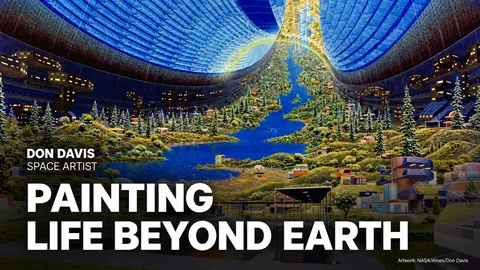 Don Davis — Space Art & Humanity’s FutureDon Davis on painting space settlements, working with Carl Sagan and imagining life beyond Earth.
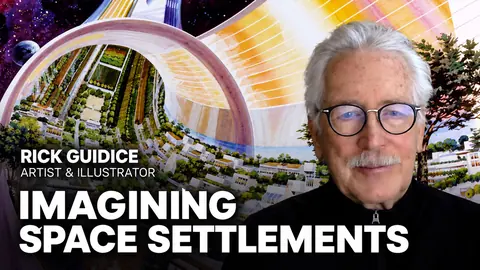 Rick Guidice — Art, Science, and Space SettlementsRick Guidice describes how architectural illustration prepared him to turn NASA’s space-settlement studies into vivid paintings.