

Build the Future Podcast
Josh Clemente — Metabolic Health and Real-Time Feedback
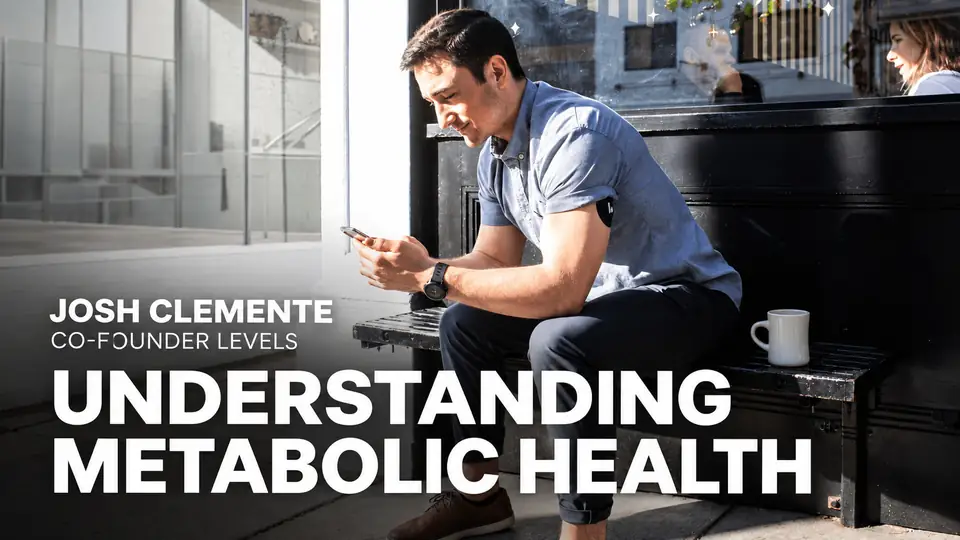
Josh Clemente explains how glucose monitoring and faster feedback can help people understand their bodies.
September 2, 2020 · 33 min



About the episode
In this conversation, we talk with Josh Clemente, the co-founder of Levels Health where they help you track your blood glucose in real time, so you can maximize your diet and exercise.
We talk with Josh about the importance of metabolic health, the smart health stack, and the implications of living in a world where we have 24/7 realtime monitoring of all of our essential biometric data.
Links
Chapters
Times follow the podcast audio. The video’s timeline may be slightly different.
- 00:00Welcome and introducing Levels
- 02:15What metabolic health means to Levels
- 04:54Making feedback more immediate
- 11:16Understanding individual responses to food
- 14:11Beyond glucose: future health feedback
- 20:04Data, motivation and behavior change
- 23:29Making wearable data useful
- 26:23A connected health-data ecosystem
- 30:25New possibilities built on better information
Read the conversation
Open the full transcript
CAMERON WIESE: Welcome to the Build the Future podcast. My name is Cameron Wiese and I'm your host. I've always been fascinated by the ideas and sentiment that drove American culture in the 1960s with the space race. A culture of possibility with a mission to build things. And I quote JFK, not because they are easy, but because they are hard. It's this culture that seems to have been lost, and it's something that we want to bring back. With Build the Future, we're here to promote the ideas of those who not only see how the world can be better, but those who have plans to get there. It's our hope that these plans inspire you to think about the future you want to live in, and create plans to go build.
SPEAKER UNCLEAR: Today, we're talking with Josh Clemente, the founder of Levels Health. At Levels Health, they're laying the groundwork to enable 24-7 monitoring of all of your important biometric data. In doing this, they're building the future where we're able to adjust in real time what we're eating and how we're living to ensure that we live happy, healthy, and honestly, longer lives. Josh, welcome to the show. Super excited, Cam. Thanks for having me on. Yeah, you bet. So I want to start with the basics. Can you tell me about the future you're building with Levels? What's your vision?
JOSH CLEMENTE: so the vision is to reverse the trends of metabolic dysfunction in the developing world by giving people access to their own health information at the moment that it matters so every day we all sit down we're going to eat lunch we're going to make a choice why do we make that choice right what are the reasons that we're choosing to eat that lunch that we choose and why a lot of the time we're basing these things on emotion on the advice of others on internet searches and in this world where we have a microelectronics revolution that is allowing this sort of the miniaturization of technology that otherwise would never have been able to leave the lab, we need to be leveraging this in society. And we use data throughout our lives with the exception of health and wellness. And so Levels is there to be providing easy, actionable insights to help you make better choices and ultimately allow human flourishing by giving people access to their own information at the moment that is valuable.
SPEAKER UNCLEAR: What sort of data are people able to get? Like what should they be looking at,
SPEAKER UNCLEAR: thinking about? So Levels is focused, we're the metabolic fitness company, so we're focused on the space of metabolic health. And the reason we've chosen this is because it is the unspoken epidemic that is causing the most destruction across the world. In every developing country, specifically the United States, metabolic dysfunction is the leading cause of death. If it's not specifically a metabolic failure that leads to morbidity, it's a closely associated comorbidity. And so we're talking about things like PCOS, prediabetes, type 2 diabetes, cardiovascular disease, stroke, Alzheimer's. All of these are metabolic in nature, very closely related to metabolic dysregulation. And so what metabolic means, even what is metabolism? So metabolism is the set of mechanisms inside our bodies and our cells that produce energy from our food and our environment. And so these processes are what power us.
JOSH CLEMENTE: They literally, you have cellular machinery called mitochondria that take your food and your environment, vitamin D from sunlight, and they turn that into ATP or energy. It allows you to actually operate. And so metabolic dysfunction is when these processes start to break down and we have harmful byproducts, hormones, and control of, for example, the glucose insulin feedback loop break down. And we start to damage tissue. We start to age prematurely, free radicals, inflammation, all of this starts to build. And ultimately, that is what leads to end of life, right? And so it's an accelerating aging process, basically. So we've chosen metabolism because, again, seven of the top 10 reasons that people are sort of losing their lives early are related to metabolic dysfunction. It doesn't have to be this way. The vast majority, according to the CDC of metabolic dysfunction, is entirely preventable with better lifestyle choices. So the big molecules that we care about in this space are glucose and fat. Those are the energy molecules that the modern human runs on. Glucose is essentially sugar. You have it in your body right now. It's flowing through your bloodstream. And it's really important. We all need to have it, but in a very tight range that your body is physiologically set up to operate in. So when you start to have glucose dysfunction, which is when you lose control, you start to excurd out of the range that you should be in. That's where you start to have this inflammation at the hormonal cascades, the breakdown I was talking about.
JOSH CLEMENTE: And so we're focusing on real-time measurement of glucose information. So real-time measurement of the glucose molecule in the individual and providing a set of devices and the software to integrate with them to allow you to access your own blood sugar levels in real time and make choices that are optimized for metabolic control.
SPEAKER UNCLEAR: It seems like one part of the equation is just kind of awareness of what's actually going on. But how do you think we ended up in this state where people aren't making these healthy choices? Because if I understand correctly, it's like 70 or 90 million people are operating in a state where it's like pre-diabetic glucose levels. Yeah. Yeah. The numbers are pretty scary. We've got
JOSH CLEMENTE: about 35 million people in the United States have type two diabetes, which is a preventable form of diabetes. 90 million are pre-diabetic. Of those 90 million, 90% don't know they have pre-diabetes. And 70% of them will become type 2 diabetic in the next 10 years if they don't do something about it. We have a recent study from the University of North Carolina showed that 88% of United States adults are metabolically unhealthy. We have the highest rates ever of childhood obesity and childhood diabetes, non-alcoholic fatty liver disease. All of these things are compacting on each other. They're sort of compounding. The return on investment in our medical expenditures is the worst ever. We have our lifespan in the United States has gone backwards for the past three years.
JOSH CLEMENTE: And ultimately, what Levels believes is that this is a result of long feedback cycles and or no feedback loop at all. So as I mentioned earlier on, when you sit down to eat lunch right now, you know, it seems like you need a PhD to figure out what you should put on your plate. And so when you're operating in that world, you can't blame people who are busy and trying to live their lives for ultimately having to just make a choice that they enjoy. So we're doing things based on emotion. We're guided by flavors, for example, or we're guided by if we are taking data, it's the bathroom scale. So we're like, oh man, I've gained a few pounds. I should stop eating, right? We can't blame specific foods or we can't understand how specific choices are affecting us because the feedback loop is so open and ultimately broken.
JOSH CLEMENTE: And so by connecting a person with the reactions their body experiences from a specific action in real time, giving them data that associates the metabolic outcome of a certain choice, we can close that loop, right? We now can connect the action to the reaction, put that information in the hands of the individual, and they can now understand specifically why they should choose one behavior over another, right? And so that's the real power. I don't believe that anyone wants to be unhealthy, specifically metabolically unhealthy. It's a very uncomfortable place to be. And so I certainly believe that optimization is something everyone wants. It's just a matter of how can we enable this. And so we believe that the information, the data is the key.
CAMERON WIESE: yeah i took part of the wearable challenge that you guys ran with justin mayors and the team over at perfect keto and and i was shocked to see how my body reacted to a handful of raspberries and blueberries and it's like whoa no wonder i'm not feeling well my body's out of out of whack can you tell me a little bit more about some of the interesting things you you guys have seen through
SPEAKER UNCLEAR: through this data tracking yeah so real quick you know we talked about metabolism but the human body we're not this like perfect machine where you put in fuel and you get out an ideal form of energy, which it's very easy to try to reduce us to that on paper. But the reality is we're a chemistry set where there's like a bunch of hormones flowing through our systems that tell cells how to operate. It's a lot of it's controlled by the brain. A lot of it is controlled by exogenous external factors. So your diet is a prime example. Your body has to use what's available to it. And you have some energy stored as body fat or glycogen. And then the rest of it is coming from the food you give to it. And so if you're, if you are kicking this system with food that is causing huge fluctuations in your hormones, this leads to a very unstable system. And so it's kind of chaos, right? You can imagine like dumping in bucket loads of processed food that quickly breaks down into glucose in the bloodstream. It requires a rapid response from the pancreas to release a flood of insulin to get that glucose out of the bloodstream because it's damaging if it's, if it stays in the bloodstream.
JOSH CLEMENTE: And so, you know, you can imagine an animation almost where like the sugar comes dumping in and it flows into the bloodstream and then the brain is saying it is releasing these signals to get it out of the blood that's telling the the pancreas to produce insulin and insulin comes flowing out it's telling the cells to get to get glucose and to turn into energy but we're sitting at our desks there's nowhere for the energy to go like we're not using it in real time right so this is the hormonal theory of of energy balance or of weight gain so people who are living sedentary lives eating extremely delicious but energy dense processed foods they're constantly in this state of basically hormonal imbalance, which ultimately leads to breakdown, right? Your body cannot maintain that sort of dysfunction for long before you start to see things like insulin resistance.
JOSH CLEMENTE: And in the insulin resistant state, you're in a constant elevated glucose and insulin environment, your cells stop communicating with the insulin molecule effectively. And this is where people start to experience weight gain that they can't shed. And they also feel like intense fatigue. fatigue. And, you know, I personally started, you know, this, this whole process of that ultimately led to levels because even though I'm a CrossFit level two trainer and I was working out daily, I was experiencing extreme fatigue levels throughout the day, like total fluctuations. I mean, I'd be, I'd feel an energy boost and then 20 minutes later, an hour later, I'd be crashing and I'd be like crawling back to the coffee machine. And so that, that experience was caused ultimately I found by the hormonal imbalance, the insulin waves that I was experiencing as a result of my dietary choices. And at the time I was not eating, you know, what would be traditionally thought of as an unhealthy diet. The staples of my diet were brown rice and sweet potatoes, but the quantities I was eating them in and my own personal sensitivity to them ultimately was causing this huge blood sugar excursion into the pre-diabetic range, which would lead to this overcompensation of insulin. And people are experiencing this daily and they're experiencing it in response to choices they think are objectively healthy. So that's exactly what the wearable challenge is all about. It's taking a different approach to weight loss and saying, look, the calories in calories out model or traditional diet theory is grounded in incomplete information. And what we need is for you to have a better understanding of how you personally respond in hormonal terms to the food that you're supplying yourself with. And so just giving people
JOSH CLEMENTE: this device, letting them try to stay in range, make choices that keep you in range, you can optimize that hormonal environment and ultimately lose weight quite easily, it seems.
SPEAKER UNCLEAR: Yeah. First of all, I think it's cool because it gives people the ability to figure out what works for them. Because as you said, everyone's environment is different. Everyone's biochemistry is different. And so berries for me may not be like the same as berries for you. And so all the health advice is trying to get people to move forward to a healthier future is skewed based on large sample sizes and what people think works. But what you guys are doing is allowing everyone to drill down into saying like, oh, what works for me? Yeah. Yeah. We call it food freedom,
JOSH CLEMENTE: but it's the concept, the realization that you are an individual, you're not an average. And what we do in modern diet theory and nutrition is we average out everyone and we turn it into a sort of optimal diet. We say, this is the diet for everyone. Everyone should eat this way. And what what we're doing is we're erasing the individual reality. And so CGM technology, continuous glucose monitoring technology specifically, has recently uncovered this reality of metabolic personalization. So you may have heard of this trial that came out in 2015, in which 800 non-diabetic people were given continuous glucose monitors. And during the trial, they ate all these standardized meals. And at the end, they went back and looked at the data and had this amazing realization that two people can eat the exact same two foods and have equal and opposite blood sugar responses to them. So we're talking about no response, for example, to a cookie and a huge blood sugar response to a banana, and then for a different person, the exact opposite. So how can you know if you're that banana or cookie person unless you have that data? And so the person who's eating the banana each morning, and I'm not, by the way, condoning just eating cookies, but it's actually a question of, it's a question of like fruit sugar versus grain sugar kind of. So how do you know if you're like more sensitive to the fruit sugar versus the grain sugar? You know, there are people who every morning they're skipping over that breakfast they may enjoy that could be toast, avocado toast or something like that in favor of like a pressed juice made from vegetables or fruit.
JOSH CLEMENTE: And personal anecdote here would be the worst blood sugar response I've ever seen was what was called health drink. It was from an organic pressed juice cart. It was made with green apple, carrot and celery and they pressed these vegetables right in front of my eyes and the fruit and what it did was it put my blood sugar into a diabetic range for over an hour i was well over 200 milligrams per deciliter and the upper bound for someone without diabetes should be below 140 and so that is an example of something that people objectively think like this is healthy this is the healthy choice i'm not going to have that toast or that you know that avocado toast like i mentioned with which many people this is like kind of a real example instead i'm going to go for the for the pressed juice. And it turns out that it's directly contradicting your goals. And so these are the examples, like having the realization that there is no one size fits all diet. We all have different genetics. We have different microbiome, different body composition, all of which affects this.
SPEAKER UNCLEAR: And we can now for the first time see in real time, the effects of our choices, right? We don't have to fly blind anymore. We can close the loop. Let's talk more about that metabolic
CAMERON WIESE: like personalization, but extended out to just real-time health feedback. What else are you thinking about it in this space? So you're able to track your glucose. What are some of the other
SPEAKER UNCLEAR: possibilities? Well, yeah, this is where I'm most excited. You know, this is, we're in the infancy of this world. And, you know, for the longest time, continuous glucose monitoring was basically exclusively in the world of therapy. It was used for diabetes monitoring and management, which is exceptional. It's saved many lives and continues to do so. But it's finally reaching economies of scale where we can move CGM out into the world of wellness. And this is what Levels is doing. Now that's just, again, the first step of many. The number of analytes that are relevant to human metabolism are many. There are at least dozens that I personally would care about. And so we're seeing early movement in the direction of, I think, real-time ketone monitoring, potentially lactate, triglycerides, free fatty acids, potentially cholesterol. So all of these molecules that really do matter and that we're, you know, it's sort of, they're quarantined in the world of boutique medicine. If you get the, you know, this extremely expensive lab work and you can have an idea of where you stand on all these metrics, we're going to see a transition to very real-time continuous monitoring where you have a bio-wearable on your body somewhere that is analyzing these analytes in real time and delivering you low-hanging fruit, no pun intended, for better behavior. So right now we're reactive. We're saying monitor and then find the problems and change them. In the future, we'll be proactive. It'll be, hey, you know, it's Tuesday morning. You've got a training event on your calendar. Here's the recommended fuel source before you go out and get on the bike or go for that swim. Or, you know, you're trying to lose weight. You could potentially do so by simply staying in a low glycemic state and optimize
SPEAKER UNCLEAR: cholesterol simultaneously by having real-time monitoring of both. And you don't have to restrict calories, you just eat differently, right? These are the things that unlock when you start to have real-time data at the individual level. Yeah. What are some of the other
CAMERON WIESE: implications of this future where there's real-time feedback for everything?
JOSH CLEMENTE: What's really powerful is imagining a world where you really have human flourishing. We kind of take for granted the amount of physiologic breakdown that we see in society. It's expected that people are going to get cancer and have heart attacks and be diabetic and overweight. We just have gotten used to it because it's so rampant and it absolutely does not have to be this way. I mean, I can envision a future where we're like striding into our nineties fit as ever wiser than ever. And without the sort of unnecessary breakdown. Now I'm not someone who believes that we're going to achieve immortality, you know, sometimes it's possible. Of course, I don't know. I don't know enough about it, but I do think that we have a ton of unnecessary aging and breakdown that is a byproduct of our lifestyles. And nobody, again, wants to be in that situation. It's just, we don't have any feedback as we're going through life. And so I think that the beautiful consequence of having that real-time information guiding us throughout life is that we'll have so much more richness and value at both ends of the spectrum. When we're younger, we'll be able to make better choices and experience better. Our quality of life will be better. And as we're older, we'll be able to age more gracefully and be in more control. And I don't want to make it all about productivity, but it just unlocks so much for society where on your show, you talk about the future. Well, imagine how much more productive we could be as a society if we didn't have $300 billion worth of diabetes bills per year just in the US alone. If we had, like I said, if those seven of the top 10 reasons people die were sort of wiped off the table, what are we left with?
JOSH CLEMENTE: I think we're left with a much more productive, happier, and longer-lived society.
CAMERON WIESE: Yeah, it's easy to anchor on, obviously, the productive, but I think just in terms of being happier and healthier. I feel so much better when I'm eating well and not feeling fatigued all the
JOSH CLEMENTE: time. Yeah. It's a massive emotional burden. I also think that the mechanisms are so misunderstood. We kind of think that we have to treat everything with pills and with procedures or something like that. We have to have a diet. Part of it is with our society in general, we like to have a problem that we can solve. If we can put pills or a procedure on it, it's like we can check that box and then we fix the problem. But the reality is that this is a much more nuanced world. The world of human physiology and health is super coupled. Again, we're this chemistry set and if things are out of whack, we just like throw more chemicals at the problem and assume that's going to correct it. And what we're doing is we're just covering up the symptom. And so what I think is really extraordinary about being able to use a data-driven approach is that we can target and improve these sort of chemical disturbances that have been shown. I mean, I think one of the strongest connections is between dementia, mood disorders, and type 2 diabetes. So there's a very clear connection there between mental health and metabolic health. And it makes total sense. I mean, our brains are extremely high energy. They are basically the highest energy drain in our bodies.
SPEAKER UNCLEAR: You know, like when you're at rest, I believe something like 60% of the energy burned by your body is burned by the brain. And so that's metabolic processing that's happening in the brain tissue. And so when things are out of whack, if your brain tissue is insulin resistant, you know, that's the early signs of cognitive decline associated with Alzheimer's and which, by the way, is currently being called type three diabetes. And so if you can optimize blood sugar control and metabolic control, you can unlock just not only cognitive clarity and like you said, mood balance, but also the long term quantitative improvements in heart disease, you know, and the other physiologic breakdown I was talking about. Yeah, we are very quick to be like, oh, here's a
CAMERON WIESE: prescription, take this, fix this. And no one wants to do the conscious work of saying, oh, maybe I shouldn't eat these things or I should be more aware. And so I think it's really exciting what you guys are doing to bring that visibility down into everyone's day-to-day lives.
SPEAKER UNCLEAR: I think that most people really do respond positively to this opportunity. They understand that they are different than other people. And they've maybe tried a diet that was recommended to them by a friend or something, and like, it didn't feel right. So we have this sort of interoception where we think that something's off, or we can perceive that there's no one size fits all. But then when you actually have information from your own body, telling you how to make better choices, or what is working against you, it's very hard to ignore, you know, it's, it's not something most people are used to, we don't have close feedback loops from our from our bodies. And, And so it's really, I think, an eye-opening experience once you, for the first time, hear your body speak back to you and you can make choices in a closed loop.
JOSH CLEMENTE: It's a really empowering situation to be in. And that's why I'm so optimistic for it is it doesn't feel the same as the sort of age-old advice of eat healthier and work out more, right? It's seeing that when you eat healthier, your body is healthier. And when you work out more, you have better control or you can maybe even indulge a little bit more without seeing dysfunction. And so all these little micro optimizations that you can see and, and, and really verify for yourself. It's like putting you in the driver's seat instead of always feeling like you're on the backseat. Oh yeah.
SPEAKER UNCLEAR: No, I love that. Especially the setting up feedback loops for ourselves. I got like microbiome stuff done. I feel like I'm, I'm good. I get my like gut test back. I'm like, Oh, Oh, okay. Like there's some work that I need to do. Obviously things are not fully functional. And so I can imagine in the future, it's, there's no, no waiting time for that. It's, it's real time feedback. it's here's what's going on in your body and then back to what you said earlier it's what are your goals what are you trying to do yeah we all have different performance goals you know
JOSH CLEMENTE: and it could be just being a good performer at work it might be being a better spouse better husband father mother you know sibling there's all these different reasons that we need to be good performance and be kind of on top of our game to enjoy life and then you've you know you've got the metabolic health spectrum which is like maybe you want to lose weight maybe you want to shave seconds off your 50k time or something, you know, there's like all of these different reasons that you would care about metabolic optimization. But what it comes down to at the very, the very basic level is the same few molecules that drive our energy balance. And so if we're empowered, no matter where we land on the metabolic health spectrum, or what our goals are, if we're empowered to access and make choices that either improve the molecules that are at play, or ultimately, basically close the loop between better choices over a short time period leading us closer to our goals, we'll respond to that. That is the human condition. We personally care about our close circle, our friends, family, and ourselves. And I think it's very rare for someone to have concrete evidence that something is affecting them negatively and to totally ignore it. I'm going to make a smoking analogy here and everyone's free to do exactly as they please. But if you were to have real-time information about the breakdown of your lung tissue when you're smoking a cigarette. I think it would really change the dynamic. We brought information, we brought data to the forefront in the smoking debate and started talking about how it is directly connected to cancer. And we've seen the lowest rates in history of smoking. But imagine if you went that last step and were able to connect people with the damage it's doing to their lung tissue in real time, I doubt that it would exist at all. And I think we're going to
SPEAKER UNCLEAR: see something that powerful with metabolic health. How close are we to getting there? What is the path to this end state? Well, glucose monitoring is like the 80-20 rule, in my opinion. Although it's not the only molecule that matters, of course, so much of society's metabolic issues are at root glucose dysregulation, which leads to insulin resistance. And that insulin resistance might be in the body, in the muscles. It might be in the brain, which leads to dementia and Alzheimer's. But what we know is that glucose dysregulation is the big problem. So continuous glucose monitoring is extremely powerful for helping us serve the needs of our current sort of metabolic issues. Now, I would say that we are, you know, Levels is actively working on making the continuous glucose monitor the bio-wearable of today, right? We're not talking about years in the future. We're saying like, right now, this technology is ready. We're building the actionability and the accessibility path to get this technology into the mainstream. So making sure that we're not just spitting out a raw data stream, but we're making this data easy and actionable to make behavior change around.
JOSH CLEMENTE: So that means surfacing insights and having really strong metabolic scores and meal scores, so you can understand specifically how a choice has affected you. And so I think we're very close to glucose monitoring being a breakthrough technology for the mainstream. From there, to really like close that final 20%. You know, I can imagine like once people are paying attention to their glucose control and making data-driven dietary decisions, will then, I believe, have formed the bow wave behind which additional analytes sort of fall in line and we're integrating those into the levels ecosystem as they become available. So the world where you have a closed loop understanding of your cholesterol levels, your uric acid levels, your insulin levels, your glucose levels, all in a package that is as easy to interface with as your aura ring or your whoop strap, you know, that's a world where people are truly making optimal decisions for themselves.
JOSH CLEMENTE: And, you know, the effects of sleep, stress, diet, and exercise on our metabolic control are profound. And so this is where like our engagements with whoop and with eight sleep and how we're sort of pushing into those data streams are really going to overlap is nutritional choices and the hormonal environment they induce affect how well we sleep. and the amount of stress in our bodies and vice versa. The amount of stress in your body affects how much cortisol is released, which affects how you metabolize glucose. So there's this two-way street relationship where what we need is to just see these interactions happening in real time, and we can intervene. We can step aside for a few minutes of mindfulness, or we can grab a nap or sleep in deeper, get some blackout curtains if that's what's necessary. But just make these micro-optimizations and see the data proliferating our own health and making our goals more accessible.
CAMERON WIESE: How does this ecosystem evolve over time?
JOSH CLEMENTE: Well, right now we're in the space where the continuous glucose monitor is the first bio-wearable. So it's measuring a molecule below the skin in real time. So that's a big step forward. It's a paradigm shift in what the wearable means. So that's the state of the ecosystem right now. Levels is bringing that specific hardware technology into, again, the mainstream. From there, we're going to see very similar form factors for additional molecules come aboard. and so you'll have a similar like a device that you wear with a with a little filament that measures a different molecule and so we'll start to add these into into the ecosystem you'll get more analytes in real time from there you know i would say project forward you have kind of a smart health stack where you're taking data on those big four levers sleep stress diet and exercise those are the things that you can control at the individual level and you're you are currently making choices every day on all four of those it's just whether or not you're paying attention So once you have data on all four, that's where we sort of step into the world where metabolic health data is more like financial data.
JOSH CLEMENTE: So you've got a real-time portfolio of data streams. You're making choices in a closed loop. You have the deposits and withdrawals. You've got a projection into the future. You've got expert guidance if you need it that you can opt into. This is all available in the moment while you're riding the subway or whatever. You pull your phone out, take a look at how you're doing, and adjust your expectations or adjust your choices that day to optimize. And this world where health data is more like financial data also means you're empowered, you're in control, you're the owner. And you're not just like, it's actually a strong parallel because we all are optimizing for financial security and retirement, but it's like, how do you know you're going to be there to enjoy it? And in this world, this is how. You have that projection that tells you your trajectory into the future. And if you stay on course, you can feel very, very confident in a data-driven way that this is going to work out for you.
CAMERON WIESE: I absolutely love that comparison between like your financial dashboard and your health. Because you're right. We spend lots of time being like, okay, how are my finances? Let me check my budgeting, right? And so we track it. But to what end? They're like, oh, if I keep eating cookies and assuming that does not work for my metabolic system, like I keep eating cookies and McDonald's and all these other things. and drinking soda, it doesn't matter how much money I have.
JOSH CLEMENTE: Yeah, no, it's a really good point because we're in a very productive society on paper. Like financially, we're extremely wealthy and developing nations are catching up rapidly in GDP and got all of this progress in a financial sense. And we use data in so many parts of our lives, even just like picking a movie. Like you've got all this data from other people who are like telling you in real time, like how good this movie is. I don't know. there's like tons of examples of how much data we use. The obvious exception is again, health and wellness. Like when was the last time you use, and you're an exception because you did the wearable challenge, but like when was the last time the average person has used their own health data to make a different choice in their lifestyle? Like it just doesn't happen. I mean, the bathroom scale is the exception. Maybe you could call, I mean, sleep tracking and heart rate, like it's fairly actionable. You can do some things about it, but it's not a clinically relevant biological piece of information, right? It's not a molecule in your body. It's not, you know, we all get these blood panels once a year that take all these, you know, these point measurements in time and they tell you whether you're healthy or not. But all it's telling you is you haven't broken the threshold that the average person should care about. It doesn't tell you if you're optimal or if you're heading in the right direction even. You have no idea where you are heading in the long term. Like your choices today, project them out 30 years. Does that mean, is that a positive outcome or a negative one. It's really hard to do that when we're in our current very open loop system. So the financial comparison, I think, is really interesting because we're, like you said, optimizing daily around money and productivity, but we're not thinking in holistic terms about,
JOSH CLEMENTE: again, are we going to be there to enjoy that future that we're setting ourselves up financially
SPEAKER UNCLEAR: for? Totally. What sort of businesses and opportunities do you see coming about when we are able to track our health this well? I mean, I can imagine personal coaches, but when you compare it to finance, there's so many pieces of that. I'm curious if you have any thoughts on opportunities that can be built upon this. Well, I would say that being able to optimize
JOSH CLEMENTE: for the individual's goals is going to be something that with the addition of data only helps us to make more nuanced, more targeted decisions. And so the world of coaching, I think already is really strong. You've got physical coaches, you've got medical coaches, you've got business coaches, all of whom are making decisions for the individual or helping you to target an ideal set of daily habits. And so you can imagine like layer in really tangible, actionable information about how that human's physiology is functioning. And each of those people can become even more valuable. I think this is a value add in a really serious way where, you know, the individual themselves and then also their mentorship can sort of tailor their choices or tailor their guidance based on really meaningful data. That's kind of like a more short-term general thought, but like in the long term, you know, imagine I'm a big space nerd. And so I think a lot about actually, when I was at SpaceX, I worked on the life support system. And, you know, I think about the future. And if we ever want to go deep into space, or, you know, colonize another planet, we have to have a really strong handle on wellness on health and physiology, like you can't have high rates of diabetes and cancer, following you to a base out on the stars. And so that's what I really get excited about is like, if we can crack the code of metabolic health and longevity, it opens up opportunity for the human species in a really serious way where we're no longer limited by healthcare systems and hoping for the best in insurance plans. It's like we can
JOSH CLEMENTE: confidently move into a future where you're making choices as a spacefaring civilization with generational thoughts at hand. And I don't know, that might sound a little fan fiction-y, But I truly believe that, you know, that is the key criteria to be able to move ahead into the next big step for mankind, so to speak.
CAMERON WIESE: Thanks so much for joining us for this episode of the Build the Future podcast. If you're interested in learning more about Levels Health and checking out their product for yourself, head on over to levelshealth.com. Seriously, it's awesome. Then if you want to follow along Josh's journey, you can find him personally on Twitter at Joshua's Forest. Lastly, if you're building and want to get support, want to hear about specific topics, or hear from certain people, shoot us over an email at hello at buildthefuturepodcast.com and we'll see what we can make happen. That's it from us. Until next time, go build.
More episodes
All episodes Matteo Franceschetti — Sleep Fitness and the Connected BedMatteo Franceschetti discusses Eight Sleep’s temperature-controlled bed products and the idea of treating sleep as part of fitness.
 Alex Bouaziz — Remote Work and a Borderless WorkforceAlex Bouaziz on cross-border hiring, remote teams and Deel’s approach to global work.
 Jill Carlson — Money, Hyperinflation and Financial AccessJill Carlson explores access to stable money, the limits of cryptocurrency and lessons from field research.