

Build the Future Podcast
Jim Pethokoukis — Building an Up-Wing Culture
Jim Pethokoukis makes the case for a culture that believes in progress and builds toward it.
November 17, 2023 · 50 min



About the episode
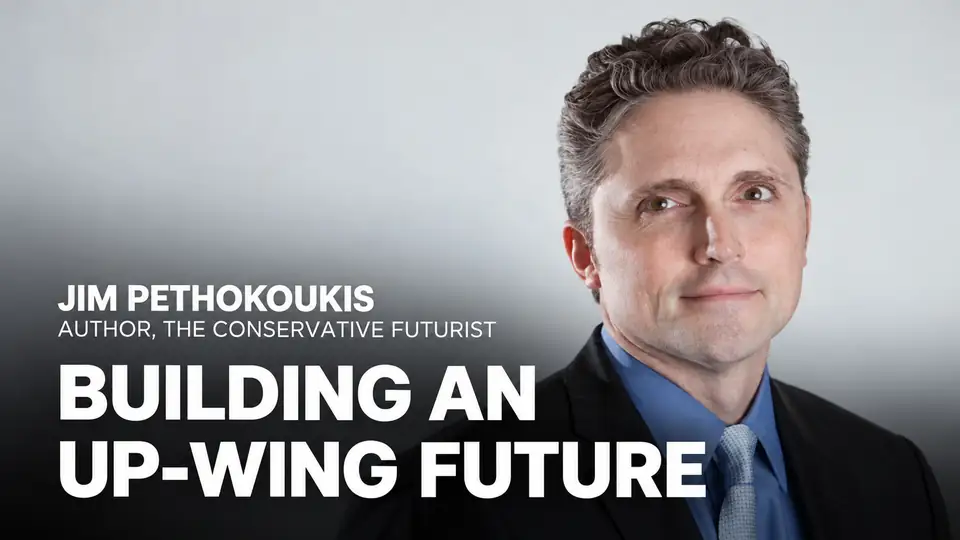
In this conversation, we talk with Jim Pethokoukis, the author of "The Conservative Futurist" and the newsletter "Faster, Please!" where he writes about innovation, economics, and the potential of future technologies.
In this conversation, we talk about the optimistic cultural zeitgeist of the 1960s space race, the unfulfilled promises of that era, such as nuclear-powered space exploration, the role media plays in shaping societal attitudes towards the future, and much more!
Enjoy!
Links
Chapters
Times follow the podcast audio. The video’s timeline may be slightly different.
- 00:00Welcome to Build the Future
- 01:10Introducing Jim Pethokoukis
- 01:52The science-fiction future we were promised
- 05:10The optimism of the 1990s
- 08:25A new cluster of technologies and old constraints
- 12:37Energy, growth and zero-sum thinking
- 16:43What up-wing and down-wing mean
- 19:47Ambition, politics and looking forward
- 23:08Policy that supports innovation
- 26:00The High Frontier and visions after Apollo
- 28:52For All Mankind and the stories we tell
- 31:12Energy, planetary defense and concrete goals
- 32:57What dystopian stories leave us with
- 34:49Fiction that inspires people to build
- 38:07Creating compelling stories of progress
- 41:46Interstellar and the cost of lost ambition
- 43:12World’s fairs and the spectacle of progress
- 48:36Where to find Jim and a closing challenge
- 50:16Closing
Read the conversation
Open the full transcript
CAMERON WIESE: Welcome to the Build The Future podcast. My name is Cameron Wiese and I'm your host. I've always been fascinated by the ideas and the sentiment that drove American culture in the 1960s with the space race. A culture galvanized to dream about the possibilities of tomorrow. Whether it's food, transportation, cities, biology, or anything else. It was this cultural mindset rooted in optimism, that the world tomorrow would be better than the world today. A mindset where people were compelled to build things and I quote JFK, not because they were easy, but because they were hard. It's this desire to build and to dream that seems to have been lost and something we're here to bring back. With Build the Future, we're here to promote the ideas and stories of those who see how the future can be better and promote their plans to get us there. It's our mission to get you to dream about the possibilities of tomorrow, to dream about the future that you want to live in, inspire you to go build. Hey everybody, welcome to another episode of the Build the Future podcast. I'm your host, Cameron Wiese,
CAMERON WIESE: and today we're talking with Jim Pethokoukis, the author of the brilliant sub-stack, Faster, Please!, which I love and read every week, and the author of the new book, the conservative futurist, how we get the science fiction future we were promised. Jim's a writer, great public thinker, and in this episode we have a ton of fun talking about the role of media and shaping culture, optimistic stories and the importance of good science fiction. Talk about now his new book of course and how we ultimately get the future that we're that we can be excited about
SPEAKER UNCLEAR: living in. So I had a ton of fun so without further ado let's jump right in.
JIM PETHOKOUKIS: Jim, how are we doing today? Great. I am ready to go. I'm ready to accelerate my way through this fine podcast.
CAMERON WIESE: Dean, well, thank you for coming on on Build the Future. We've crossed paths several times
SPEAKER UNCLEAR: the last couple years since I wrote that World's Fair essay and I've been a long time subscriber
JIM PETHOKOUKIS: to Faster Please. All subscribers are greatly appreciated. And then you just had a book come out. the conservative futurists how to create the sci fi world we were promised. Let's start with what is what is the future that we were promised? It was a nuclear powered space fairing future. I mean, those were those were two of the foundational pieces that with unlimited inexpensive energy and advances in rocket propulsion, we would have atomic everything, everything from atomic flying cars to atomic blenders. We would be using those blenders in space, on the moon, and beyond. We would have great leaps forward in computers. And I think, maybe a little more down to earth, that this kind of economic growth that we saw in the 50s and then in the 60s would continue unabated. And America today would just be a far richer place, a healthier place, and we would be taking very fast rocket trips to wherever we want, everywhere from London to a Mars city. So it's been called, I didn't make this phrase up, it's been called cool shit futurism.
JIM PETHOKOUKIS: And it was, it was a futurism of hardware, even though computers were part of it, but it was big, it was bold, it was optimistic.
SPEAKER UNCLEAR: Cool shit futurism.
CAMERON WIESE: Yeah, it's like all these things that make life exciting, make things worth living. I
SPEAKER UNCLEAR: do really want an atomic blender, I do a little bit more than my neutral bullet, which will
JIM PETHOKOUKIS: be a very powerful blender, Cameron, to be a blender of great robustness. As I decide, I wonder what it would how it would do on a will it blend? Everything will be everything will be but I should note though that that we kind of had this period again and you know, maybe a little more irrelevant for you, maybe not, but then in the 90s, you know, in the late 90s, people, boy, you know, it wasn't just like the boom and the internet there were people were so optimistic that not only would, you know, the, with the, with the economic boom sort of continue unabated again to the future, but you started reading a lot more about, you know, again, about space, about like the singularity, you know, Wired magazine every three months was running these wildly optimistic pieces. So even though like the longer period and what a lot of people will focus on is kind of that immediate post-war period Like we had again kind of a hint of that In the in the 90s for a while not much since then Like it has happened and like a big part of the book is I think we're at sort of this moment again where you have
JIM PETHOKOUKIS: like these technologies Converging but I just want to make sure we get the most out of them And if this is that kind of opportunity for like a real sustain, leap forward in growth and progress, that we don't blow it.
SPEAKER UNCLEAR: Totally.
SPEAKER UNCLEAR: Well, we could have unpacked this, but what was it that drove that sort of sentiment in the 90s?
CAMERON WIESE: I think you and I would probably point to a lot of the science fiction, the stories that were being told culturally in the 50s and the 60s that were sort of feeling that era of optimism where we're building colonies on the moon, having our atomic blenders, atomic
SPEAKER UNCLEAR: everything. I personally haven't looked too much into that sort of moment in the 90s.
JIM PETHOKOUKIS: It's interesting because in the early 90s, there wasn't a ton of, we had like a, it's kind of a forgotten recession. We had like the savings and loan crisis and there, and there was like a very slow kind of jobless recovery and sort of the economic consensus by like 94, 95 was that like the era of fast growth was over. We were now going to be a 2% economy. These presidential candidates who were running for president in 96, they should just like tamp down their speeches, you're raising people's expectations. And that really the exact second that that sort of consensus really became concrete and widespread already the economy was beginning to take off. So it was really, so if you were, it was a great time to be a contrarian because the consensus had it absolutely wrong. And then literally, like, literally, like, when that hit its sort of peak gloominess, again, it already started to take off and like a year later, people were like, off to the races, singularity is nigh, we're gonna grow 4% forever, a little bit of very rapid growth can
JIM PETHOKOUKIS: really that's widely spread can really change people's opinions. And then you know, you had a new technology that looked like it had a lot of promise and it was just a great confluence of like the and then you know, and then there were these, you know, global that you were, you know, the Soviet Union, you know, fell and China looked like it was becoming more capitalist. So it seemed like everything was sort of moving in the right direction. And it really was kind of a holistic all of society techno econ optimistic period that I have not seen anything like that since.
CAMERON WIESE: Interesting. Yeah, it was a little little bit before before my time and the popular dialogue around sort of the great signature to call the great downshift is like really focused
SPEAKER UNCLEAR: on the earlier era. But everyone seems to overlook that that
JIM PETHOKOUKIS: blip in the nine is one of my favorite examples is I had, you know, because I was a, I was a journalist in LA in the late 90s. And I had this, you know, I did a financial journalism, I had this fantastic look ahead into the into the 2000s from, from Lehman Brothers and they were super, super bullish and like, we're just gonna keep on going. This is the new digital internet economy. Now, of course Lehman Brothers did not even make it like another 10 years after that because they collapsed from the global financial crisis. And nor did we get the uninterrupted period of rapid growth. That like didn't happen either. So it was a tremendous, it was a tremendous bummer. I'll be honest with you to like expect that And instead getting like, you know, the global financial crisis and slow growth after that pandemic. So I don't need to go through that again. I want the good growth and I want to
SPEAKER UNCLEAR: I want to keep growing. I'm ready for that. So where do you feel like we're at right now?
CAMERON WIESE: What's the sort of your view of, you know, because it seems there's hints of things that are
SPEAKER UNCLEAR: really starting to bubble up. I think the technology we're seeing and a lot of I mean,
JIM PETHOKOUKIS: people probably sick of hearing about AI already, but I think across energy and computer science, meaning AI, biology and space. And boy, people really are not focusing on the massive decline in space launch costs and how that will help enable potentially a lot of those kind of like space streams of the immediate post-war decades. I think those are for real technologies. It's always a matter of timing. Usually, you know, it takes a while to, you know, the fully, you know, like perfect these technologies and, and businesses have to learn how to use them and things need to be approved. And of course, that's some of my concern. I think these are all potentially together an important cluster of technologies, every bit as important as those of the second industrial revolution of, you know, factory electrification, the internal combustion engine, and industrial chemicals. I think these are really important. And we just have to make sure that they are supported to the extent possible by public policy and by our culture.
JIM PETHOKOUKIS: I mean, when I started writing this book, to me, the example of nuclear energy and how we basically paused that and kept it paused for my entire life, I'm like, that's a really powerful example. But that's what some people want to do with AI. They want to effectively pause it or regulate it or nationalize it with very little consideration about how that could slow that technology down. So I feel like I'm reliving. So I was a kid then, not much like I do about it, but I feel like I've been training my whole life for this moment again where we're going to have this potential, this real leap forward. But the same kinds of people that didn't want to do it back then, either they're still around or they've taught their children or they've taught their apprentices, much like the emperor Darth Vader, they have taught their apprentices and they are on the dark side. And that's, so that's what I'm worried about. I think it's a real thing. We see how negative people already
SPEAKER UNCLEAR: are about AI. I think it's a real concern. It's a fascinating comparison. I hadn't sort of
CAMERON WIESE: linked the sort of nuclear fear in the 70s and 80s to now the AI fear. And like, there seems to be a cultural shift right now where people are realizing that we don't have, generally, we don't really have a climate problem. We have an energy problem. And that is our constraint, like, oh, we probably should reconsider this thing that we have hamstrung ourselves on. And the worst case is that we don't fix that. And then we don't, and then we hamstrung ourselves on AI. And then we don't fix that until, you know, 20, 30 years
SPEAKER UNCLEAR: from now where we've continued to like just puddle, muddle along. No more muddling.
JIM PETHOKOUKIS: And again, it's the VAW the same. I suppose, I think ideally, we would think hard right now about the nuclear mistake and realize that it's a lot of the same kinds of people, a lot of the same kinds of organizations, certainly the same kind of worldview that we're seeing again with AI and really the space and also with some of the new energy technologies where it is this ultra better safe and sorry approach from people who really don't want to see the progress. So that, you know, either they think it's dangerous on its own, or they're very, or they think economic growth is inherently bad. It's just going to use up all the earth. So anything that facilitates that, whether it's cheap energy or, or what have you, or the ability of AI to enable, to help enable all these other technologies. They don't want that. So I, I hope that we can point to the example, like, Hey, we've done that. We tried that. And what we have is a scarcity of clean energy problem. Why would we wanna do this again? At some point we have to learn that lesson. And I kinda think we will.
JIM PETHOKOUKIS: I think that it's clear that if you're concerned about climate change, that telling people to use less energy, forget just in a rich country, but in other countries that really need to use more energy to raise your living standards, that is a that is a loser proposition. And ultimately, what you have to settle on is, we're just going to have to, you know, make more clean energy and any kind of problems created by that we'll have to deal with them on the fly. Do you have a sense of like, why that view is so
CAMERON WIESE: pervasive? Because to me, it just seems like it's like morally wrong to be over here in the West and say, oh, we've industrialized and oh, but now we have climate issues. And so, hey, developing nations, you can't do what we did, you need to stay where you're at. Like, it just seems morally wrong to me. And like, do you have any sense of like, why people like how people jujitsu their way of thinking about that is like a good thing?
JIM PETHOKOUKIS: Some will say, well, you know, we'll help them by redistributing and then the West will sort of lower its living standard so they so up core countries can raise theirs again good luck selling that to people so that's obviously not going to happen what would happen more likely if you're going to go down that road is that we'll keep what we have maybe our growth will be slower or stagnant but they'll never get rich and and how do they justify it well bad luck i guess that's just really too bad i don't think they'll say that in public but if what you're is, oh, we know the West will redistribute its vast resources and create this kind of global equity. What you're really saying is the latter, because that's obviously not going to happen. I see no scenario where that one, we just came out of a pandemic where people were freaking out because there weren't enough like Clorox wipes on the shelves. We are not a society that does suffering. This is not a theocracy. We do not deal with shortages as well. And to think that we're we're going to be in a permanent recession and permanent
JIM PETHOKOUKIS: shortage is an utter misreading of sort of like our national room or the room that all rich countries are in. There really is no path but forward.
CAMERON WIESE: And I think that part of this is articulated in a compelling vision of what that future looks like that addresses a lot of these a lot of these challenges around climate around energy around, you know, our relationship with AI in a relationship with technology, and how we ensure that the
SPEAKER UNCLEAR: planet and humanity flourish together, not like at the
SPEAKER UNCLEAR: expense of one another.
JIM PETHOKOUKIS: I want to get out of the zero sum game and the zero sum thinking. Like that that is, that is the dream killer. Like that is the society killer, a society or global society mired in zero sum thinking where you think any gain that guy gets makes me poor. I mean, that to me, that's a recipe for conflicts. It's a recipe for misery. And the only way you get out, you sort of crack that puzzle is through technological progress, driving growth, that like, that's the only way that we've really figured to get to get out of that trap. And that is an absolute trap that some people would actually have us voluntarily stay inside. You know, I'm hopeful, I don't find that vision compelling at all. I don't think most people do. They're like, I don't want that. But I think there's a lot of people who think maybe they don't want that. But I think that's the way it has to be. I did a podcast and I was talking about these kinds of themes, and when it was over, the producer, who was probably, it was a young woman probably about your age, is like, she said, like, everything you just said,
JIM PETHOKOUKIS: all my friends think the opposite, like that you can't solve these problems, that we are destined for a world of a chaotic climate and where all the rich people live on space stations and we're all on the earth, like in the rubble, fighting it out like that. I'm like, no, that that would be a choice. Only way is that we chose that I don't know why you would choose that I'm not choosing that. Okay, I mean, you're not going to choose that. So like, why would we do that?
CAMERON WIESE: No, it's like, in human is just like, yeah, I think the I want to kind of point to the framework the articulate in the book around sort of the the two different mindsets, the up wing and down wing. Because this sort of view that we've been talking about this, like, we're kind of limited things are scarce, we don't want any, you know, we want to hold off the future for as long as possible because it's scary and uncertain and lead to catastrophe, more or less represents the down wing. And then the opposite up wing is the opposite.
JIM PETHOKOUKIS: Can you articulate the two like how you sort of define both of those? You know, the book's called the conserved futurist, I work at a kind of a center right think tank. But like, You don't have to be like conservative or right senator to believe in any of this. I know there are plenty of people who are like left of senator or call themselves democrats. People in the middle. I think the common bond there is that you think that if you think we can solve problems, that we have enough smarts, not perfect intelligence, but enough smarts and will and tools and the tools we don't have, we can build those tools to make things better. Not a utopia, but like incrementally year after year, make things better, solve problems and create a better world. Like if you think like that broadly is true, not, and as we just said, not everybody does, then that is an up wing belief, whether you're also on the left or right. If you don't think that's true and you're more concerned about the downsides to all that, You're more concerned about the disruption for progress.
JIM PETHOKOUKIS: You think that like, oh, space, that kind of sounds neat, but we have all these problems here on Earth, and the robots will take the jobs, and then they'll murder us, and we'll probably screw it up anyways. And I'm very fearful that someone from another country, they'll take my job, and I'm very fearful that trade will make me. All that stuff, that's down-week thinking. You can find that on the left and right too. That's why, despite the name of the book, I really kind of want to move out of that framing because I think it leads to nowhere. You end up alienating people who you agree quite a bit. I just wrote in my Faster Please newsletter, Noah Smith, well-known newsletter writer, Twitter person. He's to the left of me, but I tell you, we agree on a whole lot when it comes to the fundamental sort of goal of a society, which is to make life better, you know, through innovation. Well, you lock him and me in a room, I we probably come up with a pretty good Ted point
SPEAKER UNCLEAR: agenda.
SPEAKER UNCLEAR: Totally. Yeah.
CAMERON WIESE: And I think I like how there's there seems to be this thing that's transcending the traditional sort of like political divide, where it's no longer sort of left versus right. It's like, are you pro future or anti future?
SPEAKER UNCLEAR: And I think the up wing, down wing, it's a really good sort of encapsulation of that.
SPEAKER UNCLEAR: Who would be anti-future?
JIM PETHOKOUKIS: But listen, when you look at politics, how much of it is sort of stuck wanting to return to the past, wanting to return to 1964? That world, that world, the societal arrangements, the family arrangements, people very worried about change. What I like about that era was not living in that era, but what I like about the era was the optimism and the effort to create a better tomorrow, not to stay there. That's not what we're trying to do. But clearly there are people who view it like that and run political campaigns. Here's my dream that like, whenever a president, when someone runs for president, they'll have like the big flashy campaign ad, Which they'll go with the uplifting ad and it'll show great things from America's past But what I noticed with those ads they all end in about 1969 with Apollo Though like World War two Jesse Owens winning a gold medal Apollo and and then not much You know, that's that is the kind of backward-looking. I don't want I want to hear a lot more about how we're gonna create great kind of America altering, fate altering stuff that will make us
JIM PETHOKOUKIS: healthier, wealthier and hopefully a more resilient
SPEAKER UNCLEAR: society. How would you get people who don't who are like,
CAMERON WIESE: and I don't really feel like this certain political system is serving me like, how do you advocate the upwing sort of
SPEAKER UNCLEAR: mentality to both people who are sort of neutral right now,
JIM PETHOKOUKIS: and the people who are who are down wing? I mean, you really can't be apathetic. I mean, I think at some degree, people get what they want. And I think what we've kind of wanted is caution. We've wanted caution at a very deep level and that's what we've got. I mean, I mentioned this in the book in 2000 and that was the 2000 and I think 12 Republican debate. They had Mitt Romney who eventually got the nomination and he was right. They had a debate and Newt Gingrich, former Speaker of the House said, we should build a colony on the moon. You know, we should build a, and it could be our 51st state. And like, you know, you know, Mitt Romney, who I kind of generally like was like, that's a ridiculous idea. Any business that tried to do it would go bust. And everyone was laughing. And they're like, what a gaffe. What a political gaffe. Like, no, that says something very wrong about our society and our sort of our reflexive caution that that would be mocked. Of course at the very moment, SpaceX is working on Falcon rocket. So it actually made a lot of sense.
JIM PETHOKOUKIS: And I think we help read that kind of timidity in our politicians. Listen, politicians don't like to be bold. But they think there's an audience for anything. That's what they'll give them. If they think that's what we want, what we want is acceleration. We want to like universal vaccines, and we want to be able to knock away a comet if it's coming here and we instead of having 2% growth, we want multiples of that. Well, you'll you'll find politicians pushing that. We think that sort of the core underlying like the intellectual scaffolding is for the
CAMERON WIESE: upwing narrative, the upwing point of view, just just like to contrast it with the down I mean, I've talked about this before, the limits of growth, population bomb, is sort of that cultural zeitgeist in the 70s, which seems to be very pervasive.
SPEAKER UNCLEAR: What's the, what are the sort of upwing encounters?
JIM PETHOKOUKIS: Well, one of my favorite quotes is, why is it when we see nothing but progress behind us, do we think we'll have nothing but disaster ahead of us? Listen, I'm a simple person. I look at what we have done. We have created a much better world over the past 250 years. Even in this period of relative stagnation, I would rather live today than in 2000 or 1990 or 1980 or 1970. I've lived through those years, I would much rather be here today. But relative to what we expected and relative to what we could have achieved, it is to me stagnation, even if it's not, you know, literally stagnation. And did we do everything we could reasonably have done to change that? And no, we did just the opposite. You know, I mean, if you wanted to create the kind of world we're talking about, you wouldn't dramatically reduce what the government was spending on basic science research, you would have, you wouldn't have followed up the Apollo program with nothing. All right. If you really were serious about creating the kind of world we're talking about, you
JIM PETHOKOUKIS: wouldn't have passed regulations that make it almost impossible to build anything of consequence in this country either at all or inexpensively or quickly, which means you get a lot less of that. I mean two very basic things. Listen, I would like us to... it doesn't have to be the only lens we look at public policy and I work at a think tank. Well, every time we pass a law, we should think, how does this affect sort of the innovative capacity of our country? Does it make it a little bit less? Does it make it a little bit more? Now you can look at other things too. But if you don't look at that as one of the factors, then you end up in a world where where we send smart people home who want to come here or we don't let them hear. We don't let them hear. I mean, that again, you know, not to do on Elon Musk in a in a podcast or anything. But I know I remember him saying in person, I was attending a thing with him and he said, if you want to do something great with your life, there's no better place to do it than the United States of America.
JIM PETHOKOUKIS: So like, that's a that's a real secret sauce, deep magic of what we do. And like, to not give that any thought or to disregard it as many politicians are, that's not trying very hard to create a you know, I think a richer, more capable society. So I mean, that's my scaffolding.
CAMERON WIESE: One thing that's like fascinating is sort of visions of the future that emerged post limits to growth like in the 70s, there's sort of this counterculture movement that Stewart Brand and Gerardo Neal and Eric Drexler were all involved in articulating like sort
SPEAKER UNCLEAR: of as these responses to limits of growth.
JIM PETHOKOUKIS: Are you familiar with? Well, well, Stewart Brand and Eric Drexler.
SPEAKER UNCLEAR: The sort of organizing sort of thing that brought those guys together was Gerardo Neal,
CAMERON WIESE: the Princeton physicist, the high frontier. And I thought that was the most compelling narrative, concrete definite thing that transcends the sort of, oh, we're gonna run out of resources on earth. Because even given human ingenuity, like how quickly can we build new things to replace some of the challenges that we're facing? Like, oh, well, let's just build up
JIM PETHOKOUKIS: and go a little bit beyond the atmosphere. and then our problems seemingly are solved. It's not like those ideas didn't exist. They were there. Why did we choose not to follow them? I mean, there were certainly post-Apollo, there are lots of ideas about what comes next. There were ideas about, okay, so there are ideas about furthering the space program. There are ideas about supersonic flight, coast, city to city rockets, you know, hypersonic. So there were these so there were these ideas out there, but why didn't we so so why don't we pursue them and I think I Think you know fundamentally we became a less future oriented society in the early 70s And that ended up permeating policy our culture I think you have to have like those things supporting each other you can chicken or egg them what comes first but you need to have them supporting each other or you won't have the mechanism for change and if you don't have the culture Because with any change again, it's gonna come Disruption jobs will come and go businesses will rise and fall things, you know, and if people don't have some
JIM PETHOKOUKIS: Confident that it's all gonna be worth it they're gonna say it's not worth it and it's not worth it and we just better stay with what we're doing and And you can forget about the generation ships, or you can forget about the giant space stations and coast-to-coast nuclear reactors. It's just not worth it. And we failed to provide. There's a saying from a Dutch futurist in my book, Frederick Pollack, which is, people who fail to imagine a better future, they're not going to have a future. And that's that seems to be to me to be coming true when And I'm sure you see it probably among your own friends Just a lot of deep pessimism about the future which creates I think a real paralysis and and lethargy
CAMERON WIESE: Yeah, let's look at the role that like media plays all this because even the the change And like addressing it like you introduced me through faster, please to for all mankind Which is one of one of my favorite favorite shows? And then I don't think it's been out what for a while. So this was the fourth season comes out November 10
SPEAKER UNCLEAR: I know it's all my calendar on stone. I can't wait
CAMERON WIESE: But it was fast to me like season three They articulate like the the job loss from from helium 3 and I thought that was like just a beautiful sort of like
SPEAKER UNCLEAR: We're all there's always going to be change and there's always going to be a sort of tension
JIM PETHOKOUKIS: There's protesters at some point right right exactly That's sort of the sort of world building of the show that it sort of acknowledged that to be with all kind of the cool stuff That's happening, you know, because we're we're going to Mars and we have nuclear fusion reactors Someone's not gonna be happy. So is society built around that unhappiness or do we say One do we say like, okay We'll try to help those people we're gonna keep moving forward and do those people believe that like, okay Like my life plan is gonna be different than what I imagined, but I'll press forward and try to make the best of it. But I also know that these changes will create a ton more opportunity. You can define that word in lots of ways for my children and grandchildren. Like if you believe that, you can take a lot of disruption in your personal life. If you think it's for the better. And I think it's important that people, Again, I'm not an artist. I'm not a, you know, I'm not a, uh, I'm not a novelist, not a filmmaker.
JIM PETHOKOUKIS: I'm sure there are people who can create better, interesting images of the future, but like that needs to be done. Whether it's Hollywood, whether it's Mark Andreessen and Silicon Valley, whether it's, whether it's people who are just really good at mid journey and new AI tools who can create images or short films, which, so we don't have to rely on how that we can do it ourselves. those images need to be created and a lot of images know there's no way I mean doesn't have to be sort of this one version that maybe I might prefer or come up with but lots of visions and lots of ideas and let them compete and we'll see what we choose. Are there any concrete sort of things that you would like to see? The things that to me that are most concrete and I think these I think are fairly basic. One to make sure that we can produce a lot of clean energy. Right. So I again, if that's fission, fusion, deep geothermal, you know, you know, regular solar, and when could be a part of it space, solar, like I'm agnostic about that stuff. But so that needs to be part of it. All right. So I think energy
JIM PETHOKOUKIS: is a is like a general purpose technology, maybe the ultimate general purpose technology. And like, I was just having this conversation with someone there's like, like, if you ran for president, what would be on your platform? I'm not sure this This is a winner, but absolutely on my platform would be planetary defense, whether it's from asteroids or comets or gamma bursts, solar storms, stuff that can really disrupt an advanced technological society. I think that needs to be, that absolutely needs to be on the agenda, whether hardening the earth or making sure there were places other than the earth. to me that makes you have enough energy and making sure, I'll tell you, I was just rewatching the film The Road, I don't know if you've seen that, Cameron, where something has happened and basically Earth is just pretty much devastated. And if you read the book in the film, it was probably a comet strike and there was like, no coming, the whole point of the movie is, there's no coming back. There's absolutely no coming back from that. So I would like to avoid that.
JIM PETHOKOUKIS: So, so, so it's a budget energy, planetary defense. And I wouldn't mind being able to get from like Washington DC to Tokyo in about 45 minutes, if we can make that happen, that would be awesome,
SPEAKER UNCLEAR: too.
SPEAKER UNCLEAR: Absolutely. So I think like the plan for defense contrasts well
CAMERON WIESE: with like, imagine a film, like, it's kind of like The Martian contrasted with that. The Netflix movie came out to you is like, don't look up, you know? It's just like, the don't look up is like, oh wow, look at humanity, like we can't solve our problems, like we're kind of helpless and we can't coordinate because this bad thing is gonna happen and we're all like kind of shit out of luck. It's like, why are we telling that story versus, oh, we have this huge problem, humanity has come together, we've brought our best scientists, our best engineers, our best thinkers, and we've coordinated ways to alleviate this problem and ensure that it doesn't happen again.
SPEAKER UNCLEAR: It's like very you know, up wing it's up wing down wing sort of media
JIM PETHOKOUKIS: I'm not sure what you think you accomplished with that. That was a demoralizing Movie it was also demoralizing the Apple Plus series extrapolations from Steven Soderbergh who did contagion which was supposed to be a serious fact-based thing about a series about climate change and There was nothing about nuclear in it and by the end of because every show was like another 10 years in the future and by the end humanity had survived, the world was way worse, there was nothing about nuclear, and they were putting CEOs on trial for war crimes. Who wants it? And sorry, what are we supposed to do? Like what is the call to action there? That sounds terrible. Rather, how about like a Martian version of that? Like, you know, you can make interesting, compelling media. Like everything, listen, everything doesn't have to be up way. We can have plenty, like I love a good zombie as much as, you know, movies, just as the next person, But to have that be like 95% that that is creating a self-fulfilling prophecy of dystopia
CAMERON WIESE: Yeah, the contagion is a good example I think this this points out something that I'm curious to get your perspective that I've been thinking about which is I think our our pro future like the opposite stories are mispriced because No one watches contagion or terminator and says oh we should do something about this It's just like passive fear. It's like oh, we don't want that Versus you have like ready player one and the social network which Differently sort of talked but those inspired people that gave them examples like most the people I know in Silicon Valley like they watch the social network and like oh I can go be an entrepreneur I can be a founder and that wasn't the point of the movie But it gave them that permission and ready player one Palmer lucky Zuck like they watch the movie. They read the book They read Snow Crash, which was sort of the previous serve, the first instantiation. And like, it compelled them to build something. So like, it matters. It matters. Like if you define, hey, here's what could be like even like you have entrepreneurs building
CAMERON WIESE: like the primer from Diamond Age, which is the new Stevenson's book, because they're like, oh, that is cool. That doesn't exist. We should build it versus, oh, we're going to have a global pandemic. We should do so. Like, I don't think it compels people to action the same way.
SPEAKER UNCLEAR: No one seems to be thinking about this. I mean, a lot of my
JIM PETHOKOUKIS: lot of my book, you know, there's a lot I have studies as economics of the history. And, and I'm like, well, the culture stuff, is it really, you know, does it really go with that? Is it like, then the more I wrote the book, I'm like, like, this may be the most important part of the book, right? I mean, it obviously just inspires entrepreneurs and technologists, you know, as well as giving society image, like it really does matter. And the example I've been, you know, I've been using a lot as I've been talking about it, is the book by William Gibson called The Peripheral, and there's a TV show called The Peripheral, I think is another Fine Apple Plus production. It's set in the future, it's set both like in the 2030s and in the year like 2100, and it's clear that in that, between that time period, like nothing major went wrong, but lots of little things went wrong. So, you know, you had It's a pandemic and a bit of a new linear nuclear war and climate and all that added up and like 80% of us died but then like in the middle of that is
JIM PETHOKOUKIS: At least in the book the way Gibson wrote it was science started popping It's start everything started to work the AI the you know The nanotechnology and that's the only reason like anybody survived but like like but but it was still kind of too late So that's my so I don't want it to be too late right? You know, so I don't want to I don't want to figure out all this stuff, you know, as the comet is heading toward us. Right. So, so to me that that is, you know, that is kind of a gloomy movie. But there's actually is like a message in there that, you know, that I think under that maybe a different writer might have pulled out more and that so you can do this kind of media, these kind of stories and have them be interesting and all that, but have like a fundamental lesson that people can draw away, which is like, we don't want to wait till it's too late. So like, maybe we don't want to like screw up AI. So everything that we could get in two years, we don't get in 20 years.
CAMERON WIESE: Yeah, it's interesting, like trying to think about like what a what a framework might look like for that type of type of story. We're I think we're both friends with Jason Crawford, from Ritsworth. Yeah. He and I have spoken about this. And then we have another friend who's a director and film producer. And what does the genre look like for this type of film? And so what are the underpinnings or values or ideas that are represented in the stories, whether they're like protopian or, I mean, even to some extent like the peripheral where it's not like, oh, we solve all the problems, but it's pointing in a different direction. Like, what do you think about what that set of films
SPEAKER UNCLEAR: like would look like?
JIM PETHOKOUKIS: or with this sort of, how would we define that category? So I think it can be like a cautionary tale, as with like the Martian or the revival of Lost in Space, which I think is on Netflix, which I wrote about in the book, almost every episode was about fixing a problem with something that at least approached like real science, where the Jeopardy comes from like not being able to fix something and figuring out how to solve the problem. So I think like that's like kind of like the Martian kind of lost in space genre. the, you know, the kind of the cautionary tale, oh, if we had if we only had this technology, like we wouldn't be having this massive problem. It's me, it's so easy to create something which you could, which people could leave with something beyond despair, that I don't think it's that hard. Instead, we just had media which has leaned into this completely into this, the despair, where it's obviously like there is there's not going to be a happy ending. Listen, a zombie movie, where the whole world is basically destroyed, but the people at the end live.
JIM PETHOKOUKIS: That's not like a happy ending. So they can live like we did 500 years ago. That's not a happy ending. I'm not an artist, but I, I think there are enough examples out there where it does. It's not just Star Trek. I mean, that's one example, but there are, there is enough out there. That if someone wants to do it, I listen, like for all mankind, no kind of this alt history, which is another interesting genre, I mean, Ronald D. more, you know, who did bal circle, act good did Star Trek. like, he just created that, right? So like other people could have done that. But he did it and had a really good sort of leaping off point, which is Russians win the space race. Then what happens? Well, America's like, guess what? We're going to keep on racing. So you know, now we're going to win the next round and then everything flows from there. So I would like to see like really intelligent all history world building like in a smart way. I think that I think I think there's tons of all history books out there. I think that's a very ripe genre for this kind of stuff
JIM PETHOKOUKIS: in which you can have things go right, things go wrong, heroes, villains, all, it doesn't have to be a bland. And just cause it popped on my head, you know, like I said, we can create our own media. And I think if you've ever watched like the five and a half minute SpaceX video about Mars colonization, that's pretty spectacular. To me, anyone I've showed that is like, that's great. We should do that. I recommend if you go to the SpaceX site, I think you can find that. You can make it. But it has, I think, appeal to certain like, we're pioneers, we're explorers. But that's as humanity, that's who we are. So I think trying to appeal to that spirit, like as, you know, Interstellar, another great, I think, fundamentally pro-progress movie. Though it is very dystopian in a way too.
CAMERON WIESE: Yeah, but the trailer though that teaser that they want that they like release to promote the film, where it's Matthew McConaughey sort of narrating, you know, this key scenes was like, you know, we've forgotten the baby were we're still like
SPEAKER UNCLEAR: we're pioneers that maybe the best is not behind us but and
JIM PETHOKOUKIS: head ahead of us and just like, camera, I'm getting the chills now camera. I love that movie so much. I am I am I I'm in my AI office. But we're doing this from my home office. I have a giant interstellar poster sitting sitting on my wall.
SPEAKER UNCLEAR: Absolutely love it.
CAMERON WIESE: It's in that one scene I can never get this out of my head. The scene where I'm at is in the classroom, talking with the principal and Murph's teacher. And they're like, Murph can't be bringing this book to school. What do you mean? Like, we can't talk about the Apollo missions because it's distracting kids. It's like, oh, it just like it gets me so so tense thinking about that. And that seems to be like, I mean, that's the
JIM PETHOKOUKIS: down wing sort of mentality. That's great, because all the problems in that society stem from a pervasive down wing attitude. That's what it got people got when they finally had a really big problem that they needed the tools to solve. They did not have them and they didn't have them out of choice. And that is where the disaster didn't come from progress, but the lack of progress.
SPEAKER UNCLEAR: Last thing I want to talk about is, you know, shared interests
CAMERON WIESE: of both you and I, which is the world's fair, what excites you about about the world's fair historically, and in the role it
SPEAKER UNCLEAR: can play in enabling, you know, sort of cultural perspective of
JIM PETHOKOUKIS: the future, one of the most important roles of the world's fairs was introduce people to technology, so they could, you know, see it up close, they could touch it, they could, it wasn't a strange thing. Everything from robots or highways of the future, all kinds, and people got, you know, electricity, like very novel, but people got to experience it. So a way it kind of accultured people to the stuff that maybe they were only reading about, or it just did not seem so foreign. And I think that's an important role. And certainly one can see with all these new technologies how that could be important again. I mean, you created a very, I think, attractive, super creative vision of like one version of what a world fair could look like. And I think along with that, like the idea of spectacle, like getting people kind of fired up. And one of the examples I use in the book was from the London Olympics of 2012, where they did this whole great thing at Wembley Stadium about the industrial revolution, which, you know, went from the green, sort of the green fields of
JIM PETHOKOUKIS: England to, you know, all the, you know, the worst parts industrial revolution, the smoked stacks, but then out of a come, you know, it ends up producing modern society is represented by the, you know, golden Olympic rings. And Danny Boyle, the great, the great director who organized that said that that's the message he wanted to get that you know that we as society things you know we move forward went through difficult periods but here we are making like making a better civilization like so that can be done it was it can be done in the Olympics it can be done at World's Fairs I was talking to someone who thought about this idea and she's like you know it's very you know again it's what's the reason World's Fairs are still popular in poorer parts of the world because it gives poor people an opportunity to see these things that they don't see in their lives. I'm like, that's wrong. I mean, like how many people still like have never put on like, a pair of like, you know, goggles, you know, virtual reality goggle or been into a driverless car, or
JIM PETHOKOUKIS: even try chap GPT or any of this stuff. I mean, that was a great time, I think, an unbelievable moment for a world's fair to like introduce people to technologies and sort of the spectacle of human achievement. I don't see how that ever goes out of style. Even if you've done great work turning me onto this, and you that's you've been a real hero on this.
CAMERON WIESE: Do it do what we can. So this is this is one of my favorite books, fair management by Lennox law, who's the GM of the 1933 Chicago World's Fair. Down through the ages, fairs have marked significant milestones in man's development for each generation has felt the urge to vent its pride and demonstrate its progress and the quality of its products. Fairs have greatly accelerated the acceptance of new methods and of scientific, technical, and agricultural discoveries. Masses of people assembled from distant parts saw for the first time recent developments that could be useful to them and thus speeded the otherwise lengthy interval between inception and general public acceptance. And so through the halls of the future times there will ring the gay voices of crowds seeking that which is new and since human nature changes but little, that which is old. There were skeptics in 1930 who felt the day of the fairs was over. They reasoned that the world had become sophisticated, in blasé, through the printed word and the radio, people had heard all worth hearing. And with the ease of travel made
CAMERON WIESE: possible with the automobile, they had seen all worth seeing. The doubters proclaimed that the day of the hick was gone forever, and with him the reason for a fair. That they were wrong was amply tested by the record breaking crowds which have attended fairs since.
JIM PETHOKOUKIS: 30 years after that was a 1964 World's Fair in New York City with the new version of the Futurama exhibit which was also the 39 World's Fair. And I think the only thing that matched it was the artwork of Michelangelo who was at the fair. Lines around the block. People wanted to see in the [unclear] exhibit a vision of tomorrow. And that thing had, it was all classic, like, you know, it was the space colonies, undersea cities, people love. We are never too sophisticated to see what sort of crystals of imagination can be exhibited with great spectacle at fairs. I think I would love, I mean, I would love to see those returned to the United States and United States and other rich countries put great effort into them in a pro-progress technologically optimistic way. Yeah, that's a great, that's a
SPEAKER UNCLEAR: that's a great passage.
CAMERON WIESE: It just gives me chills every time I read this is it's it's
SPEAKER UNCLEAR: timeless. Humans gathering wanting to tell stories wanting
JIM PETHOKOUKIS: to wanting hope and people want to hear a story about how tomorrow can be better than today. I don't again that that
SPEAKER UNCLEAR: story will always sell. Well, we've got a lot of lot of work
CAMERON WIESE: to do with you and I and everyone who sort of believes in the future to kind of tell these stories. Where can people find
SPEAKER UNCLEAR: you should definitely sign up for faster please and buy a
JIM PETHOKOUKIS: copy of your book faster please on substack the book the Conservative Futurist: How to Create the Sci-Fi World We Were Promised available everywhere Amazon everywhere
SPEAKER UNCLEAR: every Amazon books a million Barnes and Noble and audio
JIM PETHOKOUKIS: Kindle hardcover. Again, I mentioned faster please on sub stack. I also can see Macasi on CNBC AI website. And occasionally on find on fine podcasts like like yours. Incredible. So any any sort of last last words you want to depart to people? Don't be discouraged, right? You know, don't be discouraged. We absolutely have it within our means to do better. I'll leave with this. The conservative futurist I talk about probably most in the book, is guy Herman Kahn, who was a nuclear war theorist in the 60s, began this totally you know, love techno capitalism as he called it. And he said, listen, at the end of the day, if we can just not make a lot of dumb decisions, if we can have a bit of good luck, we'll be okay. I think we've made too many dumb decisions. So we just start making fewer dumb decisions, a few more smart decisions like a few we talked about. And as long as we can get that planetary defense up and running before a comet, I think we'll be okay. But But we can make those decisions. We have the agency, we have the power.
SPEAKER UNCLEAR: So let's go do it.
SPEAKER UNCLEAR: Let's go do it.
JIM PETHOKOUKIS: Onwards, onwards and upwards to a better future.
SPEAKER UNCLEAR: Faster please. Faster please. Alright Jim, thanks so much. Thank you Cameron.
CAMERON WIESE: Thanks for joining us for this episode of the Build the Future podcast. If you loved it, we'd be really grateful if you share it with a friend or post a review on whatever, wherever you're watching or listening to this.
SPEAKER UNCLEAR: That's it from us. We'll see you next time.
CAMERON WIESE: Until then, go build.
More episodes
All episodes Jason Crawford — Progress, Prescriptive Optimism and Useful KnowledgeJason Crawford argues for understanding and appreciating past progress while actively working toward future improvements.
 Dr. Anton Howes of The Royal Society of Arts — Innovation, Invention, and Great ExhibitionsAnton Howes discusses the RSA, the history of invention and the Great Exhibitions.
 Eliot Peper — Science Fiction & CultureEliot Peper explains how curiosity about the present becomes material for fiction.