

Build the Future Podcast
Isaac Arthur — From Physics to YouTube
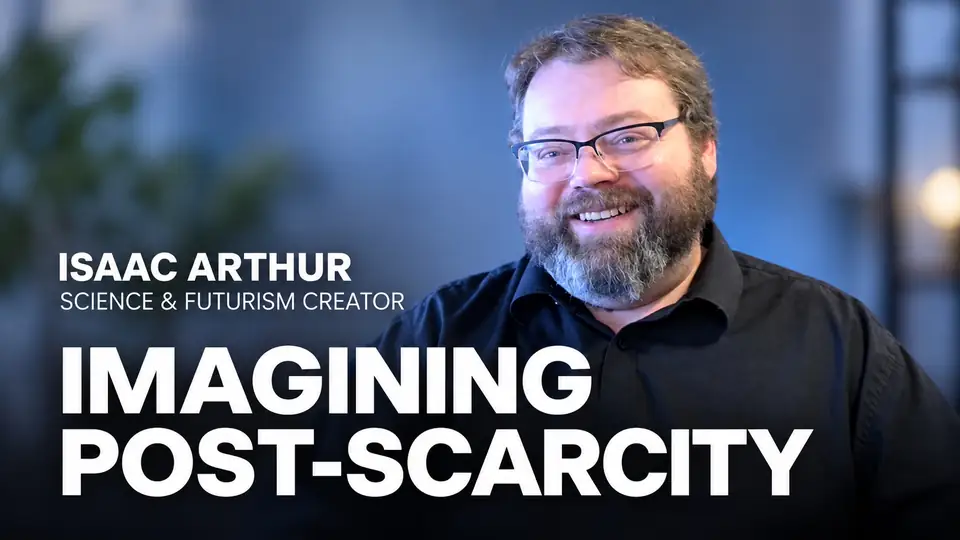
Isaac Arthur connects everyday progress with the much larger futures he explores on Science & Futurism with Isaac Arthur.
November 3, 2023 · 63 min



About the episode
Isaac Arthur is a physicist turned YouTuber and science educator.
Join us as we discuss the roots of progress and its potential into post-scarcity futures, the challenges of building in practice, Isaac's favorite science fiction media and his vision for his channel, his personal journey studying physics to becoming a YouTuber, and what innovation and future utopian scenarios may be possible, including space colonization and virtual reality.
Isaac's story is proof that passion and optimism can blossom into a lasting career. We hope you find inspiration in his story to go build your own visions for a positive future!
Links
Chapters
Times follow the podcast audio. The video’s timeline may be slightly different.
- 00:00Long-form conversation and the changing media landscape
- 02:25Fiction we enjoy and worlds we would choose
- 03:35Progress, recurring ideas and everyday needs
- 07:01The everyday benefits of progress
- 10:48What post-scarcity means
- 12:31Information abundance and trust
- 14:53Science fiction and the complexity of governing
- 19:05Communities, housing and different preferences
- 22:32Space habitats and movable communities
- 25:14Social needs, entertainment and abundance
- 29:33Favorite science fiction and guilty pleasures
- 32:09A playful idea for a manufacturing parody
- 34:40From physics and the Army to YouTube
- 38:14Choosing topics and telling science stories
- 39:35Colonizing the Sun and challenging intuitions
- 43:44How art, science and fiction reinforce each other
- 50:02Different visions of utopia and virtual worlds
- 54:04Turning future ideas into immersive experiences
- 57:46Space progress and what to build next
- 1:00:44Patience and long-term progress
- 1:02:19Where to find Isaac’s work
Read the conversation
Open the full transcript
CAMERON WIESE: But I always find like when you kick off the conversation, it's just like there's so much good stuff.
ISAAC ARTHUR: oh yeah i i think it was it's um i'm on tomorrow with my friend john michael gordier and he and i will talk for like four hours not because we're gonna do an interview that long which is because we chat so much is you know what let's just start the recording now and i'll edit out anything if we say something stupid or embarrassing or private exactly exactly
CAMERON WIESE: It's been so exciting to me to see the podcast movement kind of grow because it's the best way to just have an in-depth, nuanced, complex, and interesting conversation with people in a way like most people aren't used to. Where everyone's used to this 30-second soundbites, quick stuff on TV. It's like, well, it's actually getting to the meat of it.
ISAAC ARTHUR: Kind of like back in the 50s and 60s, there were a lot of old black and white interview shows where they're basically bottle shows where you got one guy in the studio. and one guy here and then the camera over here and they just kind of change with the children angle the whole time and there's nothing on the stage except for a glass of water, a little table of chairs and of course an ashtray because it was the 50s. Of course. And you get these in-depth policy discussions that even like the 6 o'clock news started kind of interfering with because when you only have a minute to discuss a news item it's just not much to do, but they go into deep detail. So I think that's what we see the revival of now is because when you have a limited amount of bandwidth to actually be talking to people on like three TV shows three channels, for instance, you can only put your top quality in there. Now, we can relax a little bit to just what people enjoy doing to the length they want to do it at. So you don't see 26-episode-long shows anymore every year. You see, we're going to go next season.
ISAAC ARTHUR: It might be a year and a half, and it might be eight episodes, and next season might be 11, and the episodes might be 20 minutes long or 50.
CAMERON WIESE: Yeah, and there's a huge variance. But even stuff, people wait for the new season of Game of Thrones, the new season of Westworld. They're like, I'm waiting for it. And then the minute it drops, it's just binge. Well, they do kind of season it.
ISAAC ARTHUR: I'm not really waiting for the next season of Westworld. I was disappointed with the beginning of season three. So I kind of felt like two was built up to kind of a, I hate to use the term, but it's kind of like the Lost Indian, the classic. We have a spot in front of you, like Battle Stalker Lactica did too. There's a plan. We don't know what it is, it's the Vitals, but we're going to come up with one in the meantime and keep implying it.
CAMERON WIESE: it's like we like it seems like westworld and a lot of similar films i mean like ready player one and snow crash just like more recently have played a role and kind of they like shape what the public wants like like do you think it's it's like what do you think the relationship is between these like do we watch westworld and be like oh that's the world we want to create or is westworld kind of stemming from like you know rna desires for you know this future that we imagine like um i'd say
ISAAC ARTHUR: is kind of like Game of Thrones and the House of the Dragon situation. It influenced what people wanted to watch, but not what they wanted to live in. Nobody wants to live in Westeros. That would be, you know, that's not a setting you choose. Like, if all the places you might choose to live in fantasy universes, that would not be on my top ten list. It really is not quite on my top ten worst list. People tend to like, well, in George R. Martin's stuff, characters die so often. It's like, in the fantasy genre, he's actually kind of low on the surprise killings. Should be Black Company by Glenn Cook sometime.
SPEAKER UNCLEAR: Everybody dies. Even
ISAAC ARTHUR: fairly light-hearted ones like Brandon Sanderson, more of the cast died than in Game of Thrones.
SPEAKER UNCLEAR: Yeah. On the
SPEAKER UNCLEAR: 50s, 60s,
CAMERON WIESE: you have these longer form interviews. It's interesting. It seems like there's a lot of stuff that we're returning to from that era. right like we have the world's fair you know it's kind of encapsulated encapsulated in that era you have like boom supersonic building supersonic jets you know like the concord like we had in that era um the podcast returning like did in that era like what was it about that time and like any
SPEAKER UNCLEAR: any thoughts it's fascinating because it's right after world war ii as a period of hardship and
ISAAC ARTHUR: people are suddenly booming but i never liked the idea of cycles of history people you know they say well things spin around like a wheel i was like well wheels aren't natural and they spin when you want them to to get from point a to point b they sort of purpose that's why they spin history doesn't have cycles but you have these like i have an end goal i'm actually trying to achieve and you tend to come back and forth on various ways to approach that so how do you get your groceries well in the 50s you were still getting a milkman delivering the stuff you know a guy brings by your big ice cube and say well now it's so much more convenient to go to the gigantic warehouse store wait a few steps in between too you know your uh the local pop mom pop shops your convenience stores the 80s then the gigantic warehouse store and now you know even pre-covid that was really up so we had that came out right before coveted i said within 10 years people are getting their groceries delivered most of the time that got accelerated a little bit by
ISAAC ARTHUR: by that but you know that's where that's going uh and why well you know in the end is i want the groceries i want in my in my refrigerator when i want them easy peasy no problems and the byproduct that is that what you end up with eventually would be some robot that goes and puts your groceries away for you and half the time you don't even have to ask it to order. It's just say, you're getting low on milk do I have permission to auto order it when it's low? And that's what people want. So you'll see the cycles of, do I go out to get this item or do I have it delivered to me? Because catalogs, because it's in full of this.
SPEAKER UNCLEAR: Amazon's not new. Totally, totally, yeah. That was a great joy
ISAAC ARTHUR: of the postal service, you know, back in the oh, what was it? It must have been after the Civil War, but you had the postal service everywhere, you know. They get a letter to you in another state in just a couple of weeks. It was amazing. You could order clothing from the other side of the concert and it would arrive and probably
SPEAKER UNCLEAR: fit you too.
CAMERON WIESE: Could you imagine like, like just the shock of that, you know, you go from not having the post, like something like the postal service. And then, you know, one day some, someone shows up your door and like, Hey, here's this letter from someone a thousand miles away. It's like, yeah, the shock of that would be just like, I think there's so many of those
SPEAKER UNCLEAR: things that we just don't appreciate.
ISAAC ARTHUR: You know, I avoid using Facebook for years when I first got back, but it was like the only way I could stay in touch with my friends who were deployed. You couldn't call them up on the phone. They were off in Afghanistan or Iraq at the time as a way to contact them. And that's what's cool about this. I can contact them that way. It's so much better than telephones, especially long distance rates. If you don't remember, you would MCI or AT&T battles in the 90s. And then before that, you know, operator, can you please pass me through to this number? Let's see if they're available. Or the telegraph or the letter before that. and then you go back just 200 years for the thousands of years of human history before that, if your kid moved two towns over, you'd be lucky if you ever saw him again, let alone if they went to another country. And they might come back on some massive pilgrimage that cost them half what they owned to go visit you for a year. And, you know, messages they took months to travel, even for
SPEAKER UNCLEAR: government businesses. Yeah, and I think
CAMERON WIESE: this is like, there's this whole story to be told around, it's like I mean, this is Jason Crawford and Patrick Carlson, like the progress studies. People have a hard time thinking about these things. How much better is life now than it was 50 years ago, 100 years ago? All these little things, these nuances we take for granted. Oh yeah, I have my groceries and my letters. I can communicate. I can see my friends. I can see my family. It's just like this weird arc of history. Everything just keeps getting better and better and better and better.
ISAAC ARTHUR: I like to use the example. It's like the stock market because that's not the best at the moment. But, you know, in the whole, I was looking at, was it 1972 day, 1973 day. I want to see what the $6 million man cost in modern money. So I was thinking, well, you know, that would be an example of an expensive thing. Steve Austin, the $6 million man. I looked up what the inflation was before $2 million in modern cash in 2022. If you're watching this in 2023, that might be a little bit more. So you can buy like seven or eight tanks, good tanks too. not like crappy World War II. And so that's a lot of money, but that's the kind of same amount of stuff market's gone up that time too. You get this inevitable rule of progress and technology from stability and it feeds into it. And then it's not just technology, it's the innovations. You think about how much better we got in things like garbage pickup. Yes, there's technology involved in that, but so many of the things we have in life that we enjoy, they're innovative, but they're not really technology based on science
ISAAC ARTHUR: and kind of deep way that we tend to think of as high tech. They're just techniques, which I guess is kind of the same thing, but then that's just, any time you have a bunch of people sitting around who can put together long-time studies, records, chat with each other, learn about things, and not be afraid someone's going to cut their head off the next day, I think you get progress towards
SPEAKER UNCLEAR: life.
SPEAKER UNCLEAR: Totally, totally.
CAMERON WIESE: I think on the $6 million man, another interesting parallel is like he had rock of someone did the study on rockefeller like the the quality of life that he was able to buy as the world's wealthiest man pales in comparison to what like everyone has today so even though he was the wealthiest like he had you know even the money just adjusted for inflation like he didn't have yeah access to like all the antibiotics people have today the medical service, the transportation. Nobody today would trade places with Rockefeller.
ISAAC ARTHUR: I mean, many would, but it depends what your motivations are, what you're looking for. Before COVID, one of my favorite analogies to use was, what I love about our society is at 3 o'clock in the morning, I can walk into a Walmart and pick from 100 different cereals. It doesn't matter that I'm going to get the same one I always get. I have that option. It doesn't matter that I don't go shopping at 3 o'clock in the morning too often, that I did at the time, I had that option. And I hate that the big box stores are closed down now at night, but still, you have that option available. And that's that difference. It's not so much what new technologies we've got as what are your new options for satisfying your wants and needs. And we were talking about, are we a spoiled society? And I don't really think so. I mean, compared to our ancestors, we were tougher in some ways, softer in others, but it's more that these aren't luxuries. These are things that we've always wanted as humans, and we just didn't have the option for.
ISAAC ARTHUR: Like, it's a luxury not to have half your children die before they're 20. That's a luxury in the eyes of people from 100 years ago or 200 years ago. And, you know, I don't think we can call that a luxury, though. That's something we just had to put up with before. Not dying of cancer will probably be a luxury to us in another 50 years or hopefully less. It probably won't be anymore. and so we're just trying to you say what qualifies as post-scarcity or utopia and say well you can't ever really completely fill everything you know not that we can have not just a solid court house but that house on that one important piece of property because only one person can own it only one person can own the last copy of action comics number one or whatever but you can you can lower people's anxiety about their basic wants and needs and not just their basic ones either because those are not even the most important. You know, these post-scarcity things, we have them already. Air. Air quality can be banned in some places if you've been to L.A. or China, but on its whole, air is post-scarcity.
ISAAC ARTHUR: You're not really worried where your next breath is coming from.
SPEAKER UNCLEAR: Water.
ISAAC ARTHUR: Maybe you're not sure if you've got enough water to feed your crops, but you've got enough water to drink. Not everywhere, but a lot more than we used to. So society becomes post-scarcity not across the board, but individual little things. and we say it gets to the point where this fundamental need, it's not do I have an iPhone, it's do I feel like I can find information on anything at a moment's notice? Do I feel like I can contact the people I love to talk to them? That's the actual want or need, and that gets filled up. So if you're just measuring by the raw piece of technology, and we do do this sometimes, we say, well, if there's iPhones 20 years from now, there probably won't be. There probably will not be smartphones 20 years from now. There weren't 20 years ago. Maybe a little longer, but maybe it would be implants, maybe something wearing your ear maybe a contact lens who knows but the technology will go away that doesn't mean that we've gone backwards there are probably fewer books in people's houses these
SPEAKER UNCLEAR: days than they used to be we are not a less literate society you know but the access information
CAMERON WIESE: has has expanded i think it's just like how do people find like how do they kind of come like find the agency to realize oh wait a minute like i [unclear: can/can't] go learn anything you no longer are constrained to the 20 books you have on your shelf you have the unlimited access to anything which then which then poses an interesting challenge like how do you actually curate and find information streams that are going to like give you the right information or enable you to go
SPEAKER UNCLEAR: like do things with them like i i still never found a good answer on that one i mean
ISAAC ARTHUR: you know it's one of those who watches the watchful situations you put people in charge which whose job is to determine what is good, clean, proper, or relevant information and to phrase it. And, I mean, I've never particularly thought people in the journalism industry were a great source of information in the first place. That's a science bias. They'd be like, well, we created something in the laboratory that absorbs all the light of one frequency of this radiation, kind of like a black hole. You made a black hole in the lab? No. Black hole in the lab.
SPEAKER UNCLEAR: Exactly.
SPEAKER UNCLEAR: I was like, wow, what?
SPEAKER UNCLEAR: What?
ISAAC ARTHUR: oh boy they they were very trusted because they only source information i i find myself thinking a couple hundred years ago if i was an enemy general i would probably send guys on foot with real faked accents the enemy's territories and have them run through the town screaming recruit run run the enemy's advanced yes run tell anybody run and just see what happens because that's that's the limit of information access more is not always better but you know it's better to be out of those multiple sources and we are getting that we used to only have a few news sources and And the problem was that whatever their biases were, whatever their institutional otherwise, whatever their focus was for, and these are not necessarily politically speaking. There's what they think was important. But you've got a dog. Let's say you have three reporters who are on doing the 6 o'clock news who like dogs, not cats. You're going to see a lot less cat-hash cheeseburgers moments on them.
ISAAC ARTHUR: And that's not really all that important in the grand scheme of things, but that's just a really simple example of how bias can be in there when you have limited sources. I think the problem though is now we have so many of them that we have to figure out a way to reconstitute who writes the encyclopedias. Nobody trusts Wikipedia. It's a garbage heap. It's the most valuable garbage heap out there as well, but it's a garbage heap. Nobody trusts the media anymore. Why would you?
CAMERON WIESE: So what replaces that? What can we learn from science fiction? Are there any any kind of authors, any books that have painted a vision for how we solve this particular problem, like the information access?
SPEAKER UNCLEAR: I think George Orwell at IT84.
ISAAC ARTHUR: There's been a lot of suggestions on how not to solve it. I think sometimes sci-fi gives us good ideas, often gives us very good ideas for what to avoid or what mistakes to make. And this is a problem. A lot of sci-fi authors are not really experts on the real world, and they often write opinion pieces, though. very straw manny and very much what their perspective is and therefore heals the way and i'd say robert heinle i love his work but this is something he was prone to doing is he always had a character who knew everything right ethically morally and was super intelligent and everybody else was an idiot a drool idiot who could not make a point to say their lie and and i would do that too as would i mean there's endless list of folks who do that asmo did that and great writers but that was the bias that was in there was so often the problems seem really simple but if you actually think of it, this would never happen in the real world. The bad guys can't be this stupid.
SPEAKER UNCLEAR: And so they
ISAAC ARTHUR: talk about, here's how I would run Civilization if I was running it. I say, well, that's good but based on your practical skills here, I don't think you'd be able to sit on a village council let alone a galactic empire. And I'd invite them, you know, if you ever think running things is easy, just start at the very basic bottom. Go find out what your township trustee means or area or village council or local school board and get involved and you just attend and you'll soon realize it's not that people are particularly corrupt or incompetent it's just that
CAMERON WIESE: things are complicated yeah it's it's always a good reminder you know you it's what is that quote like do not attribute to malice what can be attributed to uh maybe maybe the quote is incompetence but there's like the complexity of systems it's like everyone's like oh my mayor's doing this or my city's doing that. Good luck getting anything done. People have households to manage. That's complex. Now imagine a neighborhood and then a city.
SPEAKER UNCLEAR: HOAs
ISAAC ARTHUR: or COAs, those are a great example of that. We have this idea I can't remember what it was. It was Over the Hedge. It's a cartoon that my wife was a given of all kids. It's set in an HOA that spun up overnight with cartoon animals running around trying to steal food. They make the HOA head out as part of the dictator. And there are certainly no shortage of tin pot dictators in the lower echelons and things. Usually, that's where you find them most often. But a lot of times, it's because trying to run something like a neighborhood to everyone else's different code, it's like trying to hoard cats. Nobody wants you to, you know, this is my yard, don't tell me how to run it. Say, well, you know, he signed the contract. I said, ah, I don't care. That's for other people to follow. I thought that was to protect me from all the stupid stuff they were doing. and that's even worse like the township level is like we need you to stop boarding tires on your front lawn this is an actual problem i won't say where from but in my county that came up was
ISAAC ARTHUR: a multi-year problem we need you to stop boarding tires on your front lawn and this was getting to be like a daily event we had a free recycling these at the county level they even offered to transport them though they
SPEAKER UNCLEAR: probably shown up is like what the person had decided to take in their heels and and it turned
SPEAKER UNCLEAR: out they had no enforcement value over that oh my goodness it's like hmm what time is it oh it's five o'clock time to go burn the tires hey you know these are a lot of cases you can't really
ISAAC ARTHUR: go ahead and call up like the sheriff you're like could you come down here and make this guy stop he's trying to make a point i don't know it might be protected speech at this point if it's a
SPEAKER UNCLEAR: political statement.
ISAAC ARTHUR: You make him sound like, well, no, we've got these drug dealers down the road that we're busy trying to spot right now. They're right by a score. I could stop doing that and come put the tires out or I could arrest these drug dealers. What would you like me to do?
SPEAKER UNCLEAR: All right.
SPEAKER UNCLEAR: Thank you. Yeah, let's... The HOA
CAMERON WIESE: complexity, it's funny because you think that, okay, if you make a system, that's kind of like opt-in, right? That solves all of your problems. But the HOAs are a perfect example of like, okay, well, hey, you moved here, you moved to this neighborhood. These are sort of the constraints and the requirements. Like, are you on board or not? Everyone's like, sure, sure, yeah, I'm on board. But the minute that like when push comes to shove, they're like, oh yeah, you're right. Like those aren't for me. Like that's other people. Like I don't want to do that.
SPEAKER UNCLEAR: And so it'll be- On the same thing, there's also the generational cap on it was like, well,
ISAAC ARTHUR: I know my parents moved me in this HRA and I am now stuck to this house because the equity is down and I have to pay it off for them and I don't really want to follow any of these rules. I'm going to follow it in, I'm trying, but not really there. Or like plant communities, right? We love this idea, but while it sounds great to say let's go have the one where everyone follows this set of rules that we all agree to, they don't have a last one generation. Whether you're like a group of religious missionaries or pioneers moving to an area that's set up New Jerusalem or whatever it is for your community. Well, one generation later, people are saying, I love you guys, but I don't want to do things quite the same way as you. I don't want to move, though.
SPEAKER UNCLEAR: This is my home.
CAMERON WIESE: More than yours, I was born here. How much of that do you think is tied to this weird incentive structure that we have around home ownership is the main story of value?
ISAAC ARTHUR: I was watching something on that just the other day from something. She has to finish it, so I don't know if I agreed with it off or not. It was something towns. That's not very helpful, is it? It was like rough towns or small towns. And it was on the idea that the suburban sprawl from cities that we got in the 50s, the idea of own your own car, own your own home, own your own lawn, was kind of a, I think he phrased it as a Ponzi scheme, though minus the fraud. And this idea that it was costing too much to set these things up. and after a couple of generations, iterations of road repair, you're basically burying the place financially if they weren't constantly growing. And we do see that. Like I'm in the Rust Belt area of Ohio. We definitely see that happening in a lot of places where the community is a little bit too much. At the same time, you know, I try not to question what people think of as their ideal setup too much. They might influence it, but if that's what you want, and I live on a 50-acre farm in the middle of nowhere and I keep like four acres of grass,
ISAAC ARTHUR: I'm not really going to complain too much about people. I have to drive 10 minutes to get to the convenience store. and i love it you know that's it if it's it's it's the life that i want to have and obviously you know you're willing to sacrifice those other priorities including the community's priorities but if what we decide is we all want to have the split level suburb and picket fence although there's too many of those anymore you know um i kind of want to find ways to accommodate that as much as possible but you know there is a limited amount of land so my answer is usually let's go build more of it um a lot of farmland we have we you know farm more on less and we can keep doing that you can go so much more under like a cover of our greenhouse we don't have the robots yet for intensive agricultural in a greenhouse kind of environment but we're getting there and when we do we could get away with turning you know one third of the farmland into farms under greenhouse and robots one third back in the forest and one third in a more suburban spot is it a long-term fix?
ISAAC ARTHUR: Define long-term. You know, there is no infinite
SPEAKER UNCLEAR: one on that. Well, you know, eventually we get to
CAMERON WIESE: the point where, you know, we've got the long-term on Earth, and then, you know, we're up in space, we have space habitats, and
ISAAC ARTHUR: like... And what I love about space habitats is, one, they're buildable to a certain scale. I mean, the bigger you want to build them, the more inconvenience gets, but you build them on the size of a county. Right? You can build them theoretically bigger, but that's economical, theoretically, for a given value of the word economical, right? and you can move it because it's a spaceship too you know or at least you can tug it with a space tug and now you don't like your neighbors anymore you take your whole community and move so your county size space habitat size I don't want to be one of Ohio's you know 88 counties plus it's 12 orbital counties I want to be part of Wyoming or screw it we're going to go ahead and join Switzerland they do better deals on this one and you might get some micro countries that actually have like tons of space assets just because they are offering that diplomatic and higher level federal incentives without that much taxation um but even then you can take that a little
ISAAC ARTHUR: step further and say why can't i move my house i mean that that is potentially technology we get at some point in time even on a space habitat maybe we just disconnect your chunk of it
SPEAKER UNCLEAR: oh that's interesting yeah because the idea is like you have like the ultimate portability
CAMERON WIESE: the ultimate modularity of like even even down to the space habitat levels like okay cool hey you know i'm done but perhaps at that point like when the technology that would enable us to build space habitats also enable us to just completely reconstruct like brick by brick whatever is in that plot somewhere else and you're like okay cool i'm done just gets you know i mean it'd probably
ISAAC ARTHUR: be cheaper to move the existing one if it depends on how you build it right so you have a case where is like well this is going to be a lot easier to knock over when we build somewhere else brick by brick or even with the individual bricks but this one was built with the ability to homogeneity mic is more like an rv you know and so it depends on and there'll be styles i know i'm not going to move this place i helped found it i ain't going anywhere i ain't paying the extra 10 percent to have my rv style house or it limits how many basketball courts i can have and as a guy who likes to play basketball i don't but i need to have at least three basketball courts in my house as a post-scarcity person. We don't really know what their stance is going to be on these things. But the thing is probably not that over-the-top or crazy. We've certainly wanted to go for bigger house styles, but it's not like everyone's goal is to have a 10,000-square-foot house. That's what you do with it as well. You can have your own private movie theater, or I could have a 70-inch one in my bedroom,
ISAAC ARTHUR: or I could just have my phone. And the little thing to lean up to is I can watch it, or a VR headset. that, you know, do you really want your own bowling alley? And the answer is maybe to practice off, I got that much money, but I'm only practicing it so I can go play at my bowling league with my fellow humans. And I think that we are an innately social species, so we always have to look at communities, compromise together. But you could have some scenarios where people say, I'm tired of all this, I'm going to take the equipment of my Mr. Fusion on my personal spaceship with my Star Trek-style replicator or more realistic, very awesome 3D printer, and I'm going to go fly off into space and go random, random asteroids 10,000 light years from here and refuel every so often, but I don't want to talk about humanity. I've got a database full of prototypes and maybe more technology will pop up, but who cares? I've got everything I could ever want or need already in the database. I've got 50 million years of movies just from last year alone that I haven't gotten around to watching yet.
ISAAC ARTHUR: I think there's a character in Douglas Adams, Hitchhiker's Guide to the Galaxy, Warbagger the Infinitely Prolonged, who through an accident was made immortal. And after the first few million years, he's realized he's watched every movie like 30,000 times. And he's just bored. And I said, well, you're not really going to actually run out of those. You're not going to run out of new movies or new books because they're printing them faster than we can read them these days, let alone some Galactic Empire. on the other hand how many times do you have to read variations of jr or tolkien before you're kind of bored of them you know it's it's like if you go back if you start off reading fantasy series and you didn't read shakespeare or your tolkien or whatever and you go back and read the originals often seems kind of cliche because it was just set up you know tropes in the first place but you can only have so many times you've heard some character pull a sword out of a stone even when you start getting the metal fourth wall variations of that where it's
ISAAC ARTHUR: boring you know and i think that might be a case where people find they don't really want to enhance their intelligence too much because it probably makes them bored faster you know oh that's
CAMERON WIESE: that's an interesting point and then like because then you start to pick up on the like the parallels between all the stories like wait a minute this is the same story being told like a thousand different like slightly different variations like okay i got get the underlying kind of concept here
SPEAKER UNCLEAR: what's next like i'm all zombies are different orcs are different or knights are different this is a
ISAAC ARTHUR: samurai story they're all limits but you don't really ever run out of a desire to do eating at all this is between boredom and temporary boredom with something else but i always thought it was kind of funny is because when i got netflix i was late to netflix and you know prime and all that stuff um i could watch whatever i wanted whenever i wanted and yet and i grew up on the three networks plus pbs where you got what you got you got it period and i remember the early cable days it was like 40 channels wow awesome and yet I would like look through things to try to decide what I want to watch and I'd be like okay after five minutes of flipping through these I want to watch nothing I've got to read instead I think part of that's such a time commitment there's like eight seasons of this show I don't know if I want to start watching it because I might like it
SPEAKER UNCLEAR: and then I'm committing a week of my life to it
CAMERON WIESE: and you emerge on the other side you're kind of disheveled and you're like oh well i got to step into a time machine i got through eight seasons of like how i met your
SPEAKER UNCLEAR: mother the office or whatever the new thing is and well like reality tv is something that i kind
ISAAC ARTHUR: of missed out on i was very new when i was in college and i went overseas for years right i was just not connected to television and i got back and i was talking about reality tv and i had no idea what they're talking about and then so 2016 everyone's talking about well that is the exact case was trump i was like okay i should watch this apprentice show maybe it'll tell me more about this guy who's running. And I watched this thing called Hell's Kitchen with Gordon Ramsey. This is good, too. I don't see what people are complaining about. This is junk, but it's entertaining junk. And I realized there was no end to this. You're just watching people have, you know, kind of Jerry Springer style involvements with themselves that are very fake once you start noticing the pattern. And that's kind of the junk, but there's no real storytelling there. And again, there's nothing against any of those producers or shows. They're making something that people would like to watch, and they do it well. But, you know, it's
SPEAKER UNCLEAR: not really what does it say
ISAAC ARTHUR: I don't like to be snobby about it but you don't really come away feeling like you just got done watching like masterpiece theater or something like that
CAMERON WIESE: perhaps not as like intellectually stimulating or like in that fashion
ISAAC ARTHUR: it's probably allowed to have stuff there's that movie you know from an objective standpoint is crap and yet it's still on your top five list
SPEAKER UNCLEAR: what's that for you
CAMERON WIESE: share with the world Isaac What's your top five crap movie? If you're like, you know... Until recently, still my favorite movie
SPEAKER UNCLEAR: was Blade Runner, which is good.
ISAAC ARTHUR: And my second favorite movie was Dune, the David Lynch version from 1983 or 84. And that got replaced finally by the new Dune. I'm really loving the... I don't know how to pronounce his name. The new Dune film by Dennis V. And it replaced the David Lynch version. And I love that film. I even defended on a podcast one time and it was, the only time I lost I almost won the jury over you defend this film and you say, well objectively it's it is bad in many ways this is not a great film but there's other parts that are just wonderful I can know this is objectively crap but it's still good and there's a lot of ones like that in science fiction they're just classically bad Star Trek The Next Generation, season 1 and 2 all garbage but I grew up on them They're good. They're not season 3, they're not season 4 or 5, but they're Star Trek. They're episodes of Star Trek that should never have been made, especially in season 1. But, you know, they are guilty pleasures. And again, they don't have to be that good. They can just be ripped off somebody else. A lot of cartoons are like that.
ISAAC ARTHUR: We all had our childhood cartoons, and it's like you go back and you watch one of the ones back then, I don't mean Bugs Bunny, but any children's cartoon, almost any children's cartoon, it was
SPEAKER UNCLEAR: crap
CAMERON WIESE: but it catches simulators you know wake up wake up Saturday morning run downstairs you know sit in front of the TV
SPEAKER UNCLEAR: and watch it
ISAAC ARTHUR: all the way through the noon sometimes even get early enough to watch the how things are made that would run right before the channel actually came on where I'd be like let's go and show you how to make toothpicks they actually had an episode that was on toothpicks yeah it was nothing like the cartoons that was to show you to drop the one whole log down there and just turn the whole log into one toothpick
CAMERON WIESE: imagine if that's how like everything was made it's just horribly inefficient oh hey these hundred toothpicks came from a hundred trees people would be outraged you're wasting all that wood that'd be like a good revival series for like a YouTube channel how things are made but with this like bent where it's fake but it's done in a way that's like overly drama to get people to be like wait a minute are you serious
ISAAC ARTHUR: how things are made you might get sued on that one
SPEAKER UNCLEAR: how things are made
SPEAKER UNCLEAR: the the
CAMERON WIESE: well it's great because like you could probably run it under like a parody like I don't know there's this guy who did this like parody Starbucks Nathan Felder or something is some comedian but he created a store called fake starbucks and it literally had like fake is someone like was all the starbucks branding but slightly like tweaked to be like oh fake starbucks fake starbucks and it was enormously popular starbucks tried to sue him but they they couldn't because it was it was a parody it was art and so there may be there may be like if anyone listening is like i need an idea that may be the path to follow like go go build a how how it's made but you know
ISAAC ARTHUR: oh yeah when i got on youtube it was already still fairly full but you could still break out these days you really need a very innovative idea to break into the market so that sounds like what you know how things are made the parody so you could show some factory they're making socks and someone's just knitting very fast like 5 000 little epigons on knitting
SPEAKER UNCLEAR: oh man yeah so someone have fun with that what was um mechanically separated chicken i saw that
ISAAC ARTHUR: on the back of an ingredient
SPEAKER UNCLEAR: that I was looking for a Slim Jim when I was a kid. And I thought,
ISAAC ARTHUR: I don't know how this works. And I'm afraid of what mechanically separated chicken is. I had this image of, again,
SPEAKER UNCLEAR: the Acme scene where they got like the things going down the conveyor belts.
ISAAC ARTHUR: And you get those little skinny
SPEAKER UNCLEAR: little robot arms, the white gloves on. She's got to reach out and be like,
ISAAC ARTHUR: and then I watched a video on that. And it was disturbing, especially because it was all done. It was a machine that did it from some company in Japan and had the worst English ever. And it was playing very upbeat meat and like techno music what was going on. So he was just impressed by the process of watching them show how they mechanically separate out meat.
CAMERON WIESE: But then the music's keeping you going. So you're like, you can't stop watching because you're curious and the music's like,
SPEAKER UNCLEAR: Oh no, this is a good thing. You're like,
CAMERON WIESE: you almost told me on the idea that this is one of the great homeworks of all time. This is the best thing since sliced bread.
SPEAKER UNCLEAR: It's spam. Sliced bread,
CAMERON WIESE: mechanically separated chicken,
SPEAKER UNCLEAR: you know? Oh my goodness. What, um, how's like,
CAMERON WIESE: tell me like the story of how your how your kind of youtube channel came to be like oh like isaac i i you know i actually like first came across your work as a result of kind of the event we're both at i'm like i've never seen this before and then when we're i was sort of watching yourself like this is insane like i can't even pinpoint like one or another episode that i'm like just enthralled by because it's all so well thought through and so like research like this is awesome like this is such a cool thing and you're telling stories and you're painting visions for the future that like just draw from all the science fiction books and all the stories that people were told but it's like condensed into a specific frame that makes it accessible for people so like how does thing come together like is the you know i mean there's a lot
ISAAC ARTHUR: of ways that kind of got started in terms of where my background it was but when i was i was about halfway through grad school for physics when I decided, you know what? I do not want to do the city war. I was done working on the doctorate, so I went and joined the army, which ironically was less stressful even in the war zone sometimes. When I got back from that, I was like, I don't want to make a career out of the army after all I was going to do for, I think I did seven years there. And I was like, well, I'll get involved in local government and local cities and things like that. But that really wasn't appealing to my like science yet. I did not want to go back to college, I did not want to be a professor, I did not want to stay in the military for the rest of my life. Loved both those times of my life, but they were periods. But I missed the science-y bit, so I was hanging out on some science forms. I didn't really want to write the great novel, but some sci-fi forms where the writers were at, and they'd have ideas they wanted to kind of check the realism of,
ISAAC ARTHUR: which eventually gave me the realization, don't worry about realism for sci-fi. But I would tell them, you know, things like, you don't need to have everything set on a planet, especially when you're playing having one village there. There's so much more of the universe, so much more cool technologies are available and after repeating myself a bunch of times i thought why don't i just do these like a powerpoint and put it up on youtube so i can just lengthen that instead so i did an episode called megastructures uh in science fiction and science and just showed images of the various megastructures and discussed what they were space habitats and so on um and post that up to my youtube channel which i i always say i founded them but i actually had one just was my like gmail account and it was a couple photographs like the current election information because i'm also the chairman of the board of elections in my area and you're like what levy's going to be on and the photographs of raccoons i had coming to my porch so i eventually
ISAAC ARTHUR: deleted those all off but i put that video up there and i got a note and it's from youtube it said you have a subscriber i said what's a subscriber i never subscribed anything on youtube i was seamlessly paid money for and so i said wow that's that's neat so a few months later i did another episode kind of looking at like the realism of aliens in the universe and uh after a conversation i had during new year's eve that one did well it had a couple hundred views like wow a couple hundred views i i've only had a couple of times i taught where i had that big of an audience and that kind of was on another episode and another episode and then the hobby turned into an all-consuming passion that turned into a job but it was one of those things where it just kind of evolved out of it. I never meant for it to happen. And it's the example I give folks is don't, you know, if you're trying to be a famous writer or a famous YouTuber or a famous musician, don't try to be these things. Figure out what it is that you actually like to do to show other people
ISAAC ARTHUR: and just be really good at doing that instead. Product before opening.
CAMERON WIESE: And like, what's been your
SPEAKER UNCLEAR: favorite like
CAMERON WIESE: like fill or like an episode to pull together like which like i'm sure they're all like they're
SPEAKER UNCLEAR: all special to you but like they all have their own little story actually that's not true sometimes
ISAAC ARTHUR: i'll forget about an episode i'll start writing episode on a topic yeah this is a cool one i shoot an episode on that and one of the others but didn't you do one on this like four years ago yeah what was the title the exact same thing damn but yeah we changed his title and the content's different though because there's any any of those topics like well you can do 30 minutes on episode if you knew 30 minutes usually like 30 years there's that much content or something like that but um the ones that i really tend to enjoy are tend to be the more the existential weird ones or the storytelling ones where it's like let's follow a you know let's we always use science fiction to highlight science because it's a science channel first and foremost. We'll explain them in terms of the science fiction. And so we'll do little sci-fi stories to present the concept. Some of those have been my favorites to do. A lot of the episodes that did really well in terms of views were always favorites too, of course. Fortunately, they were often ones I really enjoyed making too, which is over the years,
ISAAC ARTHUR: I'll make an episode enough for the audience to request it, but usually my policy is I'm going to make an episode if it's a topic I really want to make an episode about. Otherwise, it doesn't come out as well. And I think maybe my favorite one to do, though, was colonizing the sun because we've been doing all these things like colonizing Mars, colonizing Venus, colonizing Titan, colonizing comets. And someone said, could we do one on colonizing the sun? It was a joke. You say, well, you couldn't do that. I said, oh, yes, I could. And we have a rule on the show. We never do a clickbait episode. If it says whatever the title is, no matter how overhyped it sounds or how crazy it sounds,
SPEAKER UNCLEAR: that is the topic.
CAMERON WIESE: so okay so i'll have to go watch this one and i'll link to it like how might we in a quick
SPEAKER UNCLEAR: disillusion like how might we colonize the sun well it depends on which star you want to colonize
ISAAC ARTHUR: there are actually ones that are cool enough you could have metal floating on the surface of them if it weren't so thick like tungsten wouldn't melt on most stars our star is one of the bigger harder ones strangely enough we call it a dwarf but it's just a dwarf compared to all the giants so you could foresee the brightest ones the easiest spot. But you have options like highly mirrored surfaces. If you could make a mirror that is 100% reflective then it's not actually all that hot in the sun. It's like hot like a bakery is. You stick your head in an oven you don't instantly catch on fire and that thing's twice as hot as a pot of boiling water. Stick your head in a pot of boiling water you're really going to feel it. One second you have to feel burned. An oven you could probably weigh your head around there for 5-10 seconds at least what got hot. The sun is really thin. You know, you see in science fiction, they could crash something into the sun, and it looks like it just found a lava. The photosphere of the sun is thinner than air, much thinner than air.
ISAAC ARTHUR: It's thinner than the air up at the International Space Station. It's really thin. And there's hundreds of kilometers thick of that you have to fall through for us. So if you're reflecting most of the light away, you're still getting heat in there, but very little. You could actually run a spaceship through something like a red giant, because that's even thinner. Those things are like 100 times wider and a million times less dense than a star that's already incredibly thin. So you could slow down that way.
SPEAKER UNCLEAR: Wait, wait, wait. So like a red dwarf like as a star.
SPEAKER UNCLEAR: Red giant, sorry.
CAMERON WIESE: Red giant, red giant, red giant. Like you could like drive it like fly a spaceship through it?
ISAAC ARTHUR: Yeah, not right through the center. That's still going to be very dense. But, you know, the center is a tiny little pea-sized object in the middle of a beach ball. and that beach ball is much, much thinner than air. But it's thick enough that you could slow a ship down by going through it, or you could potentially refill or something like that. And one of the problems of space travel is not leaving as slowing down your destination. So there's a lot of ways you can speed a spaceship up to get it out of a system, but you have to be able to do just as much to get to slow down. And those little cheats let you slow down. Same thing for going around Black Horse. People say, Black Horse must be very dangerous. they're a lot safer than the star that used to be there if you're near a black hole that's got about one stellar mass and we do episodes on colonizing black holes, living onside them right around them, they're a great place to get power from but a black hole made out of a star that was 20 times the mass of our sun you couldn't get within 100 million
ISAAC ARTHUR: kilometers or something like that, you'd be dead before you got near it and that's in its main phase, not in its giant phase but that black hole you could be within a couple hundred kilometers of and be safe.
CAMERON WIESE: There's so many things that I feel like me reading science textbooks or having fifth or sixth grade astronomy gave me these ideas about, oh, the sun is just very a lot of these stars are very thick and concentrated. It's like a lot of this stuff, oh, yeah, why do I believe that to be true? I actually don't know that
SPEAKER UNCLEAR: these things are this way.
SPEAKER UNCLEAR: We didn't even call them black holes until Disney put a movie out in the 70s about them.
ISAAC ARTHUR: Before that, the common term was usually like a dark star or a black star. And we've been thinking these might exist even way back in the 1670s. But we didn't know the details of relativity, but we knew the speed of light was a number. And if things were dense now, they wouldn't be able to escape because we can build that number. um and uh you know these these things get shipped a lot in our heads because we it is the it is the two-edged sword of sci-fi on the one hand you have this constant creative triangle between like art science and science fiction that just feeds onto each other and builds these ideas up we get so many of our scientists by sci-fi the best message i give people i get a few a week these days of saying you know i just graduated from college and i major of this feel right to watching your episodes it's like that's amazing that's amazing it makes me feel better for all my professors who you know put time into me and i didn't go into research i went into indian entertainment and edutainment but it's you know that's a great feeling but i had that in
ISAAC ARTHUR: my background too sci-fi i grew up on the stuff artists they get inspired by some some article they draw a picture somebody makes a story about it and that just gets read by someone and feeds and it also keeps the public, you know, it's where we recruit scientists, but it's also how we recruit the enthusiasm that people have. Where do we get to believe that the future is going to be better? You know? I mean, history would tell you that based on looking backwards, but that doesn't seem to be what people do. They'd look at sci-fi and say, look at these cool things down the road that we could have. These that we saw in Star Trek are very real to us. And, you know, you try to explain to people, look, the warp drive stuff ain't never going to happen. There's not going to be fast line travel. you're not going to have a replicator that just makes you Earl Grey hot like that but we have other options that are actually even more cool under known science
SPEAKER UNCLEAR: and excuse me
ISAAC ARTHUR: that's one of the things we aim for on the show is say we want to show why a piece of technology you see on sci-fi might not work but we want to just cynically say and nope can't do that we say even though you can't make a wormhole or travel to the other side of the universe etc even though you cannot travel faster light, you could still colonize the whole galaxy or even other galaxies. And the reality of that is in many ways way more impressive than
SPEAKER UNCLEAR: in the space opera. What is the role that
CAMERON WIESE: science fiction and science and all this and art should play in shaping our vision of the future? Because it seems to be one of the things that is clearly lacking. I mean, lacking to, I guess on a broad scale, you're putting out incredible stuff on this. There are lots of other people working really hard on like telling stories like talking about science and science fiction and kind of
SPEAKER UNCLEAR: pairing it with art in a way some focus more on the sci-fi and try to bring realism to it others
ISAAC ARTHUR: are more specifically science and don't really do the sci-fi as much but it you know there was way more creative sources than there used to be on this and when any of these science shows used to be you know um mr wizard and carl sagan and those were amazing right there was the you know their whole generations got inspired science by those now we got 10 20 million times as much i don't know what was inspiring about the war fail
SPEAKER UNCLEAR: that's the another example there
ISAAC ARTHUR: what did people see there and say this is a future I want to pursue I want to make this happen or something like that you see this awesome cool new visage for the future and that's what you want you want to make that happen this is the you become a missionary for that concept more or less yeah because there's zero involved you don't get a science degree in any science let alone you know the hard stem ones by you know twirling your thumbs for a couple years you walk look at those you know it is hard it is headaches it is you know unless you're one of those people who just doesn't ever do physical labor it is usually much more relaxing to do physical labor than to sit you know study for two or three hours straight like that every day repeatedly throughout the day over and over and over again and it changes your your outlook on life and not always better in terms of how you look at problems things that used to be very comfortable you can suddenly become very uncomfortable because you realize that there was parts of it you never used to see before that
ISAAC ARTHUR: that aren't so okay you know and uh we do that because we really believe in this idea and some people do it by sheer curiosity there are scientists who i know couldn't care about the world around them at all they're just very monomaniacly focused on that one bit of science
SPEAKER UNCLEAR: for some reason or math. And, you know,
ISAAC ARTHUR: some of our best scientists were people like that, but a lot of them weren't. A lot of them were people who, they had a vision for the future and that was their way of adding to it. And, yeah, it changes. It's not going to be the Doctor Who, Tom Baker, 1970 stuff that a lot of us got all vision from or the old classic Star Trek, but it's there. It's an abhorging idea and it's what makes us pursue it.
SPEAKER UNCLEAR: In that regard,
ISAAC ARTHUR: every sci-fi cartoon like Futurama, every gorgeous painting by someone like Don Davis, with the giant O'Neill Sonders we all group on frontiers in Space Farm, or high frontiers, excuse me. And those things, they are what inspire new scientists on. And they're also what inspire people to be like, you know what, I'm willing to dump insane amounts of tax money into building a $10 billion super collider. I'm willing to spend so much money on going to the moon going to Mars, going to Europa, going to Alpha Centauri eventually. These things require even if you had a vast amount of money that was just freely available to use for this, you still have all that around a rocket pad. In good old Florida there's like a six mile region where you couldn't possibly live at comfortably because it's that loud and rockets go off. I don't think people appreciate how wild those really are and it disturbs local ecology there are things required to do technology that require sacrifice by us money, time, etc and that require the whole civilization paying attention and if you don't have that
ISAAC ARTHUR: art, that fiction, that vibe from it that says this better world is on the horizon and that can include the opposite cases too your dystopian sci-fi which a good story is usually not set in utopia you kind of have to have conflict but sometimes people watch sci-fi and it's a little bit too depressing, too dark and it makes them have a bad image of the future it's not a place they want to go but just as often if it's good storytelling they say well this is an avoidable future, this is not
SPEAKER UNCLEAR: the place you want to go to
CAMERON WIESE: I think, I don't know I try and challenge this idea that you can't have like conflict and like utopia, like protopian I guess if everything's perfect there's no conflict but you could have like the scenarios the settings take place in places that are a bit more beautiful like imagine like obviously Blade Runner wouldn't work if it was set in a like if it took away the neon and the city and the darkness because like that's part
SPEAKER UNCLEAR: of the you know your mega cities video
SPEAKER UNCLEAR: this is the film no look although I would say I think it was cleaner in that movie than
SPEAKER UNCLEAR: in actual LA in the year 2019
ISAAC ARTHUR: but I saw a timeline of all the movies from the 70s that were happily set right in last few years like solar and green too um but you know um you can have conflict in utopia you know it's it's not necessarily paradise and it doesn't have to be what's utopia we all know the answer on that one is a very sort of person um we don't have to be utopian we just have to be better than we used to be and just be and that that doesn't mean you don't have to have every planet be the same if you go out and colonize a billion worlds that's a lot of room for a lot of options Some of those might be really weird places. You know, Utopia might be some place that looks like a sleazy version of Vegas for a whole planet. And yet, you know, you might have a place where Utopia is an untouched rainforest. The whole planet's one untouched rainforest. Or one untouched, you know, Jurassic Park. Because, and this is the cool thing about things like Dyson Swarms, where you're using all of a sun's light, not just all the lights on your planet and giant space habitats.
ISAAC ARTHUR: You can build 2 billion times the living surface the Earth has just around our sun. from available materials. You have to devote to your hand dance now, but let's say you decide you want to devote just 1% of all that space to nature bazaars. That is 20 million planets worth of living area in which you can build every epoch of the previous planet you can clone or make up in the meantime and have versions of it and backups. You can have a planet devoted to kilometer wide sandworms.
CAMERON WIESE: you know yeah how i don't know it'd be such a fascinating feature to live in where yeah you literally do have like the dune planet and or you are like you can go to arrakis and like you can even i think what what what an interesting concept to think about like an entire like a planetary scale film set right where you go to arrakis and you can like participate in that story.
ISAAC ARTHUR: And that will probably happen, too, because we see, when a movie comes out, you get the books to accompany it, the novelization of it, you get the games that come out, and the whole multiplayer community that swings up around it. That's part of the really good world, but it's what I like about things like Star Wars, EU, Trek, or Warhammer, some of the other ones. It's a whole setting built by thousands of people that has so much depth. Even the crazy bits that don't make sense, they're contradictory, add to it because it's like the real world then if it doesn't make sense. But you don't just have the option of real space things like space habitats or the planets. You do have the virtual options too. What does a world look like where you've been running a server that's a planet, a made up planet like Arrakis with limited AI where in some worlds and people coming in to visit and others where they've been there for hundreds of years consistently and in detail. That's a real planet at that point, isn't it? for all practical purposes. People might even live there. Maybe not all the time,
ISAAC ARTHUR: but they might live there. They might be uploaded
SPEAKER UNCLEAR: there and stay there.
ISAAC ARTHUR: And that's one way to colonize the universe, too. You say, well, you know what? We're going to build some giant computers and giant solar collectors and lots of virtual worlds where the rules don't apply as it would normally fit in the universe because I want to live in the world that Escher made. I want one where the sky can float between two seas.
CAMERON WIESE: so one of the two other things i want to i want to just riff on with you is what i'm kind of thinking about when we design the like obviously with the the design of the fairgrounds like we want to have kind of design around all the all the core themes space energy food um but it's it'd be interesting to just kind of hear your perspective on what sort of ideas from science fiction or some from some of like the videos that you've produced would be would make real make for really good like conversions into like physical immersive experiences. So like what, what stories can we tell through physical place that would imbue people with a sense of like possibility and curiosity about,
SPEAKER UNCLEAR: you know, a certain topic.
SPEAKER UNCLEAR: I mean, there's,
ISAAC ARTHUR: there's a lot of options there that, you know, in terms of some set that someone could actually be inside something like the pot on a space elevator as it goes up. And you simulate that with a little bit of maybe a swing, and it's going up. And you're seeing, you know, the screen showing you what the world looks like as you go away from it. Or what it would be like on a rotating habitat, which you have the upside that you could just project the ceiling because you already have to grab it in place. Or we'll walk you around on an orbital ring in space. Or even just here's a slice of an ecology, you're inside it, and here's the outside view screen and the inside view screen of the main hab with the gardens and all that. these kind of things give people a chance to walk inside feel touch and smell something that's still fake right it's not the real deal but that opens their eyes up in a way that just
SPEAKER UNCLEAR: seen on the screen doesn't help you know it's that step beyond even imax yeah and i think like that's
CAMERON WIESE: i mean that's the whole point of the fair is to take these these ideas like people are already talking about but how do we can how do we turn them into things that are like really kind of incorporate all the other senses because like there's something like imagine just walking through like a space habitat like oh wow this this could be and then it like makes it feel even more real and more achievable than just having like just kind of watching or like reading about it
ISAAC ARTHUR: yeah it's that experience into it and that emotion and then then someone comes out of that place and says well you know what i love this thing but that part there didn't make sense you oh wow you're right that didn't and now you can make it more real uh you know a lot of stuff that was in the world fair obviously you know didn't actually come to be in the same way the i mean most of us can sing the monorail song from the simpsons these days that monorails were always in those but um a lot of it did in one for one another or it didn't come about because we got something better you know you never got the flip phone communicators from star trek although i guess we did have flip phones for a while um you know we got something better you know there's not gonna be the tap on thing they were used like you know uh bridge come in no you got the smartphone and because they're taking photographs, they walk around, and it's easier. We got something even better. And we got that because people were inspired to pursue it. Things like that, where you put all those ideas together,
ISAAC ARTHUR: it means that when someone's trying to find – you take a bunch of school kids or something like that. Oh, well, they went to the one thing that saw the one exhibit, and that kid didn't care about that one. But the next one just latched onto them. And maybe that doesn't mean they run off and become a geologist or a physicist or an engineer. maybe that means they go on to go into marketing and but the opportunity comes up to help show that you know they were so impressed by the presentation or maybe it's just a hobby for them or maybe it's something that they take their own kids to and one of those kids turns up the next Einstein. We connect them things we give them that feeling that this can be made real and because they've seen it and touched it even as a model they know that that potentiality is there and they can help that come along faster you know what was so soul-crushing about the 80s and 90s about not going back to the moon, the not. So it's like, until SpaceX, you know, take it or leave it in terms of the other personalities involved,
ISAAC ARTHUR: came around, a lot of us felt like that moon thing was just not happening. And I also tell people, well, be patient. We're going to get things to replace it.
SPEAKER UNCLEAR: And I was right about that. We will.
ISAAC ARTHUR: But I never expected SpaceX to succeed in that way that it did. And it was, you know, one of those examples of things got moving very quickly. Why? Because it was a whole bunch of researchers and engineers who came from that same generation that watched that happen and then watched what didn't happen. And they were willing to invest their whole life into making that happen because it mattered that much then. And, you know, the public has loved this. The public's all for it. And they would like to see us move forward. And we maintain that by giving them lots of actual examples to say, here is what we can potentially give you. It won't look quite like this. So if you don't like it, that's okay too. This is the options that might be out there. Help us make that a reality. and what most people are going to say is, yeah, yeah, I will help you make that a reality.
CAMERON WIESE: If you had to pick like, you know, just a few things that you would want people to be inspired to go build over the next, you know, couple of decades. I know if we kind of look pretty far out, obviously we want the cloud cities, we want the mega structures, we want the, like, that we want all the things but in the shorter term it's called like 20, 30 years like what do you want people to be inspired to go build? There may be pieces of it that are out there but like we tell stories about certain things that would galvanize people in the same way the space race did like what might some of those
SPEAKER UNCLEAR: be?
ISAAC ARTHUR: I like to see some more kind of ecologies as a kind of a concept. The idea that you can inside cities actually have green spaces in buildings. that are not purely ceremonial title displays, although there's a way better there used to be when I was a kid. I like the idea of people feeling like green is something that can exist in a city and not just as a massive subsidy, which comes from working on a lot more. I really like to see a lot more usage of comfortable level robots and AI with people, becoming more glued into their assistant role to people, not replacing us, just augmenting us, just a tool. and that's what I encourage people to kind of focus towards is the idea that life gets a lot easier when you have smaller assistants and in terms of things I'd just like to see built though I would love to see somebody try to build an orbital ring or a skyhook or a mass driver you know a space catapult and I would love to see a moon base a permanent moon base that just you know only had a few people at any given time and didn't really do too much to produce things
ISAAC ARTHUR: was just there to run experiments even I'd be happy with that too but I feel like that's on the horizon too like we could get there
CAMERON WIESE: Have you seen For All Mankind?
SPEAKER UNCLEAR: Yep
ISAAC ARTHUR: Only the first bit of it It was inspirational but you know so keep on it so I was going to have to go
SPEAKER UNCLEAR: out the door
SPEAKER UNCLEAR: Yeah Yeah it's
CAMERON WIESE: a slight change I think like that paints a pretty interesting picture for like what I guess like what could have been and like what could be like what
SPEAKER UNCLEAR: might a moon base look like and kind of exploring exploring all that but and it could have like
ISAAC ARTHUR: patience is is the big thing on this is is we we took so long to get back to the moon and when we haven't actually gotten back yet but at the same time we had people walk on the south pole more than a century ago the first base that was built in Antarctica that was 50 or 60 years before the first one that was permanent and then a permanent one there for 50 or 60 years and there are thousands of people are living there now, though they don't technically live there because of treaty, you know, in all but fact. And that took time. It took time. You know? It takes a lot of time to get these things done sometimes, but think of the folks who had to build cathedrals. If they could do it back when they'd be lucky, they'd literally be 30 or 40 years old, and they were willing to spend centuries building things like that, then we can be patient. You know, we've gotten good at these things. That's the biggest one, is just because you didn't get the hover car or the jetpack doesn't mean you didn't get the smartphone and the Nintendo. Other things came along in the meantime.
ISAAC ARTHUR: We just keep walking towards the goal.
CAMERON WIESE: And in progress, progress in humanity just marches onward. Awesome. Isaac, this is fantastic. Thank you for coming on and sharing your brilliant, brilliant, brilliant wisdom and excitement for the future with us. Where can people find you and where can they support all of
SPEAKER UNCLEAR: your incredible work? Well, you can
ISAAC ARTHUR: Find us on YouTube, Patreon, Audible, Amazon, iTunes, Spotify, and almost everyone else out there. If you search for Science and Futurism with Isaac Arthur or just Isaac Arthur, you'll usually come right up. And then find an episode whose title or picture looks appropriate to you. They will never clickbait. It is what it says it is. And just go ahead and try it out.
CAMERON WIESE: I can attest to it and highly recommend. It's a fun deep dive. like, oh man, there went my afternoon on more than one occasion. But hey, it's stimulated my imagination, which I think is something we could use a little bit more of in the world. So yeah, thank you for the great work you're doing again.
SPEAKER UNCLEAR: Thanks for coming on.
SPEAKER UNCLEAR: Thanks for having me, Cam.
More episodes
All episodes Geffen Avraham — CubeSats and a More Accessible Space EconomyGeffen Avraham on making satellite launches accessible and building connected systems in orbit.
 Laura Crabtree — Epsilon3 & Space ExplorationLaura Crabtree reflects on her time at SpaceX and explains why she founded Epsilon3 to support complex engineering operations.
 Justin Glibert — Factories on the MoonJustin Glibert imagines lunar factories that use local resources and eventually make their own equipment.