

Build the Future Podcast
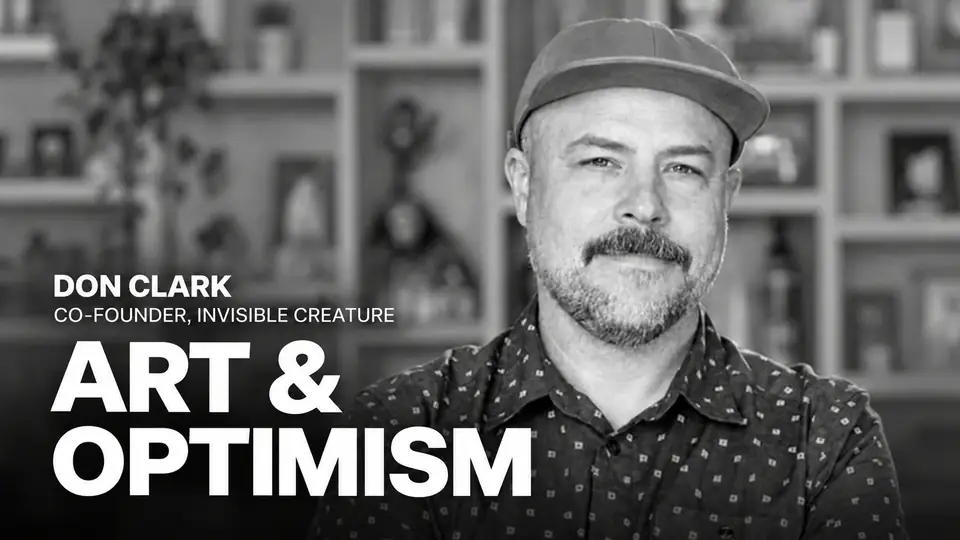
Don Clark — Art & Optimism
Don Clark traces his path from music and album covers to Invisible Creature’s illustration work.
November 28, 2022



About the episode
In this conversation, we talk with Don Clark, the incredible artist behind Invisible Creature.
Links
Chapters
Select a chapter to play from there.
Read the conversation
Open the full transcript
CAMERON WIESE: Welcome to the Build the Future podcast, a project by the World's Fair Co. where we're working to promote a culture of optimism and hope for the future by reviving and reimagining the World's Fair. Today we're talking with Don Clark, the brilliant artist behind Invisible Creature, where they've done work for artists like The Foo Fighters, Kendrick Lamar, and Alice in Chains, as well as beautiful projects for groups like NASA and, yes, the World's Fair Co. In this episode, we talk about the future of the creative industry, the role of art in shaping our perception of the future, the magic of poster art, including the posters that Don designed for the fair, and much more.
SPEAKER UNCLEAR: Let's jump right in.
CAMERON WIESE: Thank you for coming on to the inaugural episode of the, you know, revised and revamped World's Fair slash Build the Future podcast. So, you know, we met, we met last year because I was obsessed with the, which did for, for NASA and reached out. But I want to, I want, can you give people a little bit of background on who you are, the work you guys do at invisible creature and maybe a little bit the story, how ended up becoming such badass artists.
DON CLARK: Uh, by accident, sheer accident. Um, yeah, let's see. I see the invisible creature. We've been around since 2006. But before that I had a company with my brother and another friend called Asterix studio and that started in 2000 So yeah, we're looking at 22 years, which is crazy Essentially just to kind of go back my grandfather was an illustrator at NASA for over 30 years and was kind of like Definitely like a hero to my brother and I in terms of like wow you can get paid to draw spaceships and you know and creatures and and And he was multidisciplinary, meaning he drew different styles and he was very, you know, it was a, it was a way of showing us that you could have a job. It wasn't glamorous. It wasn't like a gallery artist or anything. It was like, oh, it's a blue collar job that, and he's extremely skilled. And so for us, he was kind of proof positive that you could have a career in the arts from a, um, what I would call just a blue collar work ethic. And just, so, you know, I, we didn't know anything about galleries or have any
DON CLARK: interest in that it was just, we wanted to be commercial artists basically. So, um, got heavily involved in music and music was the gateway really to, um, where we're at now. It's how we met our first clients and started doing records for bands and friends that we had toured with and really didn't know what we were doing. I mean, we would literally go down to kinkos and scan, like just, you know, photos, way too low resolution and make these, you know, make seven inch or what would be called 45 record, um, covers. And, um, this is for like the punk and hardcore and metal scene. And then that kind of started turning into like bigger bands and working with Foo Fighters and Alice in Chains and Kendrick Lamar and, and, and it just like exploded this, this is over. Um, you know, this is over like a seven to 10 year period that I'm kind describing here. And then in 2005, 2004, something what we call like the gig poster explosion happened. And that was basically like silkscreened concert posters became really popular again. And it was
DON CLARK: really a result of streaming. Napster, actually there was no streaming really as we know it then. It was digital downloads, illegally, you know, illegal downloads. And so the industry took a huge a huge hit just financially and like, you know, what are we going to do? And so people weren't buying records as much, but fans still wanted to collect art and objects from their favorite bands and have, have these keepsakes from concerts. And so we really got involved in that, which basically a band would come to town. We designed their poster. We'd reach out to bands where we'd say like, Hey, I noticed you're coming to town. What if we designed this poster for free? We give you guys 50 posters to sell and then we get to sell 50. And a lot of them would say yes, you know. Um, and that's really how we built that kind of the, the, the arsenal of gig posters that we've done throughout the years. And then the next evolution of that really was larger corporations seeing those posters and saying, Hey, you know, love you to do something for target.
DON CLARK: Um, a lot of, a lot of people who had bought, who were buying our posters were creatives that were getting these jobs at these larger companies. And yeah, just that's really like where I would say illustration became the came to the forefront in terms of what we did
SPEAKER UNCLEAR: was through the posters for bands. What was the moment? Yeah, or what was the project that kind
CAMERON WIESE: of shifted? Remember, like, Oh, I can actually do this full time. Because I know you were, you were doing the band stuff with your brother. And then if I recall correctly, he kind of continued off to go do Demon Hunter and that cool. I'm going to do art. Like what was the.
DON CLARK: Yeah, I think that for me, I was in the band. I started Demon Hunter with my brother in 2000 and I was in the band eight years, I think. So the first four albums and then yeah, we started, my wife started having kids and I just felt like I didn't want to be on the road as much, I just, I was getting really into, um, obviously becoming a dad, but also just like illustration and really wanting to push that. And really I had just, it's funny. I had just seen the Incredibles in 2004 and that would be really the art of book, visual development for the film really like changed how I saw illustration in a weird way and kind of like, Oh, I want to draw like that. And so that was kind of a catalyst to just like really go full throttle into Into Invisible Creature.
SPEAKER UNCLEAR: Can you explain, like, what an art book is?
SPEAKER UNCLEAR: every film
DON CLARK: Needs visual development you before before anything is one even the first shot Sometimes even before it's pitched. I mean a lot of times before it's pitched you need artwork and And, um, which is called visual development. There's a lot of different departments and studios obviously, but you know, everything from character design to landscape to world building. And that, that is my favorite stuff. I love, I'm a cinephile, but my favorite stuff is just like what, what goes into making a film from an artistic standpoint before the cameras even turned on, you know, so the, so the visual development for a lot of those early Pixar movies were amazing. I mean, there's still all the, all the development for these films are amazing, but, but specifically those are the ones that I was knee deep in, um, Monster's Inc and, you know, Credibles and Toy Story and stuff like that. So yeah, just learning about those artists and no, so many people think, well, if I want to get into that world, I'm going to get into animation, but it's, that is a huge
DON CLARK: piece of it, but there's all these other, there's all these other jobs and departments that go into what a world would look like on film. That's not that that's not animation. So yeah, that's, that's kind of like what got me really just really kind of changed the way I saw my style going, I guess in a weird way.
SPEAKER UNCLEAR: It's really hard to like appreciate just how much work
CAMERON WIESE: goes into some of the world building like these, these Pixar movies like, Oh, wow, this looks so great. Like all those characters had to be designed. All the objects had to be designed. I think it was maybe someone that you mentioned in one of our conversations was looking through their portfolio and they designed like their project for Pixar was designing a world inside of one of the snow globes in Andy's room for like Toy Story 4. And like most people like the attention to detail is such as like an afterthought to the majority of people who like aren't actively involved in the creative process for a lot of these things. But if you are, you're like, you appreciate all the details.
DON CLARK: Yeah, I think too, like that has made me a more empathetic person when watching a film. You know, a lot of us will watch a movie and we'll be like that thing, you know, that movie sucked or whatever. Now, you can say that like, because movies just take so long to make, there's so many people involved, so much money. And for the, so when you go to watch it, you're only, you know, you're experiencing the final project and you might not like it. But it's almost like to the artist, it doesn't really matter because it's like they, they put in, they put in their effort and kind of like, they poured their soul into this thing. And you might not like this two hour, the end result of it, but there's so much backstory and so much amazing stuff that goes into it. So yeah, I like. Like when I've talked to friends at the animation industry, they're almost like, well, it's kind of beside the point whether people like it or not. It's like, this is what we put into it. And so it's made me look at film differently and kind of these grandiose, huge projects where there's so many people involved.
DON CLARK: And then you've also got kind of a studio executives also, which is a lot of times that's like, you know, they're crushing the artist's dreams in terms of like, like, Hey, let's this and this, let's take this out. It's like, wait. So, yeah, you're right. There's so much amazing stuff that goes into this stuff. And, you know, a lot of my favorite stuff is the stuff that doesn't even make it to the, in the film at all. It's just like, you know, it's an idea that someone had that got killed for probably the right reason, but it's still beautiful.
SPEAKER UNCLEAR: So.
CAMERON WIESE: How do you think about that tension between the design of something and, you know, getting the resources and then also between that and like the thing that gets shipped in the rock. Cause like everyone wants especially non creatives want to like add feedback and
SPEAKER UNCLEAR: you know, Oh, we shouldn't do this. We shouldn't do that.
CAMERON WIESE: Like, how do you, how do you think people should handle or how do you like handling that? And how do you think other people should handle that sort of tension between the creative and you know, the other, yeah.
DON CLARK: The Mark Mark thing where, yeah, I've been just because we've been doing this a while, I feel like I've learned a lot in that regard. And I think most people want to feel like they have a voice, you know, and so on a practical level, that could be, Hey, there's someone in marketing. This person has a great job. They don't give their input in this thing. Then they feel like not doing their job. And that input, that input is not, may not be even anything valid. They have to do this because that's the position there. I think you, I think you see that a lot. And unfortunately, you know, it can produce crappy results if something is shoehorned in, or maybe there's an idea from someone who's not super creative. So yeah, I've always been an advocate of kind of hiring and leadership in terms of these types of companies and students from the creative departments. And, you know, so that there's more, I guess, more decision-making happening from a creative standpoint, as opposed to like a financial or a marketing standpoint. Those two obviously clash quite a bit.
DON CLARK: On the flip side, when you're working on a film, these are, this is your, your, your full-time job, your day job. There's a lot of stuff that's due certain times of the day. And, you know, we have a meeting at one. So this is what we want to see at one o'clock. and toiling over things that mean that for years actually that no one will ever see. I feel lucky that when we're working on stuff, almost everything that we do ships, you know, like we're working specifically for a client or for a company. And it will see the light of day. It's very rare that we're working on something that no one's ever going to see. So in that regard, I feel super lucky that what we're putting our effort into is going to be seen. And I know that that's not, that's a luxury to be honest. I have many friends that work on stuff that know, that's just amazing that no one's ever going to see.
SPEAKER UNCLEAR: And so, yeah.
CAMERON WIESE: And then, and then especially like if they're doing it like within an organization and they can't share the work.
SPEAKER UNCLEAR: Like one of the things that I found super gratifying
CAMERON WIESE: is just like having things ship, right?
SPEAKER UNCLEAR: And like, oh, you know,
CAMERON WIESE: You put some other world, people see it, they respond to it, they like it. Sometimes they don't like it. And then you can, if you have that feedback loop versus shipping things into the void and being like, is this going anywhere or people are going to like it?
SPEAKER UNCLEAR: It's.
DON CLARK: And I think that that is part like, I feel like you have to ship it eventually. Like whether, if you can work, be working on something that's part of the story that never gets seen, that's fine.
SPEAKER UNCLEAR: You cut it out. That's fine.
DON CLARK: But in terms of commercial art or, or just creating your own thing, I think John Lassner Pixar used to say that, you know, our movies are never finished. They're just released. And I totally, I totally respond to that. Like, when we're working, we're working on stuff. There's a due date for something and it needs to be done by that time. And I might, I try to, you know, everything, my power to get it to where it should be, but I could work on this thing forever. And you know, so there, I think that's the, the boundaries of working in the real world in terms of especially what we do with commercial art, you have to see it that way. You can't be too precious about something and just say, Oh, this is, you know, you're, you're, you know, we're getting paid by large corporations to create stuff for them. And they're, you know, we ultimately they're the final say. And so as much as we put our soul to this, you have to have like one foot out as well. Like, okay, this could go, this could go sour, you know, and then be okay with it. That took me a long time to be okay with.
SPEAKER UNCLEAR: Yeah.
CAMERON WIESE: We exist. It's like, it's not fun, you know, to like have that sort of capping post on like Pixar's clearly, you know, a shining shining star in the creative world, who else does like a really good job of sort of like managing the creative process or putting really, really high quality things that people like may not may not know about because I think everyone knows Pixar, everyone knows the details of the films, but like Studio Ghibli, I think is another another example.
DON CLARK: Yeah, I think Pixar is definitely the gold standard. They at least they definitely were, if not still. And one of the great things about them is that they hire from within. Like we were just talking about, obviously Disney has been doing amazing stuff. But you know, you started to see some cracks in some of these make these bigger corporations. Now, I think that everyone's vying for eyeballs basically. And there's just so many options. I've always thought Apple does a really good job of not really asking the public what they think, but giving the public what they, you know, maybe that they don't know that they want. Right. And so I think any company that is, that trusts their instincts and guts in terms of creating something, putting out in the world and not, not asking permission, really just saying, Okay. We put this thing out. I mean, Apple's put out some weird stuff that has not worked, but at least like, at least they went out there on a limb and did it. I don't know that it's hard to think of other companies.
DON CLARK: There's a lot of companies that are doing that, but in terms of like on a broad, like large scale, I felt like Apple's the kind of the king of all that stuff. I mean, specifically when Steve was still alive, but in many ways we're kind of at peak phone tech now, you know, I mean, the cameras can only just get better. It's like, yeah, it's like, well, I can't tell you the last time I was really like, super excited about a new iPhone. Cause it's just like, we're at the, you know, we're at the pinnacle of what these things can do, but yeah, I think to be fair, like a lot of things have changed with just like larger companies picking up smaller companies and you know, Disney plus, there's like a zillion other entities on there and now they're all owned by Disney. So there's a lot of like, I don't know, I'm excited for the future and maybe like, what can happen with like some bigger independent companies that are going to start putting out stuff.
CAMERON WIESE: Yeah. What do you think like the, just to rip on this, like the feature of creative projects looks like, because it seems like you have Disney and Netflix, you have these big studios that have kind of absorbed all this talent and all these projects and like all this capital, but they've kind of, they may or may not have like, tapped out. And now there's, this seems like there's this sort of like restlessness for people to go want to go do things on their own, like the smaller shops and like I'm hoping to have Ryan on to talk about kind of stuff he's doing in that world. But I don't know, like what do you, how do you, do you kind of like, what do you see
SPEAKER UNCLEAR: the kind of the future of sort of like the creative world looking like in terms of like films and art
SPEAKER UNCLEAR: and stuff that gets produced? Yeah, I tell creatives all the time. I personally, I mean, And, you know, I'm biased because this is the era that I live in. But I feel like there's maybe never been a better time to be a creative in terms of a
DON CLARK: working like career, a flourishing great career can be had in the arts now. I mean, there's so many channels and shows and just so much content. So that's the positive. The negative is that, yeah, if you've only got like three major companies owning everything, let's just say Amazon, Netflix and Disney, then their fingerprints are in everything. Right. And so you can start to see the, you know, so that can to me is usually a negative. So like, you're going to probably start to see more fragmented, like studio. And when I say fragmented, like my fear is that everything's going to start to go tribal. Eventually, there's going to be like one side watches this stuff. One side, you know, I'm going to stay away from this and I, Which if you go back 50 years or even less, like these companies were producing things that everyone was into. And then that that's where you like hung, you hung any like political or religious or whatever, you hung all that stuff at the door and you went in and you, you enjoyed the art and it was, it was a place where we could escape everything.
DON CLARK: And I feel like that's being less the case now. And I think people snuff it out sooner. And you can definitely tell when something is shoehorned or into a story or whatever. So that, that stuff I, is not as, like, I'm not as inspired by that. The flip side is that there are so many cool jobs now, but in terms of making art that is, you know, that is your own and is not kind of tainted by like a, a large group of people that don't even know you now, like putting, having their input into your story, that that's more of a negative thing. So yeah, I'm a little bit like I'm kind of in the middle right now and like where we're where things are going to go because I don't want it to be tribal and fragmented. But I also think like if there's three companies owning everything that's like on everything major.
SPEAKER UNCLEAR: I don't know. Yeah.
CAMERON WIESE: Well, I mean, this is this is the power of art, right? Like this, this like potential to unify people, hang your hang things up to the door and just kind of experience like pure creation and pure creativity. Cause I think a lot of people like, they don't seem to view art that way. It's like, Oh, that's just a nice thing. And then, you know, pair that with power of distribution now and go on YouTube and you can upload stuff. It's, I think if we, if we can kind of increase this sort of mechanisms for financing, you know, like more creative projects, the district, the distribution is already there, but I think that it seems to me that the challenges you have, people need money to go do big films. And so they have to go to a Disney Plus or a Netflix or a Amazon to get budget to do these things. And then that immediately comes with all sorts of constraints around what you can do, what you can say, oh, does this fit the narrative? Does this not like, and that's incredibly kind of constraining and then leaves us in this kind of world where like all the content is just like,
CAMERON WIESE: It's kind of dull.
DON CLARK: Like that's a good word for it. I think honestly, like I've watched, like I was a huge Star Wars fan. And so I was excited when Disney bought Star Wars. I love the force awakens. I love like the rogue one. And I was just very like, okay, cool. What I've noticed like with the TV series is that's exactly the word dull. You just said that is exactly what's describing these series that I'm watching on the, on the channel. And again, it's just, I think it's not anyone's fault necessarily. It's just that there's so many folks giving input thing. And it's like, are you hire a great rider? That rider gets the paycheck and they're like, Hey, cool. I could care less what you guys do with this. Cause whatever. And then you've got, you know, they're getting paid. It's Disney ton of people are going to see it, but then it just kind of like starts to fall apart. And so yeah, what happens? Like if, if you have, unless you're Christopher Nolan or Spielberg or something where the through line, like you, you're untouchable, but that's, That's very hard these days.
DON CLARK: You have to be kind of like grandfathered in. So yeah, it's a great observation. I think that like things are just not, they're not as compelling, I guess, as they were, and so, um, which leads us to like the world's fair, which is what, now your project know why that like, I was so intrigued, intriguing to me. And like, in many ways, the future that we envisioned back then has been, we've done it, you know, we've, we've done all that. a lot of the things we wanted to do and why are we all melancholy about it? We've got self-driving cars and people are still complaining about it.
SPEAKER UNCLEAR: It's just, yeah, I always try to lean on more of the optimistic side and kind of... Yes. Good segue into the fair. I'm curious, I don't think I've... I haven't asked you this
SPEAKER UNCLEAR: before, but you have lots of people coming to you with brilliant ideas and they want to hire you
CAMERON WIESE: guys to do the incredible work that you do. And so I called you like, Hey, like let's talk about this, this wild project. What was it about the, the fair or like the concept kind of got you excited? You're like, Oh, I want to, like, I want to, I want to help work on this.
SPEAKER UNCLEAR: Yeah.
DON CLARK: I mean, I'm a sucker for in 1930s to 1970s, anything specifically in the, in the world of just design and art and, and, and from automotive to architecture, shirts, animation, just all of it. And so my favorite world's fairs are the 64 and the 64 New York and what I'm blanking on in Seattle 62 62. So those two stand out in my mind as being like the, the, from a visual standpoint, the like pillars of optimism. Okay. And that like where the future is going to go. And I have, I have a bunch of newspapers from 62, like in really great conditions, Seattle times I have them. And it's just like, you, uh, I'll have to like scan them or something. I'll show you like every single ad for every company is like, it has a space needle in it and everyone's celebrating the fair. It's like, come down and buy a washer and dryer. And it's got like a beautiful illustrate for this piece. You know, it's like everyone is hyped and stoked about this thing happening. And it's like the world of tomorrow. I'm obsessed with Tomorrowland, with Disneyland, at Disneyland.
DON CLARK: So that is all just in my wheelhouse of what I would say is my love language. So when you approach me and you're in the same boat in terms of like, why do we gravitate towards that stuff from that era? Why are we in a position now where we feel like if you ask most people on the street, are you optimistic about the future? I think a lot of us would say like, maybe not really. And why is that? And we think of, when we think of what architecture, what things look like in the future, we think of really bland and contemporary and very cold and just disconnected. And so people are working on really amazing things right now and doing amazing things. And it's like, there should be a place to highlight all this stuff that we're just completely taking for granted because we're on our phones, we're about like the Kardashians are doing or something.
CAMERON WIESE: Why do you think it is about that like 30s to 70s era that is so just like powerful for people? Because I mean, there's something about it. You look at art pieces or you look at the book from past World's Fairs or Disney's Epcot, like the planning acts. Even the letterhead that Walt Disney had in the thirties just had this like, just like feeling to it.
DON CLARK: I think a lot of it is the advent of the industrial age. So when machines started making things, things got simpler in form. Um, you go from the Victorian era, which is like very beautiful, ornate, you know? And what, what happened with modernism is modernism came along and said, yeah, we're getting rid of everything we don't need. And so that's why I think you see basically simple geometric form showing up in everything. And it was also post-war, it was very optimistic. You know, every family was going to have a beautiful house that was affordable and you're going to have a white fence and 2.5 kids. And I think that form factor from the industrial age really kind of moved into everything, whether it's design, animation, you know. Um, so yeah, I mean, you look at even like album covers and books and posters, like look at blue note, you know, jazz album covers. It's very, very simple, but beautiful. And it's, it's, I think we're trying to always get back to that. Even like in 2022, which you still see, like everything's still, people are still trying
DON CLARK: to boil things down to the various minimal. I don't think it's done properly a lot of times, but yeah, I think that it's, the word always used as just optimistic because I think it was a time, it was the space race. It was like, we just won the war, we're going to the moon. And so yeah, that's what I gravitate towards.
CAMERON WIESE: It's almost like that feeling, that sentiment of that potential somehow seeped into the art and the design and the aesthetic of the era. So it's not like it was intentionally done. It's just like, There's something about that optimism in the air that influenced the way people thought about things. That it's like it's hard. Like I feel like I'm like, I'm not even saying anything because it's like such like a weird
SPEAKER UNCLEAR: concept.
SPEAKER UNCLEAR: You're right.
DON CLARK: You're on your own track. I mean, when you think of like, for me, I love what happened in Seattle in the 90s with music. And I look at what was done with like the rocket magazine and sub pop. And like there was a visual counterpart to the music that was being done by Art Chantry and Jeff Kline-Smith. And so what was happening sonically was being represented visually in a really well way. And so you could almost you could attribute the same thing with this modernism. I think that like as simple as it sounds like just the just adding color to things. And so I think when you think about, when we think of the future, whatever, we see some of these like, okay, this is what, you know, what architecture is going to look like, you know, in a hundred years, everything is just brutally cold. And I think that like, the reason for that is, you know, that, that would be, that's the next logical step in, in terms of design is streamlining and, and, and rounded curves and, and very clean. And when we think of clean, we think of like white or, or, I mean, it's like, I don't know.
DON CLARK: There's ways to, I think Tesla does a really great job of like, okay, these things are beautiful, but they're like, it doesn't, you know, doesn't feel dystopian in any way. Maybe the Cybertruck does actually.
SPEAKER UNCLEAR: It's weird.
CAMERON WIESE: Like, yeah, Cybertruck is an educated thing, the rest of their stuff. Like, there's like a quality to it. There's like, there's cool, like some taste that is being kind of like channeled to make these things beautiful versus sterile. Because you look at some of these renderings, touristic cities, or these concept arts. Why is everything so dull? Cold, sterile, dull. Just to dig into this, what should an aesthetic of the future look like?
SPEAKER UNCLEAR: We had that, Antematouchek sent,
CAMERON WIESE: I kind of had that tweet about, oh, like why is all the art?
SPEAKER UNCLEAR: Yeah, that was cool. Like from the 70s. That was cool.
CAMERON WIESE: And like, and then you and I talked a little bit about like what the art looks like in moving forward, but we didn't, we didn't record it when we were talking. So can you, can you jam on, on that a little bit? I think that's a really like interesting thread to pull on.
SPEAKER UNCLEAR: Yeah.
DON CLARK: In terms of just why, why we think that way.
SPEAKER UNCLEAR: Yeah.
SPEAKER UNCLEAR: And I guess, or why, why we tend to think things gotta be more sterile or.
CAMERON WIESE: Yeah, or I guess like, or like what the like aesthetic of the future should look like. I think everyone has this notion of like what it is based on and the render things and the things that people are creating right now. And we're like, that's not very exciting. What might it look like if we kind of change the rules of the game? It would look like the posters. It'd be like, oh, there's like, there's color, there's art, there's color, there's intention, there's design, there's patterns.
SPEAKER UNCLEAR: I don't know. Future aesthetics.
DON CLARK: I said, yeah, I think a lot of times, you know, the, is art imitates life. I think it's actually reversed a lot of times. I think it's like future life. Imitates what they, what we've already seen in art. Oh, like, I mean, the Cybertruck's a perfect example of that. That's a Sid mead drawing come to life. Um, so I think, you know, that, that is cheesy. That sounds like that Chobani commercial that you sent me. I mean, it's pretty well done. Like, you know, we want it. We want things to feel fresh and organic and green. And, you know, you could argue that a lot of these things are actually like taking up more carbon and actually destroying the planet, but you know, even though they, they look beautiful. So it's like, okay, what's the smart way to take this on? But I think that it is, it's taking like a hard good look at the modernism, a mid-century modernism, a term that is now bastardized. But looking at that and not thinking, I hate the word retro or I hate that kind of thought behind. Like if anyone says our work is retro or novelty
SPEAKER UNCLEAR: is not a word.
SPEAKER UNCLEAR: The retrofuturism.
DON CLARK: Yeah, I love retrofuturism, but I'm never trying to set out to make something look old. I'm just trying to make something look good. And so like, you know, how can we take that outlook, the outlook of David Klein and Stan Galley, two poster artists that I just love, Transworld Airlines and United Airlines. I want to live in those posters. And they did something so beautiful with those travel posters that you, like, it just sells themselves. And so like that, I don't know how we're going to get to that exactly. But I know what I want it to look like in the right now in terms of getting people excited about it. Um, it's a huge ask to, to actually fill the dream of making something look that fantastic or, or that beautiful. Cause there's just so many people that need to be on the same page. But as an artist, that's the stuff that I gravitate to. Like just again, it goes back to like the visual development for a film. It's like, gosh, this is what I want it to look like in my head. I don't know how we're going to get there.
DON CLARK: Yeah, it's a very much, it's a dreamy way of looking at life, but that's kind of the
SPEAKER UNCLEAR: only way.
SPEAKER UNCLEAR: I'm with you. I'm with you.
CAMERON WIESE: If you had like unlimited budget and resources to like build out that world, like what would you choose? Like, what would you choose to go do? Right? Like what, like, if you, if you like had to create a project to like, invoke the sort of like worldview on people. Yeah, maybe it's a world's fair, but maybe it's like something else. Like what would that look like?
DON CLARK: I think I am kind of in the beginning throes of working with a film project with Buddy and we talked about that a little while ago. And so that I'm like kind of like hyper focused in that world that it's going to take a long time, but like putting out like, again, we're, we're discussing like great content for everyone. I'm just like, you know, creating a world that, um, people want to see and live in through, through a film project is kind of like on the forefront. But yeah, I mean, to be like maybe art director or, or to oversee some visuals at something like a world's fair or like a Disneyland, I'm, I'm. I'm extremely limited in my skill and, you know, and knowledge and scope of how to pull some of this stuff off, which would mean there's a huge team that would need to be put together for something like that. But just to be in the room and be at the table would be super special to go, okay, what would this, if you, if you took Walt Disney world and just, and, and, you know, and then you, You mix the 62 World's Fair and then the era we live in and what we're doing,
DON CLARK: that's me as like, that's the pinnacle. I mean, of what I love to do.
CAMERON WIESE: We're on to something very promising here. There's stuff in motion. Very exciting. Yeah. We jam on often. On the poster specifically, I know it's really difficult to describe the creative process, But one of the things that I want to do is like show people if it's cool if you had the initial sketches. Hey, Cam, here's kind of what I'm thinking. I want to like show, you know, maybe the one for the oceans. And then, you know, then here it isn't kind of superimposed to kind of contrast like, hey, this is where things start. And this is where they end up. Can you shed some light into like the process that you went through for the posters for
SPEAKER UNCLEAR: the fair?
SPEAKER UNCLEAR: Yeah, totally.
DON CLARK: Well, it all starts like every every project starts with just like a great idea. And so for you for working with you It's like okay, Don. Here's the Here's the 12 core
DON CLARK: What did we call them
SPEAKER UNCLEAR: themes themes
DON CLARK: Exactly. It's like okay. Here's the 12 core things and that right there is all I need to like get going if you were If you were to say like, Hey, just do whatever you want. Do 12 world's fair posters. It's not like a blank canvas is a scary thing for I think any, any artist. And so having that initial art direction, that initial like, and you gave me a lot of great, just bullet points and like, this is here's some like companies that are on the forefront, which that was really helpful because I didn't know a lot of companies that are doing stuff right now. So that was a great like foundation for it. But then yeah, it's just, and we talked about this a lot. It's just like, my job is just to get people excited about what you're talking about. It's not to actually design the world's fairest. That's not what we're doing right now. What we're doing is like, we're trying to get people excited about this thing that we're excited about and by any means necessary. And I think that by going hyper stylized with posters is the way to go.
DON CLARK: Like, and so my core, the thing that I'm most concerned about is just making this poster look beautiful. So yeah, it comes down to a compositional thing. Like what, like with that Oceans 1 behind you, it's like that, that came off of like something you had said about some companies that were like, you know, using vehicles to like learn more about whales and even like speak to them in certain ways. Like it's just super, super cool stuff. So it's like, yeah, I just had this visual, this giant whale, this vehicle, and the vehicle's based off of like a real vehicle that's being produced by a company. And so trying to weave in like as much real stuff as I can, like the travel one was pretty specific to actual boom, supersonic is in there. And then is it zoom?
CAMERON WIESE: There's zooks, the car and then Joey, I think is our Archer for the aviation. Yeah.
DON CLARK: And those totally, they just look great in that like atmosphere and style. And it's totally like, works. And so I think people are like, when they see that, they kind of get excited, like, Oh, yeah, this is like, it's not as like dystopian as like, we're making it out to sound. And again, it's, I mean, it's just like, well, I just added color and put it in a great composition. So, but yeah, it all starts with a sketch. And some of the stuff, this happens every time I do a project, but, you know, I'll pitch a sketch. And then like, when I'm working on the final, something cooler is like just comes to me and I'll really try to push for that. A lot of times I don't sketch at all. I just like, okay, it's, I think for the Bitcoin one, I don't know if I did. It was just like, I want to have this like symbol of freedom and, and, you know, especially with just like a bird that a bird, birds are just so fun to draw anyways. And so it's like, okay, you know, this bird like breaking the chains of financial restrictions and or whatever. So it's like, I love it when I don't have to sketch.
DON CLARK: Most of the times I, obviously I need, most, obviously the client needs to see where my mind goes. So I get it. Um, I love it too, but I'm just like, Hey, we need this poster in two days. Do your thing. Like I kind of, I kind of thrive on that. So yeah, that's kind of my weird process.
CAMERON WIESE: There's this, this notion of like, Oh yeah. Like obviously, you know, creativity has to come from somewhere. Surely you have all these ideas in your head. Like I get this, you know, working on, you know, some of the like smaller projects and then like I assume it's the same for you. These ideas just kind of just like come out of the ether and like you have to channel that right. It's just like I sat down with a pen and all of a sudden just like canvas the canvas
DON CLARK: starts to fill up. Oh it's a it's a it's a process you know and I I cannot say that my job's hard because I know lots of people with hard jobs and being an artist is not I wouldn't step there with hard but I would say that there is a process to creating stuff that, um, yeah, it's not 99.9% of the time. It's not just looking at a canvas and boom, I'm just going to put my magic down. It's like really kind of, okay. Like composition comes first. Like what, why are all these, why do I love these David Klein posters? It's like, Oh, it's all about composition. And so, no, it is a, it's an arduous thing.
SPEAKER UNCLEAR: And I, when you, when you talk about the like composition, like what is, what do
SPEAKER UNCLEAR: What do you mean by that? For like, yeah, the weight of an image, you know, like where your
DON CLARK: eyes gonna go to first, where's it gonna go to second, you know, like the basically the weight and balance of an image is, is like, what I consider composition, like a beautiful composition means that it flows, your eye flows along the art properly. Yeah. I'm, you know, what do I know?
CAMERON WIESE: So it's, it's wild. Like I, you know, the David Klein stuff I'm, I'm looking, looking at it right now. Like actually haven't seen, I mean, I haven't seen some of this stuff before.
DON CLARK: Um, it's basically perfection.
SPEAKER UNCLEAR: Yeah. I just, I'm always just trying to rip them off.
SPEAKER UNCLEAR: Yeah. Who else? I think, you know, David Klein, Sydney, do you mention?
SPEAKER UNCLEAR: Stan Galli.
DON CLARK: So G-A-L-L-I. He did United Airlines. like if you look at the Hawaii poster, and if you see that where it's a bunch of people on a boat, on a wave, Stan Galli. Let's see. You type in Stan Galli Hawaii poster.
CAMERON WIESE: Oh, the, like in the canoe?
SPEAKER UNCLEAR: Yeah.
SPEAKER UNCLEAR: Like all super poses, but this one.
DON CLARK: Let me go back to your screen
SPEAKER UNCLEAR: because I'm looking at the internet. Yes.
DON CLARK: Yeah, to me that's perfection. To me, that's just like it's it's with all of these the composition is king and it's like he just he has his It's just it's simple. It's just these what is that five or six people want to come in a canoe? But it's it's perfectly vertical and it makes you want to go there, you know, like I think ultimately that's what comes down to is that It makes you excited about what you're looking at and you want I mean as a commercial artist that's kind of my job is to just evoke that spirit.
CAMERON WIESE: And again, I know, like, you know, we we we touched on this just again, like, what is it about? Like, when we look at I'm looking at his, you know, the United Airlines, New York, Hawaii, San Francisco, like,
SPEAKER UNCLEAR: what is going on internally? I think just like, I think, I think it's the simple, it's
DON CLARK: almost like the most subconscious, simplest way to evoke a sense of place. That sounds weird, but like, okay, he did one for Los Angeles, and it just says this woman with like, she has a shadow on her from like, let's see, is it Stan Gally or David Klein?
CAMERON WIESE: I, it looks like Stan Gally, where she has like the palm tree.
DON CLARK: Yes, the palm tree shadow. She's smiling. She's like got sunglasses on and that like if you were to describe that to someone Without them seeing it and be like wait what but then that's exactly Like what when we think of Southern, California That's what we think of like you think of surfing and like out on the beach or whatever and like here's this like beautiful happy woman, so in many ways it is just like that's why I love poster art because I've done a lot of books and books are different because you have to tell one continuous tale and everything needs to be cohesive and every page needs to like, you know, somehow fit in with the rest of the pages.
SPEAKER UNCLEAR: So posters, it's one image. It's got to do its job quickly. You know, it needs to tell you what's going on [unclear] excited about it. And, you know, ultimately the biggest compliment is that you want to own it, you know, or that you want to hang it up
SPEAKER UNCLEAR: and see it
DON CLARK: every day. So yeah.
CAMERON WIESE: And it's who today you think is kind of doing a like good job this, of creating like this sort of art that like evokes this for people. Think like it's really hard to see to go find like, because I mean, we mentioned Pixar earlier, and then you know, you have a couple of like shops, like, are there people like it's hardy distribution for these things, too. So it's like, it's kind of niche. Like you have these kind of channels and information streams you're plugged into where you're seeing all this really cool stuff that most of the people don't
DON CLARK: get exposed to. I think that what, what Mondo did with the film industry kind of changed the landscape of what, like a collectible poster. They came out kind of like after get poster exploded. They came out of that. Actually, a lot of those artists were from the gig poster world. Basically one off limited run, so screen posters for movies. Um, and one of the, so there was quite a few that came out of that, like artists that came to that, like I'd say the closest would be, there's a company called Phantom city creative. If you Google that, and I think it's just two people and they're doing like, again, it doesn't like evoke the spirit of like that kind of like mid-century optimism that we're talking about, but I am talking about like very smart compositions like they did this Lord of the Rings one. I don't know if you see that, but it's got Gandalf and part of his hat is actually making up the hillside that they're walking on and like they did one for the Jaws. They did a Jaws one that is just amazing. They're doing really smart stuff for film.
CAMERON WIESE: And like how do people develop like a taste for this sort of thing? Like clearly like like, this is just brilliant. Like it's brilliantly done. The Batman one too, or you know, like his head is like on top of the question. It's just how do people develop taste for this, this sort of thing?
SPEAKER UNCLEAR: Like, you know,
SPEAKER UNCLEAR: Or as the artist,
CAMERON WIESE: as an artist, like, like, how do you, how do you get to a point where like, these are the things that kind of come out of your, out of your brain? Like, cause it's not just like, I couldn't sit down and you know, do this like Batman question mark thing.
SPEAKER UNCLEAR: Just like, yeah, I think it's a healthy, I think it's like a healthy dose of like,
DON CLARK: you know, they're probably pretty obsessed with, obviously with the arts, but like just with film. And so they, they, you know, and that's something that goes into like what my brother and I do, like we, we are like products of pop culture and like, we're very much in music and movies. And so it's like, we know this world, but then we're also like, we have families and we have kids and like, we're, we're, we're the consumer as well. So it's like, I think that if you can, um, I mean, Steve Jobs knew this perfectly, right? Where he was just like, we're going to create something beautiful. The masses won't even be able to tell you why they like it necessarily, but they, they're going to have to have it. And you can argue that that maybe is not a net positive, but in terms of the iPhone. Uh, but like the, yeah, I think if you, if you're, if you understand composition, you, you, you also understand that the fan who's going to be buying this poster, like knows a lot about the film. Like it's a very, like, you know, that's a niche thing.
DON CLARK: And if it's a smart take on something that they love, then they're going to buy it. It's a beautiful, um, yeah. So I think it's just a healthy understanding of all the components that go into what you know, you're doing
CAMERON WIESE: What are you most excited about for the future right for yourself for your family for Community for like the art world like when you when you look ahead you're like, okay like This is gonna be really really exciting. What is it? What is that for you?
DON CLARK: Yeah, good question I mean on a personal level all I care about is just my family and friends being healthy You know, like just that's, that's the, I think every person wants that for their loved ones to just be healthy. Right. So there's that, um, I think with any, with any new kind of like societal invention or thing that kind of comes up, there's always going to be kind of like a backlash or so I guess what I'm saying is there's this, this kind of web three thing that's happening right now. And I, I'm like, you know, I think it's starting to kind of go down, which is, is totally fine by me. Wayne and all that stuff is not going away.
SPEAKER UNCLEAR: That's great. The blockchain. I think it's all cool.
DON CLARK: But for a while there, I was a little like, I know people that have just dove head first in this NFT thing that are just like, and I'm like, bro, I think you're in a cult. I don't know what's happening. But I think for to answer that question seriously, it's like, I just want to just live in the world that I've already lived in. I'm following a lot of these accounts. like where they're making these cars that are flying and it's like awesome. It's super cool. But I'm kind of like, like, I don't like, is that going to really have like, are people going to be pilots? And like, like, I don't know. Like that's the, that's the future we promised forever. So like those kinds of things are cool. I like it from kind of like a, just because I'm, I love science fiction, but also like, okay, realistically, can these things happen in our society. I guess that comes down to simplify it. I just like to hold things and like, whether that's a book or a toy or live in a house or like, I like things that are real, whether that's people or I like authenticity.
DON CLARK: So, you know, the guy who was in his workshop making like leather belts. I think that's just as cool as making flying cars.
SPEAKER UNCLEAR: Like I just that that's the beauty of art and making things is that I don't I I'm much more into the tangible like
SPEAKER UNCLEAR: Emotional side of it. I guess yeah, it's like very very very real. Yeah versus like at the ethereal or you know perspective like what like how do we just make things that everyday people can touch I think I
SPEAKER UNCLEAR: and experience. You hit it on the head. Like I've always tried to be the everyman, you know. I've always tried to just like think of myself as just, hey, I'm just glad to be here. I lucked out. I have a job in the arts. Like, man, I'm thankful. And I try to have that everyman feel or attitude. And
DON CLARK: so, yeah, man, I just, I love people that work with their hands and make things that I can hold
SPEAKER UNCLEAR: with my hands, I guess. Or at least touch. So, yeah. And posters are a great example. Yeah, yeah, touch it and it's real and you're like, it's not a screen saver
DON CLARK: I mean, I'm not yeah again. I don't want to come off like again. I love animation. I love all that stuff I'm obsessed with it, but I'm just saying
SPEAKER UNCLEAR: That's the world. I'd like to live in
SPEAKER UNCLEAR: Don where Where can people find you and invisible creature? Yeah, our website is invisible creature calm and just
SPEAKER UNCLEAR: It's mostly active on Instagram if we're talking about steps. So that's just at I creature, the letter I, and then creature.
SPEAKER UNCLEAR: Amazing. Hold on. This is great.
CAMERON WIESE: Thanks for, uh, thanks for coming on and excited for all it's ahead.
CAMERON WIESE: Thanks for joining us for this episode of the build the future podcast. Until next time go build.
More episodes
All episodes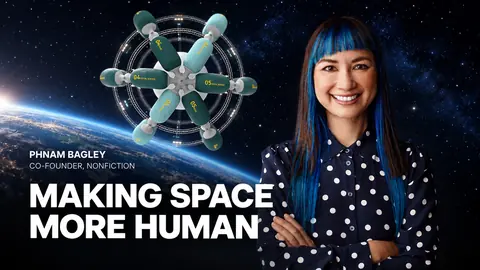 Phnam Bagley of Nonfiction — The Future of Design, Experience, and Space ArchitecturePhnam Bagley discusses Nonfiction’s mission to turn science fiction into reality through design.
 Jim Pethokoukis — Building an Up-Wing CultureJim Pethokoukis makes the case for a culture that believes in progress and builds toward it.
 Jason Crawford — Progress, Prescriptive Optimism and Useful KnowledgeJason Crawford argues for understanding and appreciating past progress while actively working toward future improvements.