

Build the Future Podcast
Adam Keating of CoLab — The Future of Engineering, Collaboration, and Work
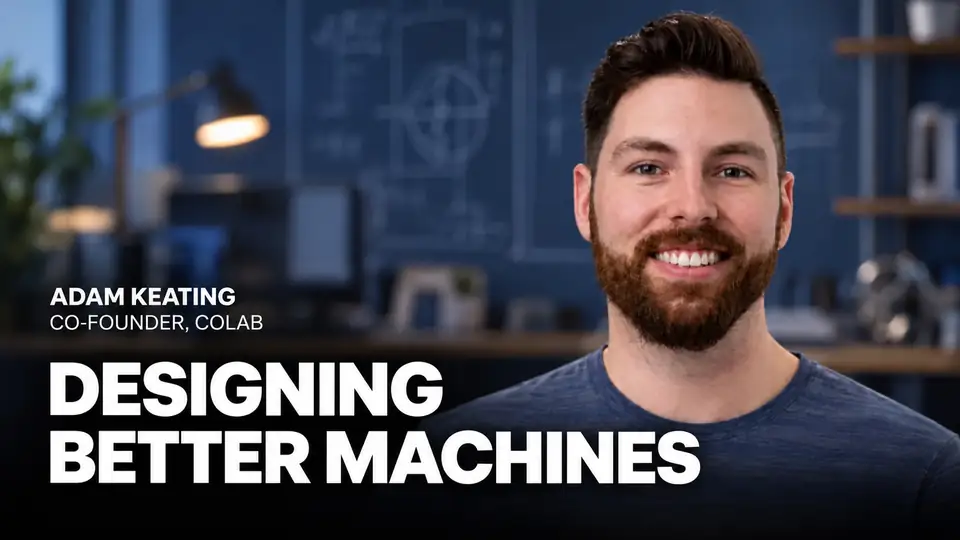
Adam Keating explains why CoLab set out to make engineering design reviews and communication easier.
April 27, 2021 · 39 min



About the episode
In this conversation, we talk with Adam Keating, the CEO & Co-founder of CoLab. At CoLab they’re building software to simplify design reviews for engineering teams building complex products. In doing so, they're enabling the engineers who are building our future to build faster and more collaboratively.
We talk about CoLab, the future of work, Hyperloops, and how bright our future is looking.
Links
Chapters
Times follow the podcast audio. The video’s timeline may be slightly different.
- 00:00Introducing Adam Keating and CoLab
- 01:31A milestone for engineering collaboration
- 03:05PLM and the missing communication layer
- 05:27What CoLab helps engineering teams do
- 07:27Remote design reviews during COVID
- 09:39From Hyperloop teamwork to company-building
- 10:40The human work software should support
- 12:32Reducing administrative work and costly mistakes
- 13:30Better tools and new ways to collaborate
- 16:06A student Hyperloop competition changes everything
- 17:36Belief and the commercial challenge for Hyperloop
- 21:07Seeing what is possible
- 22:29What ambitious student projects can lead to
- 23:58What better collaboration could help build
- 27:41Making 3D design and building more accessible
- 29:31Scrappier paths into hardware
- 32:30Long-term goals and wider access to technology
- 35:43Advice for students and aspiring builders
Read the conversation
Open the full transcript
CAMERON WIESE: Welcome to the Build the Future podcast. My name is Cameron Wiese and I'm your host. I've always been fascinated by the ideas and sentiment that drove American culture in the 1960s with the space race. A culture galvanized to dream about the possibilities of tomorrow, whether it's food, transportation, cities, biology, or anything else. It was this cultural mindset rooted in optimism that the world tomorrow would be better than the world today. A mindset where people were compelled to build things, and I quote JFK, not because they were easy, but because they were hard. It's this desire to build and to dream that seems to have been lost, and something we're here to bring back. With Build the Future, we're here to promote the ideas and stories of those who see how the future can be better and promote their plans to get us there. It's our mission to get you to dream about the possibilities of tomorrow, to dream about the future that you want to live in, and inspire you to go build. Today, we're talking with Adam Keating, the CEO of CoLab.
CAMERON WIESE: At CoLab, they're building software to simplify the design review process for engineering teams who are building complex products. In doing so, they're building the infrastructure that makes it faster and easier to build the products that will shape our future. Let's jump right in.
CAMERON WIESE: What's one thing that's been really exciting for you, personally or professionally, like with CoLab over the last couple weeks? Like what's something you're really, really like feeling good about?
ADAM KEATING: We've had this really big vision since we started the company. What we're building is like, you know, not a short term product that goes to a billion dollars in two years, and that's kind of valid. It was a long-term industry shift. And funny enough, like the podcast is, you know, built, build the future. Our like tagline for a while was build the future faster. Um, so like we're literally, we left, we left our engineering jobs to build better tools for engineering teams. And we had a really massive product milestone in March and it was Colab 3.0. And really what that meant outside of, you know, being a better product for customers is it was the foundation that would let us scale and do things in a much more flexible way going forward because the engineering is so complicated. these programs are so difficult that like one piece of software that needs to be like either molded to everybody or require software development to customize it doesn't work and that's why you see like these really complicated PLNs today. We're really focused on like end user
ADAM KEATING: experience and this was kind of for us. We got through that milestone late in March and ever since we're like okay, we can see now how the whole thing starts churning and we're now back to working on like a lot of the big blue sky picture things that customers been asking for for a couple of years and we're pretty pumped to do that. So I think for me, that's the biggest win is just being able to be like super creative again, customers happy with it. And then now it's like, you know, what other problems do we go solve? How do we build this thing faster so that other people, other engineers can go build, you know, their products faster and better. What does PLM stand for? Product lifecycle management is basically like a very big, massive database of all your files that helps with your vision control management and then the whole lifecycle, so like an official change. They were introduced like a couple of decades ago because parts would end up getting manufactured, or the wrong version. And they're put there for control,
ADAM KEATING: like they're built, they're built to be like a system of record. And almost every company has one and the market's huge. The market now is almost $60 billion. The CAD market, like the 3D design market, in comparison is less than 10. So it gives you like an order of magnitude of like how much companies invest there because of the problems that come out of it. But the problem is they're so complicated that the end user doesn't use it for day to day things. They use it when they need to go through the process. So what happens then is engineers go out and spreadsheets and make trackers. They send everything to email to communicate. They put their design ideas in PowerPoint slides. All that data and communication is like totally up to them to go figure out. And it's complete mess. And we actually just released on our blog today, my co-founder, he was at Tesla at the time, sending little screenshots back and forth to a supplier to try and communicate design changes. And this went on for weeks and weeks and weeks
SPEAKER UNCLEAR: for a small part. And we were just like,
ADAM KEATING: if that didn't take so long for a small part and everything else could be that much faster, imagine how much faster that car would have been built. And then you think about like sending people to Mars, if the goal is 2025 or 2030, whatever it may be, like imagine that change over a 10, 15 year window if a year, or if you talk about a full year, being able to do something faster. And that ultimately is what kicked us back to Newfoundland. In the end, you started the company is, who were like, you know, we were in our early 20s, just finished university had been in different industries and said, you know, we can't see ourselves working with this tool chain for the next 30 years. It just isn't good enough. When you compare what software engineers have, like look at like the GitHub ecosystem and how everything just like slides into it. You look at the mechanical ecosystem, it's the opposite. Like it no longer just figure out tools to get a piece of software, there's like 200 roles you have to work through and it's like just not built to be easy and we said you know
ADAM KEATING: someone got to change this and my co-founder Jeremy he convinced me at the time it's a good idea let's move back to Newfoundland and let's start this and we turned down our jobs in the Bay Area and we moved back here and then we started the company. I know you're you're working
CAMERON WIESE: on the Hyperloop project for for a little while I'm sure that that kind of the process there influenced the stuff you're doing at CoLab. Before I dive into that can you just have you kind of Like specifically what does Colab enable people to do? And why is that really important?
ADAM KEATING: Colab itself is an engineering collaboration platform. Today we're really hyper-focused on the design review process and issue tracking. So sort of like the equivalent of what like Jira and like the PR process and software has brought, but for teams building physical products, helping to make both those pieces faster, more agile, and easier to work together. And we're looking for as teams being able to build higher quality products in a much faster pace where they're not spending so much time doing administrative work. They can spend their time doing design thinking, and how does this thing get us to the next phase in the product lifecycle and not things that a computer should be doing by the year 2021. And really what that looks like in the simplest form is we take very complicated 3D models or associated data, put it in a secure cloud environment that myself and you or different suppliers or partners or teammates can work together on. Everything is real time, so if we're talking about a problem, I see your feedback directly in the 3D model,
ADAM KEATING: but then the whole system there is there to help you get through the process really fast. We've created a framework called leader and really with the goal of bringing like agile. And so the key principles are like lean from design and software into like the actual engineering design process. And, you know, for us right now, what's been most fun during kind of COVID, I guess, is seeing the shift from teams thinking, you know, this is something we want to do, but we can't yet because we're not in the cloud or we're not ready or our systems do complicated. And then the shift now is 12 months later, everyone's like, okay, we're ready. We've got, we're all on Microsoft Teams. We've got our first taste of like a collaboration tool. And now people are hungry. So we're just excited to kind of help as many teams as we possibly can
SPEAKER UNCLEAR: building crazy cool things all over the world. How have you been thinking about the shift in the
CAMERON WIESE: physical manufacturing space with COVID. Because traditionally, the idea is like, oh, you often be in one room, you have to be able to do your 3D kind of printed models and you compare them, you take notes, and then everyone gets on the same page. But over the last year, we haven't been able to do that. There's been kind of an accelerated need to figure out systems like Colab to be able
ADAM KEATING: to do all this. Yeah, it's been super practical. Like day one, we had customers saying, we can't print drawings anymore because we're home. It wasn't even like we can't get this model, built. We literally can't print the drawing because I don't have a printer or I need to send this to somebody. What I'm going to do is print, scan them all. It just became really obvious that that didn't make sense. But as soon as they started using it and realizing that the time they're spending physically redlining the drawing is not actually the time. The time they're actually working on is going finding the file, downloading the file, going to the printer, getting the printer, coming back, marking it up, doing it again, scanning it. That's like four times the amount of time it takes to put a piece of pen to these paper. What's really changing is people are starting to see now that it's like, you know, although it was spawned by force with COVID, they're starting to realize now they don't have to waste their time doing things that just
ADAM KEATING: felt like the normal standard. So we've seen teams like we have one, one larger enterprise customer that particularly like the 3D virtual events, instead of having 1520 people in a factory for a week, trying to figure out how to reduce the cost of product and add value to it. They put 50 people in a co-lab workspace looking at 10 or 15 different 3D models, and they were just putting their ideas on the models for like whenever they had time. So they could do it any hours a day. This team works across four or five countries. So you know, you have people in America and people in China who are just like talking in real time, depending on time overlaps or asynchronously. And at the end of the day, they got twice as many ideas as they usually would. And they spent probably like a tenth of the time and they had spent zero on travel, It was better and it was way faster. And it's like, that's what's exciting for us is now teams are starting to figure out that, you know, there's much more creative ways to like actually just go focused on design, building, engineering.
ADAM KEATING: And that's why we started the company because we just like, saw it went the hyperloop thing. That's when we first saw me and Jeremy. He lived in Ottawa and I was in St. John's and we just like every night we're on Google Hangouts trying to share like CAD screenshots back and forth to make design changes. And that was like, you know, student problems. They're like, oh yeah, cool. Like student teams, no money, makes sense. But then we go work for like a couple of Fortune 500s, couple of like high growth startups. And we were doing the same things there, except it was probably exacerbated because there was so many more people involved. The products are way harder. And that's when we realized that there just like wasn't the same level of effort from like the broader software ecosystem to help these teams as there is in the software development world. But yeah, it's been a fun year. trying to keep up with everybody.
CAMERON WIESE: It's also very exciting. Obviously, in the software world, that infrastructure has been there because software has kind of been a thing you do remote, or at least a lot of projects get started remotely, but with hardware, that's historically not been the case. What do you think won't be replaced by software in this process?
ADAM KEATING: Yeah, that's a really good question. And honestly, the one thing that I think won't be replaced ever comes back to the ideation. like you're gonna see some things when it comes to, you know, generative design that will end up replacing some parts of structural ideation, for example. But like the thing that will never change is that somebody's got to figure out what the problem is and how you're gonna fix it. And I think what this type of software actually will let you do is spend way more time thinking about the problem itself and not like, you know, how many issues they have opened, where are they? Oh, we just let this thing go to manufacturing and now it's gonna cost $10 million to fix. they can actually think about building the thing right. So I don't think communication is going to go away. I actually think it's going to pick up. I think it's going to be more communication. It's just going to be actually like real time, valuable communication instead of endless email chains that nobody can ever use again. So my biggest thing is the design process won't change.
ADAM KEATING: Like there'll be iterations, it'll get better and better, but like generally, you're still going to start with a problem, figure out requirements, how you get from there to solution, I think is gonna become more agile. But that general process won't change. We're not gonna stop talking to each other and doing that, I think there should be more of it, which for me is exciting, because it lets people then like myself and others work from wherever they want. Obviously there's some limitations, physically building the prototype, you'd wanna be somewhere, but we talked to our customers actually, like a lot of them in the Bay area, who like traditionally travel, to go to work for like 45 minutes to an hour, they choose to go to work two days a week now, when they need to go to the office to build something. Just simple things that their family life is better, their own life is better, they're doing more productive work and it's just because they can communicate better now. It's simple stuff, but I think you're gonna see lots of that as we move forward.
ADAM KEATING: Yeah, everyone gets to focus on the high leverage work. It's all the small stuff that's like context switching versus the high value problem solving that I think people want to be doing. And it's so important that the other small things are done, because that's how problems flip through, right? And that's why these big systems are put in place. It's because all it takes is one person to make a mistake with the wrong file. And all of a sudden you've manufactured several hundred thousand the wrong part. And we still see it. We still see it every single day talking to people. It's like one of the main reasons companies reach out to us is they have things flipping through the design review process, because it's hard. It's like it's painful, long, takes forever. So things slip through and then they slip through, the cause of change, the change costs a lot of money, everyone gets upset and then they try to make it better. And the better that can be, the more folks that can put on design work and not so much to all the rest.
CAMERON WIESE: Seems like there's lots of movement happening in the spaces around streamlining communication. And it seems like globally we're getting to a point where people are able to focus more on, and more on this high leverage work. And it's creating lots of opportunities for new lifestyles and new businesses to be built. Do you kind of feel the same? It's hard for me to quantify, but just like something in the air, it's like we are getting way more productive and there's way more opportunities to build incredible things now than there were three to five years ago. And I don't think it's COVID either. I think it's just kind of like the software catching up.
ADAM KEATING: There's a lot of work to be done still, but if you look at like general software tools, like we started using Slack six or seven years ago. And I'm like, think back to not using Slack to run CoLab today. It would be, I don't even know how we would communicate like a Facebook messenger group, like you wouldn't be able to do it, but that feels like we take it for granted right now, like how big of a change that really was. Like Slack and Teams is like a fundamental different mode of communication that has been, you know, way faster. And I think about, you know, we just switched using Notion for like our internal documentation Wiki. I'm like the speed at which we build documentation now is like easily two or three times faster. Like they built just an incredible communication and documentation tool. They like just very outside the box. Sigma is the same way that we use Sigma for like UI design. And man, like if we were doing that through some of the older tools, where it's like one person doesn't have a look, we just co-design everything now.
ADAM KEATING: And like co-design is where this is going, right? The faster and better we can do things together, the quicker things will start, you know, sending off the mirrors and building like, you know, true electrification of everything and fixing some of these harder problems in the medical field. It fundamentally changes things. And if you think about it, like COVID is a good comparator. Making a vaccine in 12 months happened because people were able to work together and forced to do it. Like if people could do the same thing, the engineering side and just like more easily work together, like a vaccine like that, I would have thought would have taken years, like even with all the money. And it's because they were just like, you know, in this case forced to make it work. We can, we can create that culture where it's not so intense as a COVID-19 era. It's better for everyone's life. and they're more productive because I think they're not nine to five anymore. And when you're once you're remote, like people work different hours and have different lifestyles.
ADAM KEATING: And I think respecting that's super important. But people also have ambitions, right? You look at all the companies that Elon Musk has created and the stuff that like he alone is trying to do is like, you know, it's the same, but it's happening like it really is happening. I have friends working at all those companies and they literally are building all of these things. They're not dreams, they're legit happening, which is super cool because five years ago, I didn't think it was going to be real. The Hyperloop thing, I remember seeing the white paper and thinking, I was still working on gas at this point and energy and I had not really figured out what I wanted to do. And that was the turning point in my life. When I got introduced to this competition, I was like, okay, I'll hang around it. It'll be a cool opportunity. And then we get into this like, you know, down in Texas with Elon Musk showing up on stage with like 1200 schools globally competing like top 100 or something were there. And I see like, holy
ADAM KEATING: holy shit, like this is crazy. That's all these like people all over the world. Like some of the smartest people from the entire planet are here in this room right now. And they're pitching the very first Hyperloop pods. But at this point, there was just a sketch from Elon's the only one on the internet. Everyone was pitching these ideas. And our team from Newfoundland, a super small school. Somehow with a group of other schools, made it to the top 30. At that literal moment, my whole life was like, okay, we can actually go build crazy things. And we did a terrible job with first design and we still have a small man who's top bucket. Then I became hyper obsessed with Hyperloop. I ended up spending 18 months probably, just doing it nonstop while working or in school. and then Colab came right after it. But we spent a lot of time building Hyperloop pods and thank God it made it down to two in the end. It was worth it in the end. But yeah, it was quite the window in my life.
CAMERON WIESE: What do you think some of the challenges are to kind of taking the Hyperloop from, first of all, Elon put that thing out there and then everyone rallied. Oh, and some people show up and it's like, oh no, cool, like let's do this. Which one suggests that everyone is very excited and everyone is interested in actually building a better physical world, which I think you and I both would agree on being a good thing, but most people are still like, oh, let's build the metaverse. Let's go build more software. It's like, no, let's not give up on our physical world. But too, just like everyone kind of came together and pulled concepts together. Now they're demos, you know, Virgin doing theirs. What do you think of the remaining path like to actually implementing the hyperloop and some of these other kind of crazier physical technologies?
ADAM KEATING: The biggest enablers that people believe, and I said this was the biggest change for me, is when I went to Texas that year, I didn't fundamentally believe that I could go do this. Like I just from a small place hadn't seen it happen. And going there and managing to make it where we made it with what I knew is objectively not very good. That Hype-a-loop competition, I can tell you the energy was insane for how much people cared. And there was no money at the end. There was nothing. It was just that people truly cared. And that's what it takes to fundamentally change something. If you go work at Tesla, it's a tough place to work, right? They're working hard. It's like, you know, just a massive goal. But those people go there because they absolutely care about changing something. And that's like the fundamental requirement, I think, is passion and like belief that it's possible. And, you know, Elon's done some stuff that's like, you know, all over the place. But the one thing he has definitely done well is he definitely has a big dream and he makes
ADAM KEATING: it like very easy to believe that it's possible. So for Hyperloop now, I think the most important part is figuring out the commercial piece, to be honest. I think the technology makes sense in certain capacities, but some parts are like commercially really difficult to prove. Like we built an air bearing based vehicle. And I can tell you, if like going through this, that probably is not the most commercially feasible or technically feasible option. And we spent a lot of time building that. Like there's slightly simpler solutions that almost get you the same value. Like Elon's doing, you know, the cars, like his cars in the tunnels, the boring company, not actually a true hyperloop, but still trying to solve the same problem, like high speed transport into condensed areas or long distances. That kind of makes sense. and the infrastructure costs a lot less than pulling a vacuum 600km through a steel pipe. Just think about the simple stuff like contraction and expansion of a pipe over 600km with a vacuum pulled in it with a vehicle going speed of sound. It's not exactly easy, but Virgin
ADAM KEATING: Hyperloop has actually done people loaded tests, which is insane. It's really cool. But yeah, I think now it's getting the commercial side right. Someone's going to get it and it's going to work, but there's so many other techs like that now that are going to come behind it and everything is going electric. Every automotive company in the last 18 months has come out with some electric platform, which is really cool to see. Yeah, the more the merrier, I think.
CAMERON WIESE: Right now, what you kind of think, oh, yeah, sure. Maybe one day we'll have hyperlives and tunnels everywhere. Okay. And then we're going to wake up and well, what is most people's belief. And then five years, 10 years from now, we're gonna wake up and we're gonna, we're gonna take it for granted, just like we take slack and zoom and all these other collaboration tools for like, why like, how are we doing anything before? And then it
SPEAKER UNCLEAR: just
ADAM KEATING: Yeah, well, look at look at like boom aerospace, right? Like supersonic travel, like that's gonna happen. And then people are gonna be like, why did they get on a plane that goes 400 kilometers an hour? Why did I do that? But you know, it takes seeing something to like really believe it. And I think that's special thing about the Bay Area. I think you can build anywhere. And I still, we fundamentally are going to build CoLab, you know, headquarters in Newfoundland. We're going to be all over the world, you know, doing it because our customers are everywhere. But, you know, seeing that, like that experience we had of working there, going through Y Combinator and seeing like everyone who believed in what they were doing, it changes what you think about what's possible. And it literally changed how you behave. Because before that, I was like, you know, now, like, how am I going to convince this massive company that they should work with, you know, a few people from Newfoundland to fix some of their most burning problems.
ADAM KEATING: Whereas now I think we're in a position where that's like, we're in the best position to do that, which is cool. It's been that's yeah, I can't say enough. I always tell people hyperloop is a vehicle, but it like, for me, it wasn't like the physical vehicle. It was like the learning vehicle of like, a, how to just be a good engineer and like how to start something. But be also just like how to understand what's possible. Like that, that was the most important part in the whole competition. I think almost everybody who did it would probably tell you the same thing.
CAMERON WIESE: It's like the vehicle for your own ambition too.
ADAM KEATING: It is. It's our team. So I can say our team, we were a team of a group from MUN. We had people from Northeastern, Michigan, Cornell, Harvey Mudd, and Princeton. So like MUN, very small school. Then you have Ivy League schools mixed in. And that team had about 40 people. out of those 40 people, I think there was six or eight companies that started and everybody else worked for Tesla or SpaceX or Apple or Google or some other startup, like every single person on that team went and did something super cool. And most of them started somewhere like I did, which was not knowing what they wanted to do and not believing that they can do a whole lot more than the status quo. And it's just because we saw it all. And we just had that experience. And so, yeah, if anyone's listening to this and they're a student in particular, like go get involved in something that you care about. It's, I was like fixated on marks in the beginning in university, but like the experience of doing hyperloop changed my entire life, like completely.
CAMERON WIESE: I think that's really important. It's like just getting involved in things that you may think are quote unquote impossible, but like there's nothing else that's exciting. It's like no one wants the nine to five, COVID fundamentally introduced us to like new possibilities, like, oh, wait, I have more time, I can do different things. I can make things work that I couldn't make work before. Oh, I should try and take bigger swings and work on interesting projects. Like I can work on a couple of interesting projects. And if one pans out, then like, great. If not, then like no big deal. I want to kind of talk about some of the things that you're really excited to see kind of get developed using CoLab. Ned in one of his blog posts talked about, you know, kind of autonomous vehicles and like 40 printing. if that's what you guys talk about internal, like what is 40 printing mean? And then what are some of the other things that other futures that you want to see kind of accelerated that you're hoping CoLab will help enable people to build?
ADAM KEATING: Yeah, when it comes to like where, why we started it, we really started because there was a lot of things we wanted to build. And I think selfishly we wanted to kind of build them all. And you know, in some ways it's actually lets us be a part of building them all. Cause like our customers are super cool with like how we work with them. like we're super close to the officers. They almost like we're like a surrogate part of their team, which is like really exciting. But for me, like I want just kind of two vectors. There's helping team build what they already build just in a better, more effective way. Like that's like foundational. And it's like teaching the processes so that they have that like innovation mindset to like really do it properly. Like not so much like the big themes you hear in industry about digital twins and that kind of stuff. But that's going to happen. Our focus is on like pure mechanics of like collaboration communication. So they can just do this better. They don't need to think about it. They shouldn't need to be trained. It should just become a way of life.
ADAM KEATING: And then what comes out of that, I think, one, is any electrification everywhere, pretty much in all elements. We obviously care too. I have a bit of a bias. I like everything's based. I think there's just a ton of innovation happening there. But there's also just, you look at more like the product design or the med tech space or even just industrial. The way lives are changing based on something as simple there's a company in Newfoundlands called Misa, and they build smart thermostats. I literally bought them, and the value of not having to be cold in my house or waste all the heat and just be able to set it on that and control it from my phone is super high. And there's so many more products like that that need to happen. And I think the quicker we iterate through it, the lower cost to build on, the more people will do it. And then eventually, we get all these technologies that we really, really want. And the things that we need, like sustain the future here in general, with right now carbon emissions, I think all that stuff just becomes much, much more practical.
ADAM KEATING: But I think one of our broader goals is that the smarter groups inside of these bigger companies, although they work together now, like under contract, it's very hard for them to actually work together. I think seeing that cross pollination between the big OEMs in automotive and the smartest tier ones, or the big players in aerospace and some research group, really getting people together to like think about how can we do this the same way like the pandemic forced people together to think about you know how to get a vaccine. I think giving a vehicle for making that easy that's when we're going to see stuff that like you know Ned our team the rest of us have never even thought about which is like super cool. I go back to looking at you know you talk about relativity like 3D printing rockets like I wouldn't have thought about that four years ago like it makes sense now to me and it's like oh you know I kind of expect that now but four years ago, someone's like, yeah, we're gonna 3d print rockets, send up 3d printers in the rocket somewhere and go then 3d print
ADAM KEATING: the whole place. Like, who would have thought about that? Like, no nobody, right? Well, I saw some people would, but not common mainstream stuff. So for me, it's about, you know, there's some things you can see. And 10 years from now, I think we really want to be inspiring the things that no one even thought about in 2021. It's like letting people go beyond where they were and do it practically. Like, that's the key thing. Like we're not a R&D or innovation platform. Like we really want the core work to be easy, enjoyable, and then productive for building whatever it is you're building.
CAMERON WIESE: So do you guys have the ambitions? I mean, there's a bunch of companies doing like 3d, 3d printed buildings and kind of the plans around those things. They have the hardware component, but not the, not the software to help kind of align on a like how should we build this?
SPEAKER UNCLEAR: What should it look like? Etc.
CAMERON WIESE: Does that like software exist? Excuse my naivete, but you can do something CAD, but do you have the same sort of kind of process pipeline in those industries? Or is that kind of what you guys
SPEAKER UNCLEAR: are hoping to expand into?
ADAM KEATING: Yeah, we're like pretty hyper focused on like traditional manufacturing. So like auto aerospace and defense, product design, medical, special equipment, that kind of stuff. But what I think actually needs to happen for like 3d printing in general is I think there needs to be like really hyper specific 3d printing applications that make it very easy for the average human to go do it. And I'll give you an example, like I'm right now building a house and the number of like 3D drag and drop applications there are for like doing house building now is incredible. Like it really is like my girlfriend and I are like taking the stuff out of Ikea and just like dropping it in here and it's like, oh, we know what our house looks like and it didn't require any engineering background. 3D printing is not that different. If you can lower that buried entry, I think that's when like you start getting it going and someone prints like a small version of their house, Yeah, and then they fire, then they fire up the contract for laying down the actual house.
ADAM KEATING: But there is like, there's been a lot of like tiny home 3d printed home. I really like a lot of those like plug and play ones are almost like the Lego homes. I forget that I saw a couple of cool ones recently. But there's going to be more of that, right? Because there's the markets are a mess right now, like they're just all up and they're going to eventually go down. And the housing market is like, there's a lot of stuff going on there. And you can make housing more affordable and do it in like a nice way. And like a cool way. There's just so many opportunities in that space if you can get the economics right for
SPEAKER UNCLEAR: it.
CAMERON WIESE: What do you think is driving this shift away from the software to more of the hardware? People are building houses, they're building more devices, hyperloups, rockets, etc. That wasn't the case 10 years ago.
ADAM KEATING: I think part of it is actually influenced by the software culture. I think people are getting scrappier and finding more low-cost ways to start doing things. like the houses is a great example, like to build a house, a big residential company to go global is basically impossible right now, like from scratch, whether these tiny home things, they can figure out a model that works, and then they go build it. Like we see that a lot with small companies that they've really figured out their business model first, so that doesn't take five years to make money. So then they actually can fund their innovation to go do it. And that's the biggest difference between hardware and software is that software, you know, most founding teams or founding teams and early employees can go build the first thing with very little money. It's almost impossible to do that with hardware, unless you have, you know, some superpower or some nest egg to kind of tap into. And I think that's what's changing is people are getting much more creative at just like doing smaller type things. I think also the
ADAM KEATING: other part is that there's more money in the market now for investing than there ever has been. And there's a lot of people like myself, like if I had any money, to go do it, I would want to be investing in the things that I think fundamentally change the enjoyment of being on this earth. And there's just things that you wouldn't have thought about 10 years ago and go back to what you believe, like who would have believed in reusable rockets, like practical reusable rockets like if you really think about how complicated SpaceX landing, the origin landing rockets is, it's pretty intense when you think about what that really is, but they just do it like a clockwork now, like it's just easy. So it's cool. When we went through Y Combinator, there was a few companies in our batch that did hardware-related applications. There was last mile satellite deliveries. It's a lot of stuff you would never think about until now, really now, and you can see it. It's cool. I think people it's less about competition. It's more about how do we pull this thing forward together.
ADAM KEATING: Now, in some cases, EV is going to be competitive, but some of this new tech, There are so many problems that I think people just want to go out there and get at it. I love to see it. I mean, for me, it's the most exciting thing that everything you find, this cool new company and how they're going to want something in space or like this, this like XPRIZE challenge. I was like, a hundred, a hundred million dollars. I was like, man, like that's actually like, but that makes sense. You're going to actually solve some of these problems that are so big. Putting up 500K reward is kind of like, you know, not serious. A hundred million dollars is legit. Like you could start, you could really do something with a hundred million dollars to fix part of this problem. That's what it takes. It takes people putting, you know, the money where their mouth is and just going for it. And then people believing. So anything that we didn't, didn't we touch on that you think would be important to
SPEAKER UNCLEAR: kind of cover here? We actually did a little leadership planning session and a full company
ADAM KEATING: thing talking about, you know, 10 years from now, where do we want to be and what do we want to be able to say we achieved? And it's like, you know, looking forward, we want to be able to work with the top innovators in the world and be able to say, you know, this thing happened two years faster because we knew how to do it better. And then it's like, you think about two years faster across all things happening, then you can actually start to start to maybe fix climate change. For example, you know, it's not going to be easy to fix, but you can start to make improvements in the right direction on some of the bigger issues. And also just like, there's a whole other trend. Like, I looked at like zip line, for example, and like, there needs to be more of that, right? Like, they're using more of that and like weighing from Google and like making things accessible to the rest of the world. Cause they were really fortunate in North America to have like a pretty advanced set of technology into the places in Europe and Asia and parts of the world. Most of the world is not actually like that.
ADAM KEATING: And I think we take that for granted like Starlink, Starlink with the internet. Like man that we're in Newfoundland, Newfoundland is a very rural place and a good portion of this province has really poor cellular reception and internet. That's game-changing for here. Can you imagine the country that doesn't have internet? We just need more stuff like that. And yeah, that's what I'm excited about.
CAMERON WIESE: I don't think people are fully prepared for the implications of gigabit speed, internet, everywhere you go. Like, even this call right now, I think the audio is coming through fine, but stuff's a little jumpy because the internet where I'm at is not stellar. Things that will be unlocked in the places people can go and where cities can be built. Like the reason there's no cities in my opinion in the Midwest are big like cities in out Wyoming or Montana or new cities that are being built. Like, you know, internet connections are great. Transportation out there isn't great. Like there's lots of, you know, friction. If you can have gigabyte internet and you can just build new cities and you could build transportation hubs like in the Hyperloop to get you to and from that place and, you know, 30 minutes, like there's so much potential that is still on the table.
ADAM KEATING: Yeah, we always joked about it when we were doing Hyperloop that, you know, think about what speed actually is. You could like in Newfoundland, so 700 kilometers from like the main city on the east coast to kind of the main city on the west coast and the west coast is really beautiful. And I was just like, I probably would live out there. Like I would probably live out there and work in here or split time if I could. But you know, those things aren't possible right now. But that's what's exciting. And that's like fundamental different modes of life, which makes the quality of life better, which is, you know, I think anyone who's trying to build things like rocket ships, they're not doing it just for, you know, it's cool. Like there's a, there's a bigger purpose for exploration and unlocking new, new opportunities. And yeah, that, that was what I liked most about Hyperloop was just like the impact it could have on lives. And I know like when it first started the competition is because of like gridlock in LA, but for me, it's like, I'm in a pretty remote place.
ADAM KEATING: having that to go get to the main like the mainland or get to Toronto, you know, long term would be incredible that have had to sit in the airport for like eight hours, going back and forth places. So yeah, I know I'm excited.
CAMERON WIESE: Well, where can people find you and how can you support CoLab? You had a solid call to action for people to just go kind of get involved in things that shake their psychology up but any other any other closing thoughts?
ADAM KEATING: My biggest advice for anybody who's like considering making a change or looking for inspiration is like go find someone or something that you think is cool and figure out how it got started. I really dive in and someone like you want to talk so I'm fine someone to talk to you, whether it's, you know, me or someone else. Like you get pointed to something that gets you going gets you motivated. It makes it worth taking the risk because like you can't just like switches just like for free there is a switching cost in life. But when you do something that's fulfilling, you don't feel like you're working. If you don't feel like you're working, you're generally happier. If you're happier, you know, everybody else is better. So yeah, that'd be my call to action. I mean, if people want to connect LinkedIn or Twitter, just Adam Keating on LinkedIn and [unclear Twitter handle], but feel free to reach out there and I would love to continue the conversation.
SPEAKER UNCLEAR: Cool.
CAMERON WIESE: And then any call to action for, for CoLab. Most of the audience is like students and like builders, people who want to go create things.
ADAM KEATING: I would say like, yeah, think big. If you have ideas, like we still, we support student teams. So if there's student teams that are building cool stuff, they want to reach out either just for like a discussion about it or see if we can help, like feel free to reach out. That's where we started, right? And we still work with some teams that are doing some really cool stuff today. And I think the biggest thing is, you know, just go do it. Like take the risk now, especially if you're in university, it's like the best time to take a gamble on an internship or, you know, do something that feels a bit, you know, risky, like it's really pretty low risk in your university years. Once you get out and you have, you know, eventually a job and family and this kind of thing is a little bit harder. But when you're just like in a class and you can go decide to build rockets for a while, that's pretty fun. So I take the chance now and enjoy it well, while you have the
SPEAKER UNCLEAR: opportunity.
CAMERON WIESE: Cool. Adam, that's all I got. Thank you so much for coming on the show. Excited to continue to see what you and you and Colab continue to do and in the future that gets built as a result.
ADAM KEATING: Sweet. Thanks, Dan. Really appreciate it.
CAMERON WIESE: Thanks for joining us for this episode of the Build the Future podcast. If you're building and want to get support, want to hear about certain topics or hear from certain people, shoot us over an email to hello at buildthefuturepodcast.com. or follow me, Cameron, on Twitter, at CamWeecy, and we'll see what we can make happen. That's it from us. Until next time, go build!
More episodes
All episodes Liam Cadigan & Nick Warren — inspectAR and Augmented Reality for ElectronicsLiam Cadigan and Nick Warren show how augmented reality connects circuit boards with their designs.
 Dival Banerjee — 3D-Printed Metal and Better ManufacturingDival Banerjee discusses metal additive manufacturing, including the difference between print time and total production lead time.
 Ryan Dunn — Carbon Fiber 3D Printing and the Next Generation of MachinesRyan Dunn discusses carbon fiber composites as an enabling technology for lighter, more capable machines.