

Build the Future Podcast
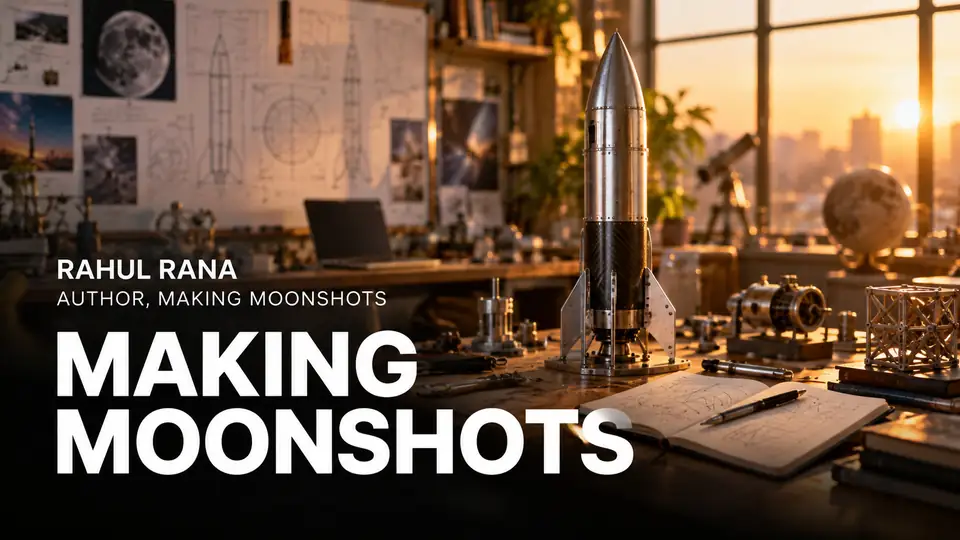
Rahul Rana — Making Moonshots and Building the Future
Rahul Rana on ambitious founders, Making Moonshots and the work behind difficult technical projects.
December 22, 2020 · 28 min



About the episode
In this conversation, we talk with Rahul Rana, Author of Making Moonshots. He tells us about his life and the unique paths that led to writing his book about Moonshot companies and why it is so important that we continue to build the future with these types of innovative and forward-thinking companies.
“It is time for conventional thinkers to stand aside and give way to the crazy ones, the contrarians, the radically creative geniuses who work outside the box to create massive breakthroughs.” Rahul Rana
We will also cover:
· What is a moonshot company?
· Why majoring in finance helped him realize his true passion for innovation.
· Who influenced him and how he decided to write his book?
· How a Georgetown Professor helped to guide him through the writing of his book.
· The process for picking the topic for his book.
· The literal blood, sweat, and tears that went into researching and writing the book.
· His positive views about the future of Moonshot companies.
Links
Chapters
Times follow the podcast audio. The video’s timeline may be slightly different.
- 00:00Welcome and introducing Making Moonshots
- 02:51What makes a company a moonshot?
- 03:56Mindsets of ambitious founders
- 06:18What holds people back?
- 10:23Choosing to write a book
- 16:21Researching and finishing the book
- 21:21Making ambitious founders feel accessible
- 25:57Finding the book and closing
Read the conversation
Open the full transcript
CAMERON WIESE: Welcome to the Build the Future podcast. My name is Cameron Wiese and I'm your host. I've always been fascinated by the ideas and the sentiment that drove American culture in the 1960s with the space race. A culture galvanized to dream about the possibilities of tomorrow. Whether it's food, transportation, cities, biology, or anything else, it was this cultural mindset rooted in optimism, that the world tomorrow would be better than the world today. A mindset where people were compelled to build things, and I quote JFK, not because they were easy, but because they were hard. It's this desire to build and to dream that seems to have been lost, and it's something we're here to bring back. With Build the Future, we're here to promote the ideas and stories of those who see how the future can be better, and promote their plans to get us there.
CAMERON WIESE: It's our mission to get you to dream about the possibilities of tomorrow. Dream about the future that you want to live in, and inspire you to go build. Today, we're talking to Rahul Rana, the author of Making Moonshots. Making Moonshots is a new book that dives deep into the mindsets, philosophies, and strategies that are conducive to pursuing moonshot companies. I've been following Rahul's journey over the last year as he's been writing this book and I'm really excited to have him on to share what he's learned. So let's jump right in. Rahul, first of all, thank you so much for coming on. I'm excited to finally have you on and talk about your book. Yeah, thank you for having me. Yeah. So tell me about your book, Making Moonshots, and the sort of future you hope it helps build.
RAHUL RANA: Yeah, of course. So, so making moonshots, right? What it is, it's a deep dive into the philosophies, mindsets, and strategies that are really conducive to building moonshot companies, right? So really impactful, deep tech, things that are sort of metaphorical for going to the moon, right? The Apollo missions and so forth, right? Like the really, really hard, the seemingly impossible things to do. But yet if you do them, they're insane, right? They're, they're impactful, they're profitable. They change the world. And I really just wanted to inspire regular people, right? Like tell them like, all right, like this is not, you just for the rich or just for the insanely smart PhD, whatever. This is for everyone. Everyone can make these. And it's all a matter of just like, what's the mindset? What are the philosophies, the intangibles, putting them in action and sort of going about navigating the whole ecosystem around it. And it's so democratized, it's so accessible to everyone. I just want to give them the toolkit and then sort of empower them and inspire them on making moonshots. And I guess, like, in terms of what future do I want to see it build? Again, it's the name, right? I want to see more moonshot companies, more of those really, really profitable, really impactful companies that leverage some sort of deep tech, really advanced science or technology and solve some big problems in the world. So yeah.
CAMERON WIESE: I think you kind of answered it in that, but I want to just dive a little deeper because you wrote your book and all of your interviews with like, what is a moonshot to you? And so I want to spin the tables and ask you the same question. Like, what is, what is a moonshot to you?
RAHUL RANA: What's a moonshot to me? Yeah. So it's a moonshot, right? Like it's any sort of, it's a three part, a three part spectrum, right? So, you know, it's a varying degrees, right? But it's, it's leveraging some some really advanced, you know, science or technology, right, the deep tech part, using it in a radically creative solution, right? A disruptive solution, you know, one that no one has ever thought about, or no one's ever sort of made successfully. And then three is solving a big problem in the world, sort of the combination, sort of like the Venn diagram of all three of those things to varying degrees, obviously, that's what really is a moonshot company. And it's again, like I mentioned before, it's just like those companies have really solved some problem, right, or make some breakthrough that are reminiscent of going to moon, right? It's technically impossible to make almost technically impossible, seemingly impossible, you know, you need that right mindset to do about it, it's probably going to fail. But you know, if it is successful, like it's going to change the world or change some, you know, aspect of society and you know, in turn have really, really positive impact. So that's what a moonshot is to me. And
SPEAKER UNCLEAR: you know, a moonshot company, you break it down into Yeah, the mindset, the philosophy, the strategy and the ecosystem, what what surprised you the most about the mindset piece? Like, what is it these moonshot founders, how they view the world that they want to share to everyone else.
RAHUL RANA: Honestly, it's kind of funny. What was most surprising is how normal and how accessible these mindset, these sort of qualities are. Literally, anyone can do it. Everyone has that energy. So long as they have that energy, getting those right qualities, building those qualities, obviously, working towards them or whatever may be, building that mindset is so... It's not easy, but it's simple, right? Like, anyone can really, you know, really, really sort of adopt those things. And, you know, in that light, what's interesting to me on how literally all the people that I've ever sort of observed, moonshot founders one thing that they always share. And if you read, you know, the first chapter, right, all the radical creativity is that they really harness these seemingly opposing qualities. And I think the harmony of those qualities are really what gets them successful, right? They're super childish, but super sort of, you know, they're They're irresponsible, but they're really responsible.
RAHUL RANA: They're really dispassionate, but they're really, really passionate, really pessimistic, and really optimistic. And it's really like these really seemingly opposing qualities. I noticed this between like every single one of them. Like there's not one that did not have some degree of sort of these polar opposite qualities. And I really like, you know, dug into that. And I came across Mihaly, I don't know how to say his last name, but the scientist behind the flow state, right? And a really, really long last name. Yeah, yeah. He actually wrote a really similar book on, you know, what are the qualities of the people who discover things, create things and so forth. He sort of broke it down into those, those tensor qualities of creativity, right? I basically took that and I really demarcated, sort of discriminated between regular creativity and radical creativity.
RAHUL RANA: The way I sort of describe it is sort of regular creativity. That's making new things out of old things, re-purposing, recombining connections between existing things and sort of, assuming this linear future based on those things. I think radical creativity is the opposite, right? It's sort of making new things out of new things. And it sort of, you know, assumes this exponential sort of future in which anything can happen, right? It's sort of this, you know, this compounding effect in terms of, you know, science and tech progress or whatever it may be. And that's really like the mindset that these moonshot founders harness. And they put it into action and you see it in their work. So, so yeah, that was honestly, that was like the coolest thing I found.
SPEAKER UNCLEAR: So going back to the kind of the energy that everyone has within them to go do something like this, why do you think people aren't pursuing moonshots? What are the blockers?
RAHUL RANA: Yeah, well, there's so many on and I would say there's like, like, like in my book, they're sort of intangible and tangible things, right? So in terms of intangible things, obviously, it's hard, like, it's not easy going to the moon, right? The Apollo missions, it was probably going to fail, right? Like SpaceX, right? Control Labs, like whatever any company, right? They're probably going to fail. A lot of people can't, you know, maybe maybe sort of don't have the means of, you know, internalizing that risk. And it's totally, that's totally understandable. People have different financial situations, right? Different interests, they may have different priorities, right? You got to put food on table and then maybe you could take more risks if you could do that Right, but you can't like you know, you got to focus on those basic survival and whatnot again different different sort of needs necessities Circumstances whatever maybe so honestly like the way to overcome that I realized is alright Like if you look at big tech look at like a you know big finance right investment banking You know software all those you know really really in in demand sort of you know jobs and whatnot I look at them and basically like one they have like this like really really conducive and ecosystems like you know mentorship and right growth and and so forth, right, exit opportunities, right.
RAHUL RANA: They have a lot of incentives, basically, is what I'm trying to say, right. The incentives to go there are so high. And like, especially, you know, for maybe people don't have, who are aspiring to have, you know, a solid salary, right. Solid benefits, right. Health insurance, I don't know, any benefits, right, any incentives, right. They go to those industries, you know, to do whatever they want to do and have the lifestyle that they want to live. Though the social attitude, right, the social infrastructure, and also like the social sort of incentives. Deep tech, right, and sort of research and academia don't have those yet. and all the industries that are making moonshot companies, they don't have that three-part structure. If you want to overcome that, we ought to have better incentives, have a better attitude around all things deep tech, and then incentivize people to come to it as they do software engineering or investment banking or whatever finance positions or whatever it may be.
RAHUL RANA: It's interesting. Again, to recap, and tangible, people are scared to do it. It's a big risk, it's totally understandable. But then in tangible terms, people have different circumstances. And we have to make this environment or this ecosystem that's really conducive their personal growth as well as their career growth.
CAMERON WIESE: Yeah, I want to talk about how we go about creating an ecosystem. But first, it sounded like you were tracked for finance. You're like, cool, I'm going to go into investment banking. But something shifted in your mindset. So what was that moment for you? Where you're like, I don't know if I want to go do this anymore. I want to shift gears and go pursue something a bit more ambitious.
SPEAKER UNCLEAR: Yeah, yeah, of course. It's kind of funny. Like, I always tell this to everyone. So my dad, my entire life, he's worked at Bell Labs, right? I mean, any tech enthusiast know how groundbreaking, how crazy Bell Labs was, all the Nobel prizes, right, all the insane sort of inventions and everything. That was my childhood, right? Like, I'd go to all the labs, right? See like a bronze plaque. So it was like so inspiring, right? I'd play with all their, you know, their little like fancy gadgets and then, you know, computers. And when I was like super cool, I loved it. And you know, that was sort of like, I was just early on, I was really exposed to all things, you know, deep tech and research and whatever.
RAHUL RANA: And then funny enough, back in high school, I sort of just blocked off all that curiosity, right, for science and tech and whatever. And I sort of fell in with the finance crowd, right? Admittedly, like, again, like the salary to prestige, fancy suits, whatever, like, you know, Wall Street, like, I was like, damn, like, I want that. I got to college, and I was like, wait, you know, I started, you know, networking in the space, you know, started doing the work. And I was like, wait, I don't know about that. Like, like, it's interesting. Again, I spent four years of high school developing those skills. So I had the skills in finance, right? And again, I absolutely do. I do like finance, you know, all things, you know, business related and whatnot, But I wanted to do it in a context that was actually impactful, right?
RAHUL RANA: And something that really was fulfilling at the end of the day. And I just think, again, like the podcast is very building the future. That's fulfilling. That makes me genuinely happy. And if I could bridge the gap between those who are discovering the future, those in academia, those in research organizations like what Bell Labs used to be, and still continues to be, but nonetheless, as innovative as they are, give them the business acumen, right? Help them with the business side of things and sort of, in turn, and commercialize these breakthroughs, right? Make more moonshots at the end of the day. So that's how I got into the deep tech space. And then after that, you know, I was just like, all right, let me do something bold. And that's how I got there right in the book.
CAMERON WIESE: So I assume that there's a lot of thinking that went into, okay, like what else can I go pursue, right? I'm curious, how did you land on doing a book?
RAHUL RANA: So that was 100% serendipity, actually. It was just like, it was just coincidence. Like, it's so funny. Like, I mean, it came to this realization, all right, I want to combine finance and deep tech and whatever, right? That was basically October, November of 2019. So December came, right? I finished the semester, was at, you know, on winter break I was like, damn, like I really, I have so much energy, like so much passion. Like I want to do something bold. What's the boldest thing I could do? That's actually, you know, possible. It's feasible at, you know, my sort of moment in time, right, considering my skills and what I know and stuff. And I think starting a company was not the best sort of thing to do at the moment.
RAHUL RANA: I don't think I could have added enough value or made a company or whatever at that moment in time. So I was like, all right, like what's the next best thing, right? Creating content around the thing, right? If I'm passionate about it, like that'll come easy to me. And it really did. Started taking so much, so much content and, you know, got ideas on, you know, how I want to present this. And then as I was doing all that, again, pure serendipity, or just coincidence, whatever it is, I came across my mentor of mine, right? Who's soon to be the mentor who brought me on this book journey. So he's a Georgetown professor. His name is Eric Custer. And I just came across him on LinkedIn, had a conversation with him.
RAHUL RANA: And he was like, all right, like out of the goodness of his heart, like he loves bringing people like together, He has this author community. He teaches them how to write books. He teaches them from writing, literally the hook of a story, putting it into an actual manuscript to even publishing it. Setting up with a publisher, doing marketing sales, whatever. He got me started on the entire journey and it was at that right point in my time when I was like, all right, I have the energy, I need to do something. I need to harness it and channel it into something. And again, I don't know why, maybe the universe is looking out for me, but he came at the perfect time. And I just ran with that idea. you know, he took me under his wings and mentored me the entire time. So I met up with the publisher and so forth. Yeah.
SPEAKER UNCLEAR: And here you are. Yeah, yeah. A little bit more than a year later with the incredible book pulled together. It seems like the I have a hard time believing in like free will. In a way, it's like stuff just kind of comes across our paths. And it's like, cool, I'm gonna like jump in, I'm gonna grab it and then I'm gonna go and see where it takes me. And that process is always a journey of immense personal growth and it gives you a new lens on the world. And so with this journey you've been on for the book, in the context of pursuing moonshots, what was your headspace like before going into the book? Because you had a lot of energy, you were excited. And then what kind of changed for you along the journey that influences how you're seeing things now at the end?
RAHUL RANA: Alright, so back to my story, right? This is January. So my first idea for a book, right? So, yeah, talk to professor, right? He brought me in under his wings and whatever. We were ideating, right? What's like a solid book, right? I was, you know, I told him all the things I was interested in PC, Deep Tech, whatever it is, you know, solving big problems, whatever, whatever. So my first idea was actually not moon shots, right? And my first idea was actually sort of taking like, all right, like how does, how is it private sector, right? Startups and whatever. How's the private sector solving public sector problems, right? So problems that are, you know, the purview of the government or have been ruined by the government, right?
RAHUL RANA: Healthcare insurance, all these, all these sort of industries that are heavily politicized, heavily regulated, like what are the startups doing that are sort of cutting through that, making some solid companies in those spaces. And, man, awesome topic. But I just was not passionate about that. And it was funny, I was talking to one of my friends and he was just like, yeah, if you're not passionate about it, you shouldn't do it because you're going to devote a large portion of your life to this. I was like, yeah, I just couldn't find that intrinsic motivation to even do the research around that topic. And I was just like, wait, I don't know. I had asked myself, why do I want to do VC, right? Why do we want to, you know, again, solve all these big problems in the world or, you know, I was just like, I got really introspective, right? It was kind of funny. And like, there, I was just like, all right, like, I just love all these, you know, these like sci-fi sounding things, right? These like, sort of optimistic, these like, you know, heroic sort of inspirational things, right? It's super, super broad, but I was just like, all right, like, that's why I love all these advanced and advanced sort of scientists and technologies, right? Like all these cool, cool stars, right? They make me feel like a kid again, right? Like, you know, watching Marvel movies or something. And it's just all right, like that's what I love, but I don't know how to make a book out of that. And again, I don't know if the universe was just looking out for me, what I don't know what happened, but obviously, you know, just like, you know, doing some research, write some like live research, listen to podcasts, whatever I came across the X moonshot factory, right? I came across Lux Capital came across all these super, super amazing, like startups, right? Control Labs, Varian Bio, all of you know, Lux's portfolio, like I absolutely love those companies. And it's just like, damn, like, those are moonshot companies, like, there's no literature around how to actually how any normal person, any regular person can make such a company.
RAHUL RANA: There's no literature around how we can make an ecosystem around said companies. What are the special factors that these founders, that they harness, that other founders don't or other people don't? How can people actually build to those qualities? I want to make it actually actionable. I was like, wait, that's a perfect book. And I ran with that. So it was interesting in the beginning. like it was really alright. Like it was a topic I was super, super interested in about. But like the thing is like, and I always tell this to everyone, I was by no means was I an expert on anything Moonchuffs or Deep Tech related, you know, when the book started, right? I use this book as a way to learn. And it's tough to do that, right? Because it's sort of, you know, two responsibilities at one, right? You have to learn and you also have to put it in this digestible sort of, you know, informational and you have fun manner, right? Entertaining manner.
RAHUL RANA: So it was doing like those two things at once. And it was tough. It was not easy. It was absolutely, I absolutely loved it. It was just tough though. Again, blood, sweat, and tears, I'm not even lying. Throughout the entire process. Literally, blood, sweat, and tears. And what do you mean by that? There's one point when I had a physical, and the doctor literally said, why is your heart rate so high? It was higher than usual. I was like, I'm under a lot of stress doing the book earlier. So literally, blood, sweat, I was literally pulling investment banking hours for this book. 90-hour work week, 100-hour work week, and then tears. I'm not even lying. There's some nights. I was working so hard on this. So many long hours that like, I started like hallucinating, like I was that exhausted sometimes. I was like, all right, like, that's what I went to sleep on those nights. But like, I'm not even lying.
RAHUL RANA: Like, it was like, tough. It was it was not easy. Again, I was like doing, you know, I worked three internships over the summer, right? I was working, you know, working on this book, learning it and also, you know, again, like I said, before, I learned the topic and also like putting in this like awesome sort of format. Like it was it was tough. But I loved it. Like I actually loved it. Like it was just amazing. It was like, it was just like so inspiring. So I don't know, like, you know, journey itself was hard. I don't know if I would do it again. I'd rather put that time into maybe a company, right? Or VC, you know, do an investing work, which I eventually got the position because of the book at Lux Capital, but nonetheless, like, I don't know, like it was just amazing.
RAHUL RANA: And then, yeah, no, the journey was awesome. And it sort of ended around mid-October. That's when I completely finished the action, the hard part of the book, right? The actual content. Yeah. After that, it's been fun though. Like, you know, getting active on Twitter, right, jumping on podcasts, like meeting awesome people, like sort of building a reputation around the space. Like it's been so fulfilling. and just seeing all of my work right, just putting into that book and everything. It feels awesome. So yeah.
SPEAKER UNCLEAR: Yeah, it's a stamp in time. It's like, here's a product. Here's an artifact of this work. And you kind of share it with people, and can people excited about it, and then leverage that to then go do the next thing. I want to jump back to, you mentioned kind of media and heroic inspirations. Two questions for you. So one, what media really influenced you? Like, you mentioned Marvel movies, And I know in the book you mentioned kind of interstellar social network and like the Martian are like the cultural like everyone watches those Everyone's like oh my god. I want to go be Mark Zuckerberg. Oh, I want to go travel But I'm curious kind of outside of those what are some piece of media that have shaped your thinking and then to Who are some heroes of yours that most people may not know about but inspire you to go pursue moonshot projects, of course
RAHUL RANA: Yeah, so in terms of media, so there's a lot of sort of, you know niche deep tech-ish related content that I started taking in early on. Obviously, you know, so a lot of my favorite VC firms, right? Lux specifically, I love sort of all the partners that they make, all these partners at these firms. I would look at their Twitter threads, or I'd look at all their blog posts and their podcasts and whatever. And I'll tell you what, the first sort of deep tech anything related or podcast I ever listened to was Josh Wolf's Invest Like The Best interview, right? that one just like set it off. After that one, it was like the coolest stuff ever. So early on, right, it just a lot of taking a lot of sort of perspectives from experts and academia, but also like VC and whatever, right?
RAHUL RANA: Deep tech space, but from those sort of angles. And yeah, yeah, ever since then, that's really how we got started on that. And then, obviously, I'm a big movie fan like me and my dad. We always love watching movies and whatnot. And I really think like, to your point, right, like, you know, Martian social network, whatever it is, Like they have this like this evangelizing factor, right? Like they, like you, you mentioned before when we were talking, right? Like having something like tangible, right? Like some, like, like a project, right? Like, you know, if you're making, you know, the event, I'm going to, yeah, I won't say it obviously, but like the event you're talking about, having something physical in, in front of you, right?
RAHUL RANA: Like it's just so much better than just like, you know, reading it or whatever. Right. Like, you know, like movies where you like, you hear it, you feel it, whatever it is. So there's so many movies, right? Like, I, like the ones that you mentioned, super, super inspired by them. and there's people who really, really inspired me and then just like was still inspired by all of them. And then who are my heroes? So in terms of heroes, that's, it's like interesting. Like I would say like, you know, every sort of, you know, major, major, you know, like scientists are one, not like like, so what is some of the movies I really liked, right? Good Will Hunting, one of my favorite movies, Theory of Everything, Imitation Game, right?
RAHUL RANA: I really love those, those sort of, you know, scientific biographical movies. Like they're so inspiring, right? Like they're so awesome. Like I really have a really deep appreciation for PhD people, right? Like people who go into academia to research or to both their entire lives, these sort of domains and industries and whatnot. So, you know, a lot of those people, I would say are my heroes, right? I'd say one of my favorite founders, Thomas Reardon, right? Control Labs. I never met him. Tom's like, if he sees this, like I want to meet him so badly. Like he's just like so cool. Like he has like this like crazy, crazy journey. You know, he built both internet explorer, right? So again, talk about, you know, an impact like Internet Explorer, that started like everything, right? Like every piece of information that we know and then how interconnected the world is, right? It all started with Internet Explorer and sort of, you know, early days of, you know, Microsoft and those companies, right?
RAHUL RANA: So he worked on that, he built that. And then he went to college at like age 31 or something like crazy, like really, really late. Like he studied like classics. And after classics, like, I don't know how he got into Nero, I forgot his exact story, but then he started control labs, right? literally making mind control real. That's so cool. And it's just like, people can't like, holly damn, I want to be something, I want to be like that. Or I want to be the person who helps those people. I want to uplift them, give them the financial support, the business acumen, all the resources that they need, just make their lives easier. They make the breakthrough, I'll help them spread it, commercialize it, whatever it is. So yeah.
CAMERON WIESE: Yeah, I think it's one thing that seems to be missing. It's just accessible heroes. because you ask anyone in kind of I guess our sphere and they're like oh Elon Musk. Yes anyone they're like Elon Musk is like a demigod right like you don't like you can't touch him he's like this mythical figure oh it's Elon. Yeah no he's just a dude but no one views him that way. What we need is more of the like Thomas from Control that yeah like more people like Thomas we need more people like Blake Scholl from Boom we need more people like yeah Ryan Johns from cul-de-sac, like we need these like more accessible founders or heroes that we
SPEAKER UNCLEAR: couldn't even tap into. Yeah, and I've been thinking that for a long time, like 100%, we need more of those people, but also like one thing I've raised in the book, I think I said this, I forgot what chapters it is, right? But like I raised this question like, all right, like why isn't there a female Elon Musk, right? Equivalent of Elon Musk, but you know, but you know, a woman, right? Or why isn't there a person of color Elon Musk, or you know, all these other sort demographics, right? A poor Elon Musk, right? Or whatever it may be. Just like, we need Elon Musk to be normalized, right? Like, you see someone like him and you're just like, all right, it's a normal person, right? Doing what they do best, right? Like, that needs to be like, you know, again, he's this awesome person. And again, he has his flaws, he's not perfect or whatever. And I know it gets slightly sort of controversial when people sort of put him on pedestal. But nonetheless, we need people like him to be like the norm. And once we get to that place, like, all right, that's what I know, like, my job is done. We've made enough moonshot founders that it's like normal.
RAHUL RANA: So it's interesting. And yeah, I think the way to do that is to have more heroes, but for specific subgroups, right? Maybe it's geographical, maybe it's by gender, maybe it's by race or whatever, maybe we just need a lot of them and diverse of people to actually resonate with them and stuff. So yeah, at the end of the day, again, like you said, we just need more accessible heroes.
CAMERON WIESE: Yeah. So you cover a lot of ground in the book. You talk about a lot of different moon shots. You talk a lot about the possible futures. Curious, what excites you the most about the future?
RAHUL RANA: I mean, so many things. Like, I mean, like, like, you know, on one hand, like space is becoming ever so slightly, like, you know, more accessible, right? Like biotech, we're literally treating DNA like it's code now. Like it's insane, right? Like mind control is like real, right? Like, you know, I'm so excited about the act, like the sheer capabilities that we're sort of unlocking with all these, you know, right? Moonshots or deep tech, whatever it is, right? I always think synonyms, like there's a lot of synonyms, right? Frontier tech, emerging tech, deep tech, hard tech, whatever you want to call it. Like just like, it's the sheer capabilities, right? And the potential for actually solving the hard problems. So many smart people are just going to big tech or big finance, maximizing advertising revenue, whatever it is, maximizing the click rate of a button. Nelly, we got to bring that talent and we got to bring more attention to people solving the big problems. Diseases, poverty, going to space, things like that, things in the environment or aging, things like that.
RAHUL RANA: There's so many problems out there that need to be solved. The futures that I want to see, what I'm hopeful for is that they will get solved, again, moonshot boundaries, with people who actually do the adventurous sort of daring things. And then you're going about these hard, sort of extremely complex problems. And then, and yeah, that's what I'm hopeful for.
SPEAKER UNCLEAR: I mean, but you're, you're doing your part now. You got, you got the book, we're kind of here talking about it. We can, we can get more people bought into this idea of going to pursue these moonshots. I think we're, we're seeing a little bit with just this year in general, so many incredible groups have popped up. People were like, wait a minute, my government's not competent. Oh my local, oh, the people who I thought are supposed to be the adults in the room or not. And if I want anything done, I have to do it myself. And so that's, I mean, that's why I'm excited about what you're doing, the path you're on and kind of the other people in our Twitter sphere. It's like, like, no, actually, no, we need to go do something. And this decade is
SPEAKER UNCLEAR: going to be fantastic as a result. So yeah, 100%. If you know, if you're going to look at my book, I don't know if you read my government sub chapter, but it was funny, like, like my editor, he was just saying like, wow, this is like scathing. Like, you really go after government. I was like, yeah, I just like, I say it in a mature way, but I also like, I don't want to hold back. Like there's so many things that I just like wish weren't the way it is in the government. And the government has the deepest pockets and what if they could just put like a tiny percentage of it, like more towards science, right? Solving problems, whatever it is, just like, away from like politics.
RAHUL RANA: I actually hate politics so much. I don't know if you know it's like throughout the book, but like I sort of take like a libertarian stance almost just like, you know, forget about the government, like we're gonna do on our own, because they're not they're not here to help us. I wish I wish they were, but clearly they're not. So it's sort of like that. That's sort of like the stance I take. I don't know if you notice that, but yeah, nonetheless, like, yeah, like the government one, like, it's like annoying to a point, right? Like, it's just like, damn, like, why can't you guys just like work together, right? Like, solve the, you know, solve things that need to be solved. But I don't know any idea.
SPEAKER UNCLEAR: Well, I'm hopeful we'll get there. I mean, we have friends who are working on solving that particular problem. Exactly. Yeah, yeah. 100%. Very confident in the future. feature looks bright. Where can people kind of follow along? Where can they get your book?
SPEAKER UNCLEAR: How can they stay updated? Yeah, of course. So I'm pretty active, trying to get really, really active on Twitter at rrana03 underscore. I have a blog, it's also linked in my Twitter. I'm going to try to make some solid content there, continue sort of the hype and sort of everything around my book. I really want to build this reputation and all things moonshot. So building out a blog, obviously LinkedIn, just search my name, Lux Capital, making moonshots, you'll probably find me there. And yeah, yeah, like, you know, the books can be on Amazon, Barnes and Nobles, you know, everywhere where books are sold. So it's all out there. And it's
SPEAKER UNCLEAR: going to be out there in a couple days as well. Fantastic. Well, everyone's definitely, everyone listening definitely go pick up a copy. I got an early look. It's phenomenal. Got me inspired. Lots of good different moonshot ideas in there. So we have the popular ones that never wants to talk about. But I loved kind of getting sucked into it, as I said, because you just cover lots of different companies, lots of different ideas. And yeah, you did a great job of weaving in the different possibilities, the different moonshots to be working on with you, with the narrative. It's like, how are these founders getting there? So yeah, yeah, excited for it.
SPEAKER UNCLEAR: Thank you. That means a lot. Wow. Awesome.
CAMERON WIESE: Yeah, no, it's good. And I'm excited for everyone to kind of check it out and dive deep and hopefully we can get more moonshot founders starting companies. Be sure to grab a copy of Rahul's new book by searching Making Moonshots on Amazon or clicking the link in the show notes. And if you want to follow along Rahul's journey to help build the future, you can find him on Twitter at rranah03 underscore.
CAMERON WIESE: Thanks for joining us for another episode of the Build the Future podcast. Lastly, if you're building and want to get support, want to hear about certain topics or from certain people, or just want to get involved in helping build the future, shoot us over an email at hello at buildthefuturepodcast.com or follow me, Cameron, on Twitter at [unclear handle], and we'll see what we can make happen. That's it from us.
CAMERON WIESE: Until next time, go build!
More episodes
All episodes Ian Rountree — Venture & the Near FrontierIan Rountree on backing hardware, biology and technologies at the edge of commercial possibility.
 Rohit Krishnan — Investing in the FutureRohit Krishnan explains how he approaches venture investing when data is sparse and the future is uncertain.
 Katie Rae — Building an Ecosystem for Tough TechKatie Rae outlines The Engine’s 2020 approach to supporting tough-tech founders through patient capital, shared facilities and community.